

- India,
- 09-Sep-2025 06:10 PM IST


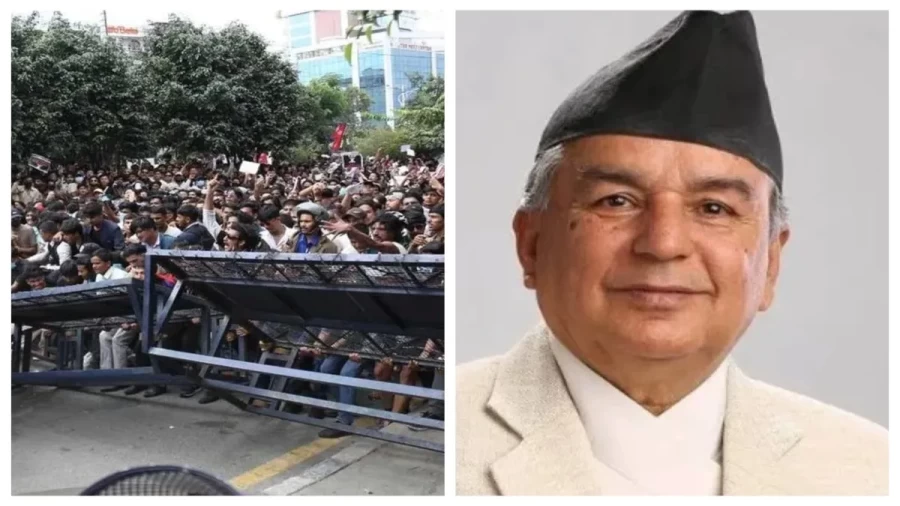
Nepal Protest News: Violent protests in Nepal in recent days have pushed the country towards a political crisis. The movement that erupted after the ban on social media took such a terrible form that first Prime Minister KP Sharma Oli and then President Ram Chandra Paudel had to resign from their posts. Despite this, the situation remains tense in many cities including Kathmandu. So far 20 people have been reported dead in the violence of the protesters.
Controversy started with social media ban
The ban imposed by the Nepal government on social media created anger among the youth. Especially Generation-Z considered it an attack on freedom of expression and took to the streets. On Monday, PM Oli had said that he could resign, but would not lift the social media ban. However, due to increasing pressure from the protesters, the government had to lift this ban. But by then the situation had deteriorated so much that resignation was the only way left.
Resignation of PM and President
Amidst the tense atmosphere, Prime Minister KP Sharma Oli resigned from his post under Article 77 (1) of the Constitution of Nepal. His resignation was accepted by President Ram Chandra Paudel. But soon after, President Paudel also resigned from his post, which plunged the country into a deeper crisis. Oli wrote in his resignation:
According to Article 76(2) of the Constitution of Nepal, I was appointed Prime Minister on 31 Ashadh, 2081 B.S. Keeping in mind the current extraordinary situation in the country, and in order to find a political way out and take further initiatives to resolve the situation, in accordance with the Constitution, I tender my resignation from the post of Prime Minister, effective from today.
Despite these resignations, the protesters have not calmed down. Incidents of violence and arson continue on the streets.
Nepal Army intervention
As the protests intensified, the Nepal Army had to step in to control the situation. After incidents of arson and vandalism at the residences of ministers and senior officials in Bhaispati, the Army evacuated the ministers to safer places via helicopters. The protesters set a minister's residence in Bhaispati on fire, further highlighting the gravity of the situation.
Balendra Shah's appeal
Kathmandu Mayor Balendra Shah, who is considered an influential leader among the protesters, appealed to Generation-Z via Facebook to maintain peace and return home. He wrote:
"Gen-Z, the country is in your hands. You will build it. Now you return home."
It remains to be seen how much effect his appeal will have, as protesters are still on the streets.
What next?
This political crisis in Nepal has put the country into a vortex of uncertainty. After the resignation of the Prime Minister and the President, questions are being raised about the formation and leadership of the new government. Despite the lifting of the social media ban, the anger of the protesters has not subsided. Experts believe that the lack of communication between the government and the protesters can deepen this crisis.
The people of Nepal and the international community are now keeping an eye on the direction in which this crisis progresses. Will peace be restored in the country, or will this turmoil deepen? Only time will tell.
