

- India,
- 07-Sep-2025 09:15 AM IST


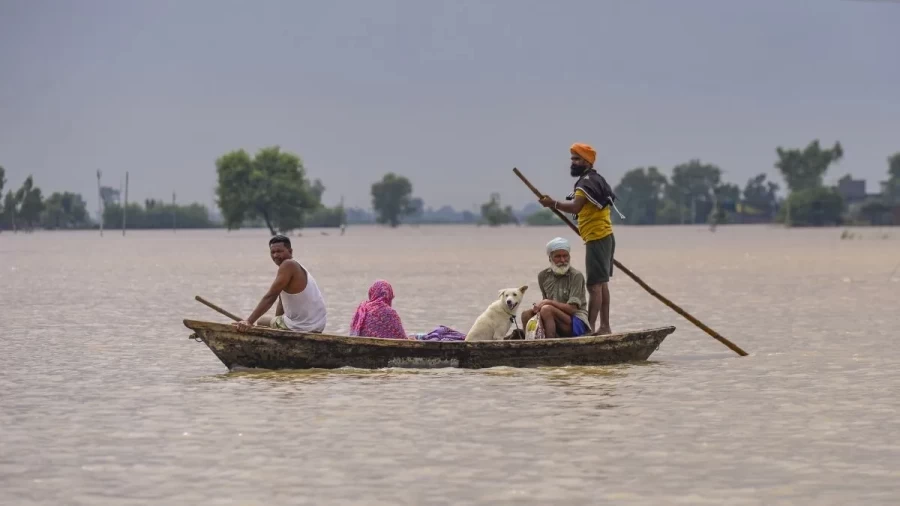
Punjab Floods: Punjab, known as the land of five rivers, is currently in the grip of severe floods. Villages have been submerged, and millions of people have been affected. This natural disaster has badly affected not only Punjab in India, but also the Punjab province of neighboring country Pakistan. In this article, we will discuss the causes of floods in Punjab, its effects and the challenges faced by the government.
Dreadful impact of floods
Floods have caused widespread devastation in Punjab. The state government has declared all 23 districts as flood-affected. According to Friday's data, 1,902 villages have been completely submerged, affecting more than 3.8 lakh people. Apart from this, more than 11.7 lakh hectares of agricultural land has been destroyed, which is a big blow to the economy of Punjab. At least 43 people have lost their lives in this disaster.
People have to leave their homes and migrate to safer places. On the other hand, floods have also wreaked havoc in Pakistan's Punjab province, where 43 people have died and more than 9 lakh people have been displaced, according to the Provincial Disaster Management Authority.
Causes of Floods
There are several causes of floods in Punjab, including both natural and human factors. Let us understand these causes in detail:
1. Geographical Location and Rivers
The geographical location of Punjab makes it vulnerable to floods. Three major rivers, namely Ravi, Beas and Sutlej flow through the state. Ravi passes through Pathankot and Gurdaspur, Beas through Hoshiarpur, Gurdaspur, Kapurthala, Amritsar, Tarn Taran and Harike wetlands, and Sutlej through Nangal, Ropar, Nawanshahr, Jalandhar, Ludhiana, Moga, Ferozepur and Tarn Taran. Apart from this, the seasonal river Ghaggar and smaller tributaries, locally called "Choi", also cause floods. Floods occur due to rising water levels of these rivers during monsoon.
2. Management of dams
The dams built on the three major rivers of Punjab—Bhakra, Pong and Thein—play an important role in flood control. But when the reservoirs of these dams fill up due to heavy rains, water has to be released to control the water. In this process, many times the downstream areas get flooded. For example, on August 26 this year, two gates of the Madhopur barrage broke while water was being released from the Thein dam, resulting in flooding of the Ravi river.
3. Lack of governance and coordination
The third major cause of floods is governance-related problems. Experts have long been demanding better management of dams and proper plans for flood control, but these have not been effectively implemented on the ground. Floods become more severe due to lack of coordination among officials and non-timely implementation of plans.
Challenges before the government
The state government is engaged in delivering relief materials and carrying out rescue operations, but solving the problems of the affected people is a big challenge. There is a shortage of clean water, food, and shelter in the flood-affected areas. Apart from this, the large-scale destruction of agricultural land has created a livelihood crisis for the farmers. It will take a long time for people to recover from this horror of floods.
