

- India,
- 13-Jan-2026 09:43 AM IST


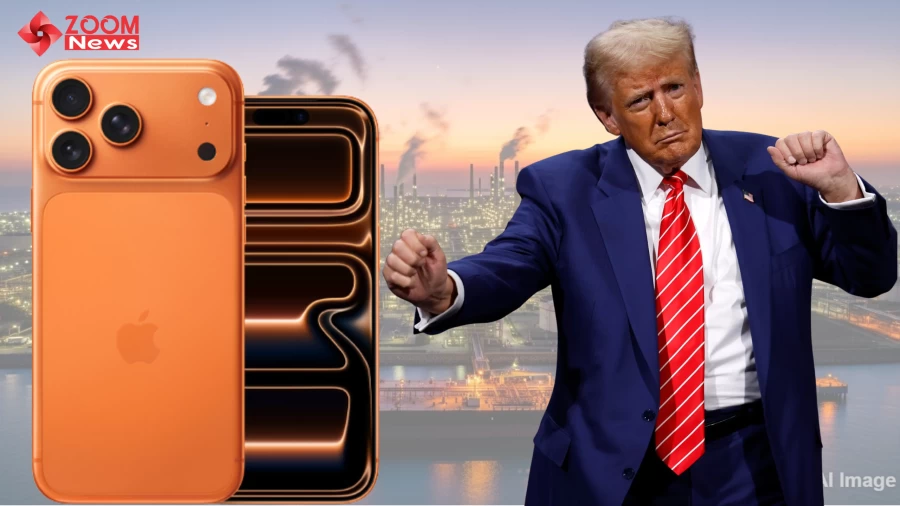
Former US President Donald Trump's recent threat of imposing a 500% tariff has sent ripples of apprehension across global markets, while this declaration comes at a pivotal time when India is rapidly emerging as the largest supplier of iPhones for the United States. The central question now revolves around whether such an exorbitant tariff would cause iPhone prices to skyrocket and, more importantly, who would bear the brunt of this financial impact – India or American consumers. This situation underscores India's burgeoning manufacturing capabilities and the increasing reliance of the US on its supply chain.
India is swiftly transforming into a pivotal manufacturing hub for Apple, demonstrating remarkable growth in its production and export capabilities. In 2025, iPhone exports from India surpassed a record 2. 03 lakh crore rupees, equivalent to approximately $23 billion. This figure represents an impressive increase of nearly 85 percent compared to 2024, signaling a significant surge in India's manufacturing prowess.
This exponential growth has been largely facilitated by the Indian government's Production-Linked Incentive (PLI) scheme, which has successfully incentivized Apple to shift a substantial portion of its manufacturing operations from China to India, while factories operated by major players like Foxconn and Tata are now producing iPhones that are directly shipped to the US and other global markets, firmly establishing India as an integral and indispensable component of Apple's global supply chain. This strategic shift has positioned India as a formidable player on the global electronics manufacturing landscape.
US Dependence on Indian-Made iPhones
The United States is increasingly relying on India for a significant and growing portion of its iPhone supply, a trend that highlights the deepening economic ties between the two nations. In October 2025 alone, smartphones worth $1. 47 billion were shipped from India to the US, marking an almost threefold increase compared to 2024. Over the period from April to October 2025, this figure surged to $10. 78 billion, underscoring the strong presence of Indian-made iPhones in the American market. Currently, approximately 70 percent of US smartphone imports are linked to India. This substantial dependency implies that it would be nearly impossible for the US to abruptly and extensively shift its supply chain from India to another country without significant disruption. Such a high level of reliance places India in a. Strong negotiating position, particularly concerning trade policies and economic discussions.
The Direct Impact of a 500% Tariff on US Consumers
Should Donald Trump indeed implement a 500 percent tariff, its most immediate and profound impact would be felt directly by American consumers. Given India's substantial share in iPhone supply, it would be challenging for the US to instantly secure such a large volume of iPhones from alternative countries. In such a scenario, companies like Apple would inevitably pass on the increased tariff costs to the final retail prices of their products. For instance, an iPhone currently selling for around 1 lakh rupees (or its equivalent in dollars) in the US. Could become exponentially more expensive after a 500% tariff, potentially placing it beyond the reach of average American consumers. Thus, the financial burden of the tariff wouldn't primarily fall on Indian exporters but rather directly on the pockets of American consumers, forcing them to pay Importantly more for these essential gadgets. This situation could lead to increased inflation in the US market and diminish consumer purchasing power.
India's Manufacturing Prowess and Strategic Position
Under its PLI scheme, India has successfully provided Apple with a strong and reliable manufacturing base. The country currently operates five iPhone assembly plants, with approximately 45 suppliers integrated into Apple's extensive supply chain. This strong and growing ecosystem has propelled India to become the world's second-largest mobile phone manufacturer. Plus, the majority of mobile phones sold within India are now manufactured domestically, catering to the local market demand. In a significant development, Apple has commenced manufacturing all models of the iPhone 17 in India, with the intention of supplying these devices to markets worldwide.
This fact underscores India's escalating capabilities and its central role in global electronics manufacturing. Consequently, it would be a formidable challenge for the US to disregard India or disrupt its supply chain, as such actions could lead to substantial losses not only for Apple but also for American consumers. India's strategic position provides it with a significant advantage in global trade negotiations.
