

- India,
- 12-Feb-2026 09:00 PM IST


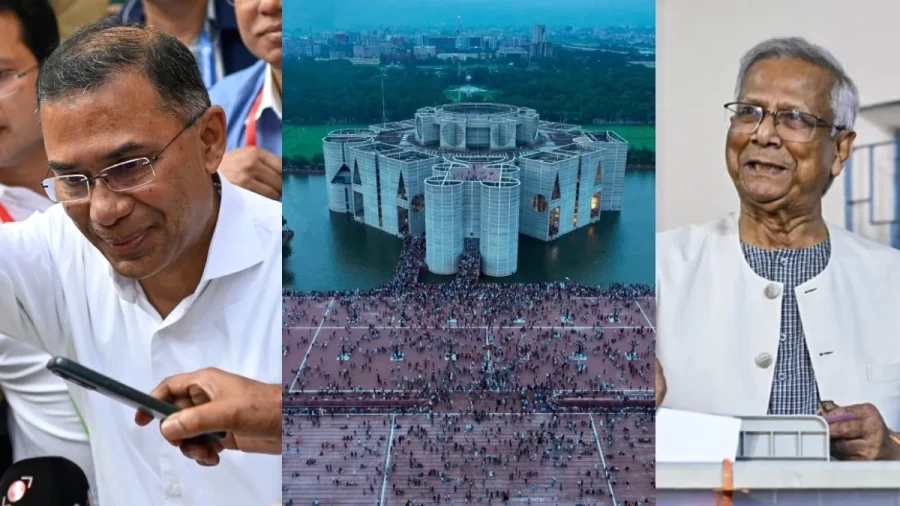
The voting process for the 13th parliamentary elections in Bangladesh was successfully completed on Thursday, February 12. According to preliminary data released by the Election Commission, a voter turnout of over 47% was recorded across the nation. This election is considered a pivotal moment in the political history of Bangladesh, as it's the first general election held since the mass violent protests in August 2024 led to the resignation and departure of former Prime Minister Sheikh Hasina. The conclusion of this electoral process is expected to end the 18-month tenure of the interim government led by Muhammad Yunus.
According to election officials, polling began at 8:00 AM and continued until 4:00 PM under stringent security measures to prevent any untoward incidents. International observers have closely monitored these elections, which took place in the absence of the Awami League. The Election Commission is now preparing for the counting of votes and the announcement of results, which will determine who will lead the governance of Bangladesh for the next five years.
Parliamentary Structure and Reserved Seats
The Parliament of Bangladesh, known as the Jatiya Sangsad, consists of a total of 350 seats. These seats are categorized into two distinct groups. The first category comprises 300 seats where representatives are elected through direct universal suffrage. Voters in various constituencies across the country cast their ballots directly for their preferred candidates in these seats. The second category includes 50 seats that are specifically reserved for women.
As per the constitutional framework, these 50 reserved seats aren't filled through direct elections. Instead, they're allocated to political parties in proportion to the total number of direct seats they win out of the 300 contested ones. A party winning a higher number of direct seats receives a proportionately higher number of reserved seats to nominate its female members. This system ensures that the total strength of the house reaches 350 while maintaining female representation in the legislative process.
The Majority Threshold and Electoral Math
To form a government in Bangladesh, a political party or a coalition must secure a clear majority in the Jatiya Sangsad. Under normal circumstances, the magic number for a majority in the 300 directly elected seats is 151. However, a unique situation has arisen in the current election cycle. According to the Election Commission, voting was conducted for only 299 seats this time.
Due to the suspension of polling in one seat for technical or other administrative reasons, the majority calculation has shifted slightly. Based on the 299 seats contested, any party or alliance will require 150 seats to claim a majority and form the next government in Dhaka. The party achieving this threshold will have the authority to elect the Prime Minister and form the Cabinet. The final results of these 299 seats will also dictate the distribution of the 50 reserved seats among the qualifying parties.
Political Landscape and Key Contenders
This election was held without the participation of the Awami League, the country's oldest and most prominent political party. Following the dissolution of the Awami League and the ban on its electoral participation by the interim government, the primary contest has emerged between the Bangladesh Nationalist Party (BNP) and its former ally, Jamaat-e-Islami. While these parties have collaborated in the past, the current political dynamics remain complex.
Data from the Election Commission indicates that a total of 50 political parties participated in this election. There are 1,755 candidates representing these parties, along with 273 independent candidates. The high number of independent candidates suggests a significant attempt to fill the political vacuum created by the absence of the Awami League. These independents could play a crucial role in constituencies where the competition between major parties is tight.
Voter Demographics and Participation Rates
7 crore registered voters in the country. The participation of the youth has been a highlight of this election cycle. 58% of the total electorate consists of first-time voters. This demographic is expected to have a substantial impact on the final outcome and the formation of the new government.
The recorded turnout of over 47% on Thursday reflects the public's engagement despite the recent political upheavals. Long queues were observed at polling stations in both rural and urban areas. The Election Commission has emphasized that all necessary technological and security protocols were followed to ensure a transparent and fair voting process. The final turnout figures may see minor adjustments as data from remote regions is consolidated.
Transition from Interim Administration
This election signifies more than just an administrative transition; it marks the end of the 18-month interim rule. Following the resignation of Sheikh Hasina in August 2024, Nobel laureate Muhammad Yunus took charge as the Chief Adviser. The primary mandate of the interim administration was to restore law and order and facilitate a neutral environment for the general elections.
Upon the declaration of results, power will be transferred to a democratically elected government, while officials and observers note that the incoming administration will face significant challenges, including stabilizing the national economy and maintaining social harmony. This election, being the first major poll without the Awami League in decades, is seen as a milestone in defining the future democratic trajectory of Bangladesh.
