

- India,
- 20-Nov-2025 12:34 PM IST


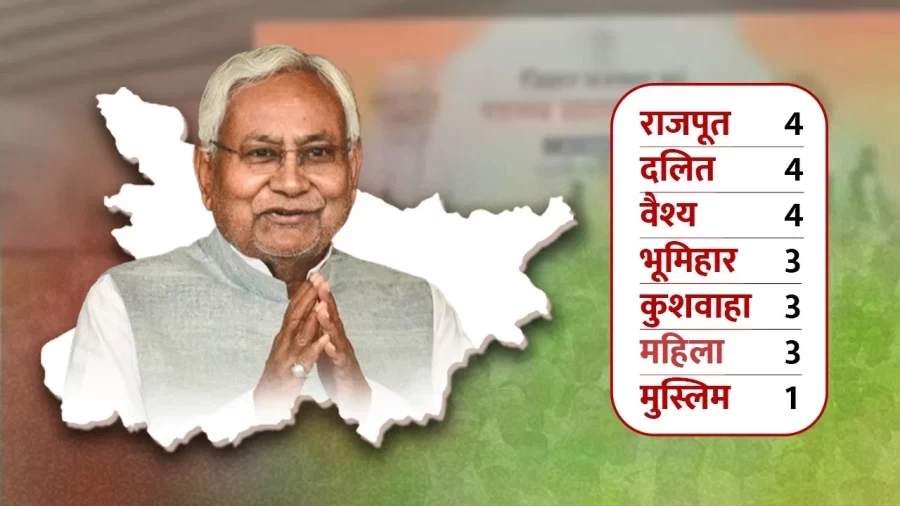
Formation of the New Government Post Landslide Victory After a resounding victory in the Bihar Elections 2025, the new government under the leadership of Nitish Kumar has been constituted. A total of 27 individuals, including the Chief Minister, have. Been inducted into the cabinet, taking charge of the state's administration. The formation of this cabinet has paid close attention to caste equations, ensuring appropriate representation for various communities across the state. The government has made efforts to include Dalit, Rajput, Bhumihar, Kushwaha, Vaishya, Yadav, and minority communities, alongside ensuring women's representation, reflecting a commitment to inclusive governance and social harmony.
Rajput and Dalit Communities Lead in Representation
The Nitish Cabinet sees the Rajput and Dalit communities receiving the highest number of ministerial berths, while both communities have been allocated 4 ministers each, underscoring their political strength and electoral significance in Bihar. From the Rajput community, MLA Shreyasi Singh from Jamui, MLA Sanjay Kumar Singh from Mahua, MLA. Sanjay Singh Tiger from Ara, and MLA Lesi Singh from Dhamdaha have been included in the cabinet. This election saw 32 Rajput MLAs elected to the assembly, with. Most coming from the NDA quota, indicating strong support from this demographic. Similarly, from the Dalit quota, MLA Sunil Kumar from Bhore, MLC Ashok Chaudhary, Lakhendra Roshan, and MLA Sanjay Paswan from Bakhri have been made ministers. A total of 36 Dalit MLAs were elected this time, reflecting their solid voter base and political influence. This substantial representation aims to ensure that the voices and concerns of these crucial communities are heard within the government.
Significant Role of Kushwaha and Kurmi Communities
The Kushwaha and Kurmi communities have also been given considerable attention in the cabinet, with a combined total of 6 members holding ministerial positions. Chief Minister Nitish Kumar himself belongs to the Kurmi community, which serves as a significant symbolic representation for this group. From the Kushwaha community, Samrat Chaudhary, Surendra Mehta, and Deepak Prakash.
Have been given cabinet berths, while Shravan Kumar represents the Kurmi community. This representation highlights the political importance of these communities and demonstrates the government's intention to maintain their support. Strong representation from these communities is often considered essential for the stability and broad-based appeal of the government. The Vaishya community has also received adequate representation in the cabinet, with 4 members from this community becoming ministers. Dilip Jaiswal, Narayan Prasad, Pramod Kumar, and Arun Shankar Prasad (Suri community) have been appointed as ministers. It's noteworthy that all Vaishya ministers have been inducted from the BJP quota, reinforcing the perception of this community as a core voter base for the BJP. This representation is expected to help address the concerns and promote the interests of the trading and entrepreneurial classes within the government, thereby ensuring their participation in the state's economic development.
Inclusion of Bhumihar, Brahmin, and Kayastha Communities
A total of 3 ministers have been appointed from the Bhumihar and Brahmin communities. These include Vijay Kumar Chaudhary, Mangal Pandey, and Vijay Sinha, who are prominent faces from these communities and hold significant positions in state politics. Also, Nitin Nabin from the Kayastha community has been included in the cabinet, demonstrating the government's effort to accommodate various social strata and ensure a diverse representation. Santosh Kumar Suman, son of Jitan Ram Manjhi, who belongs to the Musahar community, has also been given a cabinet position. This inclusive approach is crucial for ensuring the government's widespread acceptance and legitimacy across different social groups.
Yadav, Nishad, and Minority Representation
In the Nitish Cabinet, the Yadav and Nishad communities have been allocated 2 ministers each. Madan Sahni and Rama Nishad represent the Nishad community, while Ramkripal Yadav and Vijendra Yadav have been included from the Yadav community, while the Yadav community, which constitutes 14 percent of the state's population, has been given two ministerial posts, an attempt to provide representation commensurate with their demographic size. Plus, one minority minister, Chainpur MLA Jama Khan, has been inducted from the JDU quota,. Reflecting the government's policy of inclusive governance and sending a message of protection for minority interests.
Emphasis on Women's Representation
Special attention has also been paid to women's representation in the new government. Three female ministers have been included in the cabinet: Shreyasi Singh, Lesi Singh, and Rama Nishad. This move is a significant step towards empowering women and ensuring their participation in governance. It demonstrates the government's commitment to promoting gender equality and women's active role in. Decision-making, which is expected to enhance women's contributions to the state's overall development and progress.
