
- India,
- 12-Aug-2026 08:11 AM IST



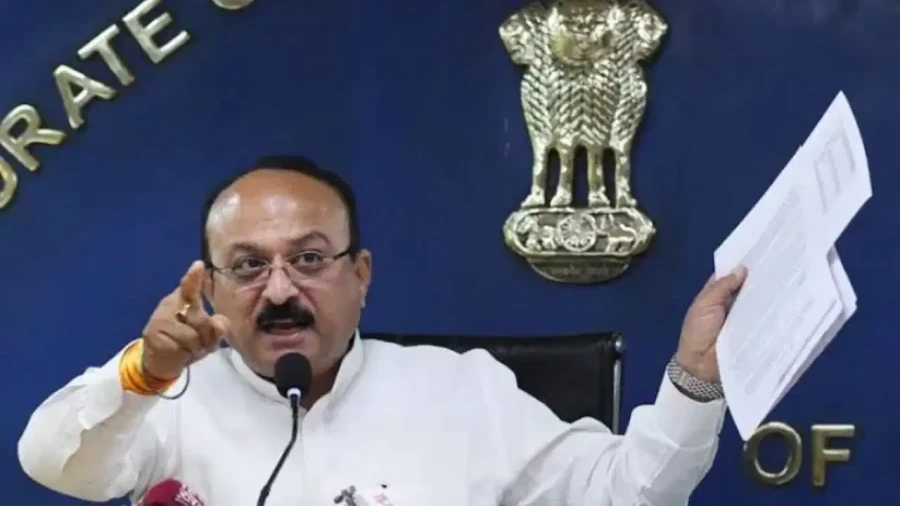
The Delhi Legislative Assembly witnessed a landmark moment on Tuesday, August 11, as it officially passed the Delhi Urban Shelter Improvement Board (DUSIB) Amendment Bill. This legislative move marks the end of a 19 year old administrative framework and signals a significant shift in the city's approach to urban poverty and slum rehabilitation. During the intense discussion on the bill, Delhi's Urban Development Minister Ashish Sood emphasized that the government has taken this historic decision to align with the evolving realities of the national capital. The core of this amendment lies in the extension of the cut-off date for the identification of jhuggi jhopri (slum) clusters. Previously set at January 1, 2006, the new cut-off date has been moved forward to January 1, 2025. This change is expected to bring relief to hundreds of thousands of slum dwellers who were previously excluded from rehabilitation schemes due to the outdated cut-off criteria.
A New Era for Slum Rehabilitation
Minister Ashish Sood articulated that this amendment is far more than a mere legal adjustment; it represents a concrete commitment to providing a better quality of life, permanent housing, and dignified rehabilitation for the poor and slum residents of Delhi. By updating the cut-off date to 2025, the government is acknowledging the growth and migration patterns of the last two decades. This expansion also broadens the scope of DUSIB's responsibilities, particularly in areas related to redevelopment, civic improvement, and resettlement. The minister noted that the previous 2006 limit had become a bottleneck, preventing many deserving families from accessing basic housing rights. With the new law, the government aims to integrate these residents into the formal urban fabric of the city.
Focus on In-Situ Development Model
The government has reiterated its commitment to the In-Situ Development model. Minister Sood stated that under the guidance of Prime Minister Narendra Modi and the leadership of Chief Minister Rekha Gupta, the Delhi government will prioritize building permanent houses for slum dwellers at their current locations. This approach, often referred to as "Jahan Jhuggi, Wahi Makan," is designed to ensure that the residents' livelihoods and social networks remain intact. By providing better and permanent housing within their existing neighborhoods, the government seeks to minimize the adverse impact on their employment and social lives that often accompanies relocation to distant areas.
Critique of Previous Administrations
During his address, Minister Ashish Sood took a sharp aim at the opposition and previous governments. He pointed out that for years, slogans like "Affordable Housing for All" and "Jahan Jhuggi, Wahi Makan" were used as political tools without bringing any real change to the lives of the poor. He specifically mentioned that while the 70 point agenda of 2015 and the 2020 election manifestos included promises of affordable housing and in-situ development, no comprehensive solutions were implemented on the ground for years. The minister accused the opposition of misleading the poor through fear-based politics and empty slogans, while in contrast, he asserted that the current government is working with a clear law, a clear policy, and a clear action plan to deliver on its promises.
Significant Increase in DUSIB Spending
The minister presented financial data to highlight the government's priorities. He noted that in 2014, approximately 206 crore rupees were spent on works related to slum clusters. In contrast, the budget for the year 2025-26 has seen a significant increase, reaching 346 crore rupees. Also, the expenditure on the maintenance of toilets in JJ clusters has seen a massive jump. In 2014-15, about 17 crore rupees were spent on this, whereas for the year 2025-26, the allocation has risen to 76 crore 94 lakh rupees. Minister Sood also alleged that previous governments used to release the final installment of funds for DUSIB just before the end of the financial year, making it difficult to take advantage of the money effectively for the welfare of the poor. The current administration has reformed this system to ensure effective implementation of schemes.
Integrated Model of Antyodaya
The Urban Development Minister emphasized that the government's vision extends beyond just providing houses. Under the leadership of Chief Minister Rekha Gupta, the government is working on an integrated model that prioritizes housing, food, health, education, employment, and dignity. This is part of the government's "Antyodaya" philosophy, which focuses on the upliftment of the last person in the social hierarchy. Initiatives like the Atal Canteen, which provides nutritious food to poor families in JJ clusters, are a testament to this holistic approach. The goal is to ensure a comprehensive transformation in the lives of the underprivileged.
Response to Opposition Walkout and GeM Portal Allegations
Minister Sood also criticized the opposition for walking out of the house during such a crucial discussion. He stated that when a bill concerning the future and homes of the poor was being discussed, the opposition should have participated constructively instead of trying to distract the house with issues like rice, medicine, and cycles. Addressing the allegations regarding the purchase of cycles through the GeM portal, the minister clarified that the Government e-Marketplace (GeM) is a transparent procurement system. He explained that if a seller's bid is L1 (lowest) according to the rules, the purchase is made from them following the set procedure, leaving no room for individual bias. He defended the government's decision to provide cycles to girl students as a public interest initiative that shouldn't be maligned for political gains.
Empowerment Over Liquor Politics
In his concluding remarks, Ashish Sood stated that the people of Delhi have rejected negative politics in favor of development and public welfare. He contrasted the current government's focus on women's empowerment with the previous administration's alleged promotion of liquor politics, while he highlighted several initiatives, including providing cycles to 9th grade girl students, financial assistance of 2500 rupees for women, and free LPG cylinders during festivals like Holi and Diwali. The minister concluded by saying that the 19 year old problem of slum rehabilitation is finally being addressed with legal and administrative solutions. While the transition might be challenging, it's a necessary step toward providing permanent homes and a life of dignity to the poor.