
- India,
- 16-May-2026 08:20 PM IST



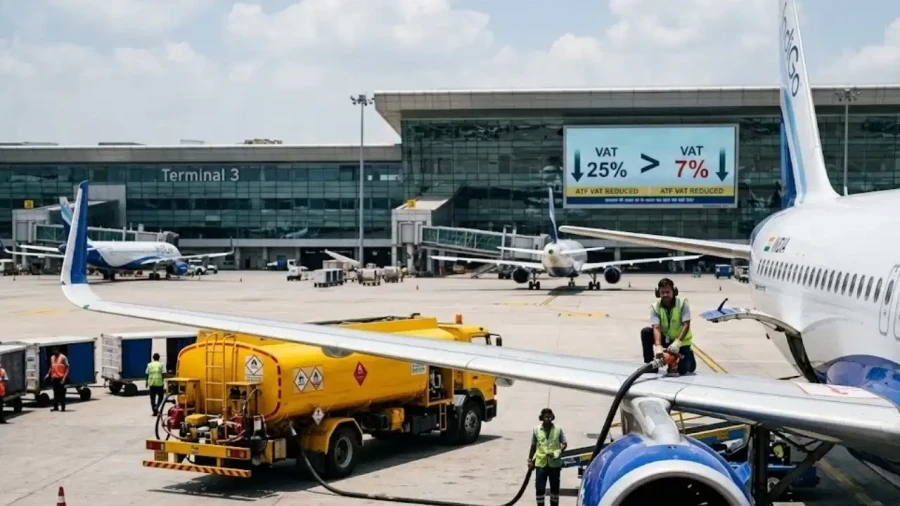
In a significant move aimed at boosting the aviation sector and providing relief to air travelers, the Rekha Gupta-led Delhi government has announced a substantial reduction in the Value Added Tax (VAT) on Aviation Turbine Fuel (ATF). The government has decided to slash the VAT from the existing 25% to a mere 7%. This decision is expected to provide much-needed breathing room for airline companies and potentially lead to a reduction in airfares for passengers traveling through the national capital.
Relief Amidst Global Fuel Price Surge
The timing of this decision is crucial, as global fuel prices have been skyrocketing due to ongoing tensions in West Asia. These geopolitical instabilities have put immense pressure on the aviation industry worldwide. By reducing the local tax burden, the Delhi government aims to mitigate the impact of rising international crude oil prices. For years, the high VAT on fuel in Delhi has been a major point of contention for airlines, often cited as a primary reason for high ticket prices and operational challenges.
Learning from the Maharashtra Model
The Delhi government's move follows a similar strategy adopted by the Maharashtra government earlier. In Maharashtra, a reduction in fuel taxes led to a significant increase in the number of flights and overall passenger traffic. The Delhi administration claims that this decision will benefit all passengers and airline operators alike. It's believed that the high cost of ATF and VAT was one of the reasons for the relatively lower passenger footfall observed at the airport recently. This tax cut is expected to reverse that trend and encourage more frequent flying.
A Strategic Move for Aviation Hub Status
Industry experts have long advocated for lower taxes to strengthen the financial health of airlines and maintain Delhi's competitive edge as a major aviation hub. The reduction from 25% to 7% will initially be implemented for a period of 6 months. This trial period will allow the government to assess the impact on revenue and passenger growth. If successful, it could pave the way for a more permanent tax structure that supports the long-term growth of the aviation ecosystem in the region.
Alignment with Central Government Appeals
The Union Ministry of Civil Aviation has been consistently urging state governments to reduce VAT on ATF, while the central government believes that during times of global crisis, the tax burden on airlines should be minimized to keep the domestic aviation network stable. While the center has already introduced measures such as fixing ATF prices for domestic operators, reducing airport charges, and implementing the Emergency Credit Linked Guarantee Scheme, VAT remained a significant cost component at the state level. Across India, VAT on ATF varies widely, ranging from 4 to 30 percent. Several BJP-ruled states have already begun cutting these taxes, and Delhi's move is seen as a step to stay competitive with neighboring states.
Impact on Airline Operations
Aviation Turbine Fuel is the single largest operating expense for airline companies, often accounting for 35-40% of their total costs. A reduction in VAT directly impacts the bottom line of these companies, while by lowering the cost of fuel, the government is helping airlines manage their expenses better, which in turn can prevent sharp hikes in airfares. This support is vital for the sustainability of the airline sector, especially during periods of economic uncertainty and high operational volatility.