

- India,
- 19-Dec-2025 08:27 AM IST


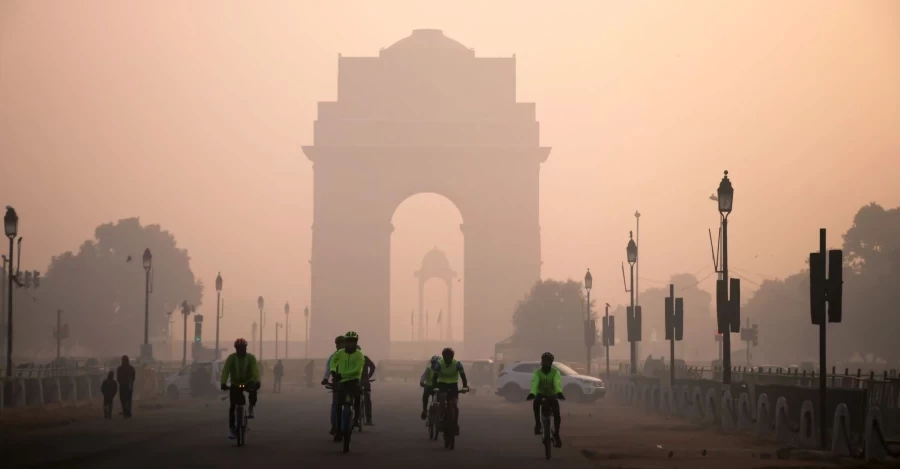
The national capital Delhi and its surrounding National Capital Region (NCR) are once again grappling with alarming levels of air pollution. The toxic air has led to widespread breathing difficulties and a persistent sense of suffocation among residents. According to data from the Central Pollution Control Board's (CPCB) Sameer app, Delhi's overall Air Quality Index (AQI) was recorded at 387 at 7:05 AM on Friday, December 19, placing it in the 'very poor' category. However, the severity of the situation is underscored by the fact that 16 out of the 40 active pollution. Monitoring stations in Delhi registered AQI levels in the 'severe' category, meaning their readings ranged from 401 to 500.
Delhi's Alarming Air Quality Hotspots
Several key areas across the capital have witnessed dangerously high AQI levels. RK Puram recorded the highest Air Quality Index at a staggering 447, firmly placing it in the upper end of the 'severe' category, a level considered extremely detrimental to health, while Plus, prominent monitoring centers such as Anand Vihar, Sirifort, and Vivek Vihar all registered an AQI of 442. These densely populated areas are experiencing the direct impact of this severely polluted air, affecting the health of millions, while dr. Karni Singh Shooting Range and NSIT Dwarka stations also reported an AQI of 423, indicating that. The southern and western parts of the city are equally affected by the deteriorating air quality.
Detailed Readings Across the Capital
Other parts of Delhi also continue to battle alarming pollution levels. Dwarka Sector-8 recorded an AQI of 429, posing a significant health challenge for residents in this residential hub. Both ITO and Mundka monitoring centers registered an AQI of 409, while Jahangirpuri and Rohini both recorded an AQI of 401. Nehru Nagar (425), Okhla Phase 2 (422), Patparganj (415), Punjabi Bagh (418), and Wazirpur (406) were among the other monitoring centers where air quality was categorized as 'severe. ' These figures clearly illustrate that a substantial portion of Delhi is currently engulfed in toxic air, escalating the risk of respiratory illnesses and other health complications for its inhabitants.
NCR Cities Grapple with Poor Air
To combat this severe crisis of escalating pollution, the Commission for Air Quality Management (CAQM) has implemented all stringent measures under Stage-IV of the Graded Response Action Plan (GRAP) across Delhi-NCR. GRAP-IV represents the most stringent set of measures for pollution control, typically invoked when air quality reaches the 'severe plus' or 'emergency' category. This stage includes a complete ban on construction activities, restrictions on the entry. Of trucks, and other strict actions aimed at immediately curbing sources of pollution. CAQM's decision underscores the gravity of the deteriorating air quality in Delhi-NCR and.
Signifies that authorities are taking every possible step to bring the situation under control. Neighboring cities within the NCR region aren't immune to this pollution onslaught. Haryana's Bahadurgarh, Ballabgarh, Gurugram, and Manesar, along with Uttar Pradesh's Ghaziabad, Greater Noida, and. Noida, also recorded Air Quality Index levels in the 'very poor' and 'severe' categories. Noida's overall AQI was recorded at 422 at 7:05 AM, placing it firmly in the 'severe' category, while three out of Noida's four monitoring centers – Sector-1 (469), Sector-116 (424), and Sector-125 (428) – registered air quality in the 'severe' category. However, Noida's Sector 62 station recorded an AQI of 369, falling into the 'very poor' category.
Gurugram and Ghaziabad Also Suffer
Gurugram recorded an AQI of 321, with two out of its three stations – NISE Gwal Pahari (393) and Sector 51 (326) – registering air quality in the 'very poor' category. Ghaziabad recorded an AQI of 317, with its Indirapuram (332) and Sanjay Nagar (337) stations also showing air pollution in the 'very poor' category. These figures clearly indicate that the air quality in Delhi's satellite cities is also extremely poor, negatively impacting the health of residents across the entire region. This situation highlights the urgent need for coordinated efforts at a regional level to control pollution.
Impact on Aviation Services
Compounding the air pollution crisis, persistent dense fog has severely impacted aviation services at Delhi airport. Due to reduced visibility, flights are operating under CAT III conditions, resulting in delays for numerous flights, while cAT III is a system that allows aircraft to land in very low visibility, but it restricts the number and speed of operations, causing inconvenience to passengers. This dual challenge of pollution and fog not only poses a significant threat to public health but also has a widespread negative impact on daily life and economic activities.
