

- India,
- 08-Jan-2026 05:47 PM IST


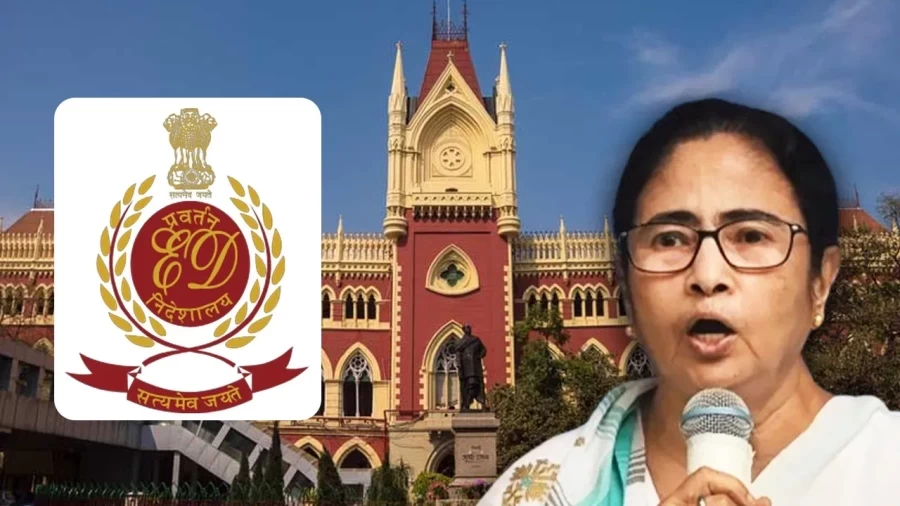
Political tensions flared in West Bengal on Thursday as the Enforcement Directorate (ED) conducted extensive raids on the residence and office of Prateek Jain, who serves as both the head of the Trinamool Congress (TMC) IT cell and the Director of the political consultancy firm I-PAC. The raids are part of an ongoing money laundering investigation linked to an illegal coal trafficking case, sending shockwaves through the state's political landscape. ED teams simultaneously targeted 10 locations, including six in Kolkata, West Bengal, and four in Delhi, indicating a broad scope of investigation into the alleged financial irregularities.
Morning Developments and Escalation of Events
The operation commenced early in the morning, around 6 AM, when ED officials arrived at Prateek Jain's residence. Jain was present at his home during the initial hours of the search. What began as a routine investigative procedure soon escalated into a high-stakes political drama. By approximately 11:30 AM, the situation intensified Notably with the arrival of the Kolkata Police Commissioner at Prateek Jain's residence. This development underscored the growing political sensitivity and the gravity of the ongoing investigation, signaling that the matter was far from a simple legal inquiry.
Chief Minister Mamata Banerjee's Direct Intervention
Following the arrival of the Kolkata Police Commissioner, West Bengal Chief Minister Mamata Banerjee herself made an unexpected appearance at Prateek Jain's Loudon Street residence. The Chief Minister's direct involvement was an extraordinary move, drawing immediate attention and highlighting the political implications of the raids. Mamata Banerjee stayed at the residence for some time, and upon her departure, she was visibly seen carrying a green file, while subsequently, she also visited the I-PAC office, further indicating her deep concern and active engagement in safeguarding her party's interests amidst the central agency's actions.
Mamata's Vehement Accusations Against the Home Minister
Emerging from the scene, Chief Minister Mamata Banerjee launched a scathing attack on the central government, specifically targeting the Union Home Minister. She accused the Home Minister of orchestrating the raids to seize her party's crucial documents, while mamata stated, 'Is the job of the ED and Amit Shah to seize the party's hard disk and list of candidates? This is a cheap and mischievous Home Minister who is unable to protect the country's security. ' She also appealed directly to Prime Minister Narendra Modi, saying, 'Forgive me, Prime Minister, please control your Home Minister. ' Banerjee further alleged that the BJP was using central agencies to 'loot' Bengal's documents, strategies, voters, and data, warning that such actions would reduce the BJP's seat count to zero. She also threatened to file an FIR against the ED's forensic team, signaling a potential legal battle.
ED's Official Stance and Counter-Allegations
In response to the Chief Minister's strong accusations, the Enforcement Directorate issued a statement clarifying its position. The ED asserted that the raids on the I-PAC office in Kolkata were. Entirely based on evidence and weren't connected to any political party or elections. The agency emphasized that the action was part of a specific case related to illegal coal trafficking and money laundering. The ED also stated that the investigation involved premises linked to cash generation and hawala transfers, and no party office had been searched. Plus, the ED made serious counter-allegations, claiming that 'some people holding constitutional positions'. Arrived at two locations, illegally interfered with the investigation, and snatched crucial documents. In response to Mamata Banerjee's threat to file an FIR, the ED promptly approached the Calcutta High Court, with the matter scheduled for hearing before Justice Suvra Ghosh's bench on Friday, escalating the legal confrontation.
BJP's Reaction and Suvendu Adhikari's Comments
The Bharatiya Janata Party (BJP) also weighed in on the unfolding events. BJP leader Suvendu Adhikari refrained from commenting directly on the raids but strongly criticized Chief Minister Mamata Banerjee for allegedly interfering with the work of central agencies. Adhikari stated, 'I won't comment on the raids. The ED can provide details. ' He further added, 'Mamata Banerjee interfered with the work of central agencies, while what Mamata did today was obstruct the investigation. Legal action should be taken against the Chief Minister. ' Suvendu Adhikari also questioned the presence of voter lists at the I-PAC office, asking if I-PAC was a. Party office, suggesting that the BJP intends to use this issue politically and raise questions about the TMC's practices.
Understanding I-PAC: A Political Consulting Firm
I-PAC, or the Indian Political Action Committee, is a prominent political consulting firm. The firm specializes in assisting political parties with electoral strategies, data-driven campaigns, media planning, and voter outreach. Its current Director is Prateek Jain, whose home and office were the targets of the recent ED raids. I-PAC was initially founded in 2013 by Prashant Kishor, along with Prateek Jain, under the name 'Citizens for Accountable Governance (CAG). ' The organization later rebranded itself as I-PAC. After Prashant Kishor's departure from the firm, the leadership of I-PAC was taken over by Prateek Jain, while prashant Kishor subsequently ventured into politics himself, forming the 'Jan Suraj' party in Bihar. I-PAC has been associated with the Trinamool Congress (TMC) since 2021, providing strategic support for their electoral campaigns. The current raids have once again brought I-PAC and its political affiliations into the spotlight.
The Road Ahead: Legal and Political Ramifications
This series of events is likely to further intensify the political climate in West Bengal. While the ED remains steadfast in its investigation, Chief Minister Mamata Banerjee continues to portray it as political vendetta orchestrated by the central government. The upcoming hearing in the Calcutta High Court will be a crucial juncture, marking the next chapter in the legal battle between the ED and the state government, while the entire episode is poised to have significant repercussions on the state's politics and upcoming elections, serving as a prominent example of the ongoing conflict between the alleged misuse of central agencies and the assertion of state government's rights.
