
- India,
- 29-Sep-2026 01:28 PM IST



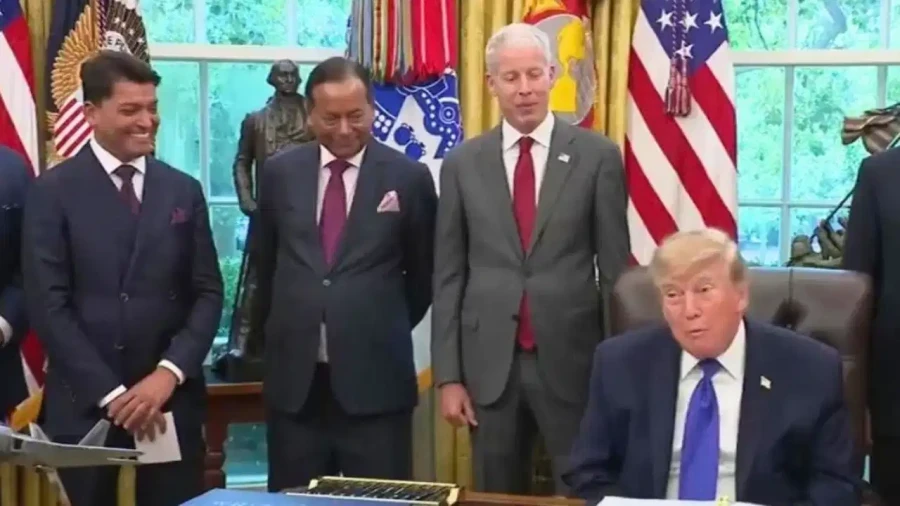
In a significant move to bolster the American industrial sector, US President Donald Trump has announced a massive 15 billion dollar steel complex project in Iowa. This ambitious venture will be spearheaded by Mesabi Metallics, a subsidiary of the prominent Indian multinational conglomerate, the Essar Group. The announcement, made during a high-profile event in Iowa on Monday, marks a pivotal moment in the administration's strategy to rejuvenate domestic manufacturing. President Trump, who met with Mesabi Metallics officials at the White House, described this investment as a monumental boost for the United States economy and a cornerstone of his trade policy.
The Largest Steel Plant in American History
According to the White House, the proposed facility is envisioned to be the largest steel plant ever constructed in the history of the United States. President Trump revealed that the Essar Group is committing a total investment of 18 billion dollars across its various operations in the country. This includes the 15 billion dollar allocation for the Iowa steel complex and additional investments in mining and infrastructure. Revant Ruia, the Chairman of Mesabi Metallics, expressed his gratitude to President Trump for his unwavering support in promoting domestic manufacturing. Ruia emphasized that the project aims to restore the importance of making things within the United States, thereby completing a fully integrated American supply chain.
Integrated Supply Chain: From Minnesota to Iowa
The proposed steel complex is designed as a fully integrated operation. Mesabi Metallics plans to take advantage of iron ore extracted from its own mine in Minnesota and transport it to the new facility in Iowa for processing into steel, while 5 million tons of steel annually during its first phase. There are plans to eventually scale up this production to 10 million tons per year. The first production of steel is anticipated to commence by the year 2030. This project is intrinsically linked to Mesabi Metallics' new iron ore mine in Nashwauk, Minnesota. The company has already invested more than 2 billion 500 million dollars in developing this mine.
Reviving the Mesabi Iron Range
President Trump highlighted the strategic importance of the Minnesota operation, noting that it represents the first new iron ore mine in the United States in over five decades. The mine is situated in the historic Mesabi Iron Range of Minnesota. According to the US Geological Survey, this range spans approximately 80 to 100 miles and was responsible for nearly 60 percent of the total iron ore production in the United States during the 20th century. 5 million tons of iron annually and create around 350 jobs in Minnesota. This development is seen as a major step in securing the raw materials needed for domestic steel production.
Economic Impact and Job Creation
The Iowa project is set to Notably expand the Essar Group's footprint in the US steel and mining sectors, while the federal government has also shown strong support, with a federal agency indicating earlier this month that it would provide up to 10 billion dollars in funding for the project. John Jovanovic, the Chairman of the Export-Import Bank, recently visited the Minnesota mine to assess the progress. Once operational, the Iowa plant is expected to create at least 1,750 permanent jobs. Also, a White House official estimated that the construction phase alone could generate between 5,000 and 6,000 additional jobs. Over the first 10 years of construction and operation, the project is projected to have a total economic impact of approximately 95 billion dollars.
Strategic Location and Policy Context
The choice of Iowa for the steel plant, despite the iron ore being mined 250 miles away in Minnesota, is driven by several strategic factors. Lower commercial electricity costs in Iowa compared to Minnesota are a significant consideration for energy-intensive steel manufacturing. On top of that, the location places the plant closer to major markets and industrial customers in the Midwest. This project aligns with President Trump's broader economic agenda, which includes using tariffs to encourage domestic production, while trump recently increased tariffs on most imported steel to 50 percent, arguing that these duties incentivize companies to build manufacturing units in the US rather than paying import taxes. The steel industry has largely supported these measures, urging the administration to maintain tariffs as they invest in new domestic production facilities.
#WATCH | Washington DC | Mesabi Metallics chairman Rewant Ruia says, "Thank you, US President Donald Trump, for bringing back the importance of building things in America... With the new steel complex in Iowa, we will complete the fully integrated American supply chain, from mine to mill..." (Source: The White House)
— ANI (@ANI) September 28, 2026