

- India,
- 31-Dec-2025 07:01 PM IST


Jaipur, December 31, while the economic condition of farmers in Rajasthan is continuously improving, a testament to the various welfare schemes of both central and state governments, coupled with the innovative practices adopted by the farmers themselves. This observation was made by Chief Secretary Mr. V. Srinivas during his recent visit to the State Agricultural Research Institute (RARI), Durgapura, Jaipur. He underscored that modern technology and research-based farming are propelling Rajasthan's agricultural sector to new heights, leading to a remarkable increase in farmers' income.
Innovation and Progress in the Agricultural Sector
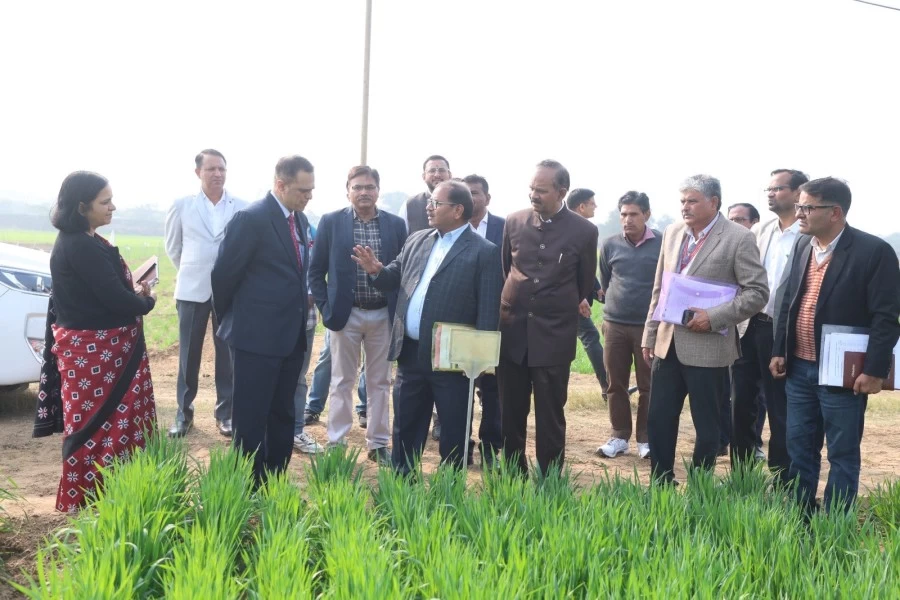
Chief Secretary Mr, while v. Srinivas conducted an extensive tour of the RARI campus, agricultural fields, and Shyam Durgapura. During his visit, he closely observed and highly praised the positive and widespread changes occurring in the agricultural sector. He specifically highlighted that today's farmers are rapidly adopting modern techniques, moving away from traditional methods. This trend, he noted, is a clear indication of the success of the state government's agricultural policies, which are proving effective at the grassroots level. He cited the establishment of the carrot market in Sriganganagar as a successful and exemplary initiative in increasing farmers' income, demonstrating the significant benefits that well-implemented marketing strategies can bring to the agricultural community.
Dialogue with Farmers and Addressing Challenges
In a significant dialogue program held at Shyam Auditorium, the Chief Secretary met with progressive farmers from across the state and officials from the Agriculture Department, while on this occasion, he attentively listened to the success stories of farmers, gathered information about their agricultural innovations, and discussed in detail the challenges faced by farmers at the ground level. Mr. Srinivas assured the farmers that their problems would be addressed, ensuring that no obstacles hinder the path of agricultural progress, while the objective of this dialogue was to establish direct communication between farmers and policymakers, thereby making policies more farmer-centric and responsive to their needs.
Call for Participation in Global Rajasthan Agritech Meet-2026
The Chief Secretary urged farmers to ensure active participation in the upcoming Global Rajasthan Agritech Meet-2026 (GRAM), while he informed that this three-day state-level event is expected to be a significant milestone in the agricultural sector, with over 50,000 farmers likely to participate. The primary objective of the Global Rajasthan Agritech Meet (GRAM) is to promote innovation in. Agriculture, showcase smart farming techniques, disseminate modern agricultural technologies, and encourage investment in the agricultural sector. Through this event, Rajasthan aims to establish itself as a leading state in agricultural exports, providing farmers in the region access to global markets and enhancing their economic prospects. To enhance the capabilities of farmers and expose them to global agricultural. Practices, the Chief Secretary emphasized the critical importance of foreign exposure visits. He informed that under the state government's Knowledge Enhancement Program, a group of farmers has already undertaken a foreign tour, where they studied advanced agricultural techniques and successful models. Soon, a second group of farmers will also be sent abroad with the. Aim of acquiring knowledge about advanced agricultural techniques and implementing them in their fields. This initiative is expected to help farmers increase their yield and productivity, leading to further growth in their income and overall prosperity.
Emphasis on Farmers' Foreign Exposure Visits
Discussions on Diverse Agricultural Practices
During the dialogue program, the Chief Secretary extensively gathered information from progressive farmers on various crops and agricultural practices. These included mustard cultivation, the benefits of organic farming, and advanced varieties of specific crops like cumin, fenugreek, and psyllium, while Also, he discussed the production of horticultural crops such as pomegranate, custard apple, amla, garlic, carrots, and capsicum, as well as rose cultivation, the importance of medicinal plants, and allied businesses like beekeeping. The objective of this comprehensive discussion was to understand the innovations and successes occurring in diverse. Agricultural sectors, so that these best practices could be disseminated to other farmers across the state.
Making Agricultural Research Farmer-Centric
During his visit to RARI, the Chief Secretary thoroughly inspected research trials related to Kharif and Rabi crops, demonstration units, seed production fields, and laboratories, while scientists provided him with detailed information about climate-resilient varieties being developed, advanced crop management techniques, integrated pest management strategies, soil health improvement measures, and technologies to enhance water use efficiency. The Chief Secretary directed that agricultural research should be made more practical, farmer-centric, and aligned with regional requirements. He also emphasized better coordination among the Agriculture Department, research institutions, and the extension system to ensure that research outcomes reach farmers promptly. Plus, he issued instructions to strengthen farmer training programs and field-level demonstrations, and to ensure the timely availability of quality seeds. Present on this significant occasion were Principal Secretary Agriculture & Horticulture Mrs. Manju Rajpal, Agriculture Commissioner Ms. Chinmayi Gopal, Horticulture Commissioner Mrs. Shubham Chaudhary, Vice-Chancellor of Agricultural University Jobner Dr. Pushpendra Singh Chauhan, Director of Agricultural Marketing Department Mr. Rajesh Kumar Chauhan, Dr. Shyam Singh Kushwah along with several other officials from the Agriculture and. Horticulture departments, RARI scientists, and progressive farmers from various districts of the state. This visit signals a positive outlook for Rajasthan's agricultural future, focusing on innovation and farmer welfare.
