

- India,
- 09-Nov-2025 08:58 AM IST


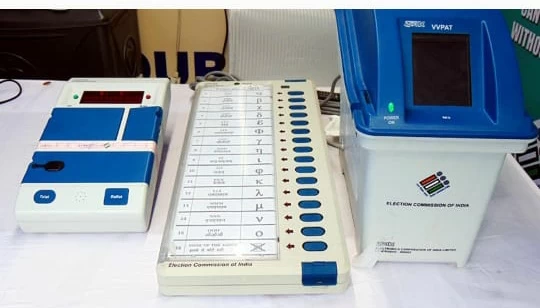
The atmosphere in Bihar is charged with assembly elections, with the first phase of voting already concluded and preparations for the second phase in full swing. Over 74. 2 million voters are exercising their franchise across more than 90,712 polling booths. During this electoral process, a fascinating question often arises: when thousands of booths are simultaneously conducting voting and EVM machines aren't connected to the internet, how does the Election Commission receive updates every one to two hours stating, 'So-and-so assembly constituency has recorded X percent voting by 11 AM'? How do these figures reach the Election Commission so rapidly, appearing on the Voter Turnout App within moments? To find the answer to this intriguing question, the INDIA TV team spoke with Himanshu Shukla, who has served as a presiding officer in elections, and he explained the entire process of how voting turnout data reaches the Election Commission so swiftly from every polling booth.
The Truth About EVMs and Internet Connectivity
Himanshu Shukla confirmed that it's indeed true that EVMs don't have any internet connection. Nor do these machines automatically transmit real-time data to the Election Commission. This is a crucial fact that ensures the security and impartiality of the EVMs. Behind the rapid transmission of data lies a well-organized human and technical process, meticulously designed by the Election Commission. This process ensures that voting information reaches the commission securely and accurately, without any external interference, maintaining the integrity of the electoral exercise.
The Role of the MPS App
The Importance of Sector Magistrates
Before the polling day, the Election Commission provides intensive training to all election staff, especially the presiding officers. During this training, they're provided with an APK file by the Election Commission. Upon clicking this file, the staff are redirected to the MPS (Matdaan Pratishat Suchna Pranali - Voting Percentage Information System) App. To log in to this app, they must use the registered mobile number they had previously provided to the Election Commission. Through this app, the presiding officer is required to report the start of voting at the polling booth at 7 AM. Subsequently, every two hours, they must update the app with the number of women and men who have cast their votes at the polling booth. In this manner, voting turnout data from every polling booth rapidly reaches the Election Commission concurrently with the ongoing voting, and this data is then displayed on the ECI's Voter Turnout App. This app acts as a digital bridge, conveying information directly from the ground level to the Election Commission. In addition to the MPS app, there is also an alternative and supplementary method for data transmission, while himanshu Shukla explained that every presiding officer is required to report to their respective sector magistrate. Besides sending data through the app, presiding officers also provide voting turnout data to the sector magistrate every two hours via phone. This dual reporting system ensures that data can reach the Election. Commission even in the event of any technical glitches or network issues. From the start of voting at 7 AM to the polling conducted throughout the day and when voting concludes in the evening, all this information must be provided by the presiding officer to the sector magistrate, while the sector magistrate then relays this information to the next level, maintaining the accuracy and timeliness of the data.
Reasons for Discrepancies in Final Figures
Occasionally, there is a slight difference between the figures reported by news channels on the evening of the polling day and the final voting turnout released by the Election Commission a day or two later. According to Himanshu Shukla, a primary reason for this is that any voter who arrives at the polling booth before the official closing time must be allowed to cast their vote, regardless of how late it gets. In such cases, voting at some booths may continue for an hour or two, or even longer. When voting extends late, this data is also uploaded to the app with a delay. It's possible that when the Election Commission releases the final voting turnout figures, this delayed. Data is included, leading to a slight difference between the preliminary estimates and the final figures. This discrepancy is due to procedural delays, not any inaccuracy in the data itself. This system ensures that every valid vote is counted and the final figures are completely accurate.
