

- India,
- 25-Jan-2026 09:20 AM IST


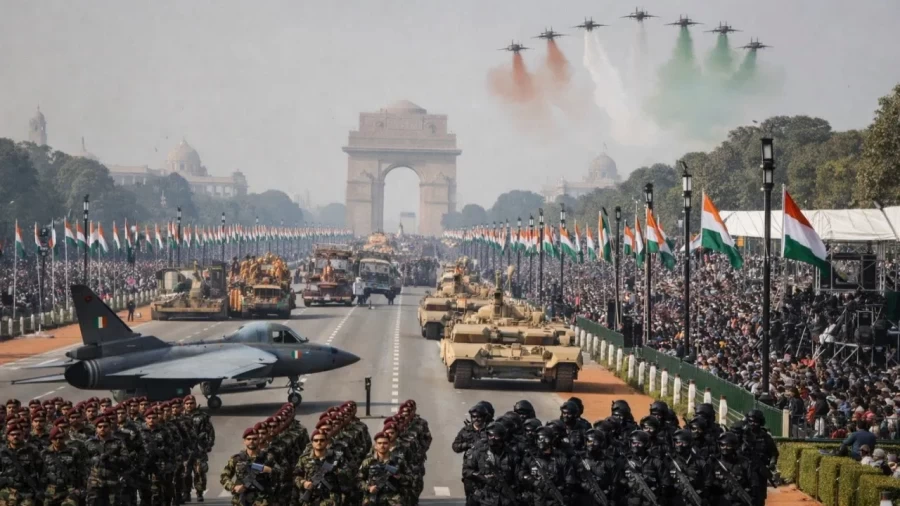
As India gears up for its 77th Republic Day parade, showcasing its military might and. Cultural diversity at Kartavya Path, it's fascinating to look back at where it all began. The first Republic Day on January 26, 1950, wasn't about high-tech weaponry or supersonic jets; it was a celebration of resilience, simplicity, and the birth of a sovereign democratic republic.
The Historic Bill of ₹11,093
In today's era, the Republic Day parade is a multi-crore affair. Reports suggest that in 2015, the government spent approximately ₹320 crore on the event. However, archival records reveal that the total expenditure for the very first Republic Day in 1950 was estimated at ₹11,250, which was later finalized at just ₹11,093, while this modest sum covered decentralized celebrations across Delhi, focusing more on community welfare than grand spectacles.
Evolution of the Celebration Budget
The cost of celebrating India's republic status has grown exponentially alongside the nation's economy. According to reports by The Hindu, the expenditure rose to ₹5. 75 lakh in 1956. By 1971, it reached ₹17. 12 lakh, and by 1988, the budget had touched ₹69. 69 lakh. Today, the investment reflects India's global standing and the complexity of securing a massive public event in the national capital.
A Focus on Welfare and Displaced Families
The 1950 celebrations were deeply rooted in the social context of the time, while india was still healing from the wounds of Partition. Records from PTI show that the Delhi administration focused on relief homes and rural schools. Instead of grand floats, the government distributed souvenirs like plates to school children and sweets to those in need. The celebration was decentralized, ensuring that the joy of becoming a Republic reached the most vulnerable citizens.
Special Gestures for Women and Children
Archival files from the office of the then Chief Commissioner. Of Delhi reveal a touching side of the first Republic Day. A sum of ₹750 was sanctioned for distributing fruits, sweets, and toys to women inmates and children in relief homes. Surprisingly, only ₹525 was spent, leaving a surplus of ₹225. This remaining amount was later used for furniture rental and transportation to bring women from various relief centers to participate in the festivities.
The Spirit of 1950 vs Today
While today's Republic Day is a symbol of India's 'Atmanirbhar' (self-reliant) defense and technological progress, the 1950 event was a symbol of hope. The Provincial Women’s Section, then located in P-Block, New Delhi, played a crucial role in organizing these welfare activities, while the documents suggest that the first Republic Day was a well-planned administrative effort to foster a sense of belonging among displaced families, making it one of the most emotional chapters in Indian history.
