
- India,
- 30-Sep-2026 01:25 PM IST



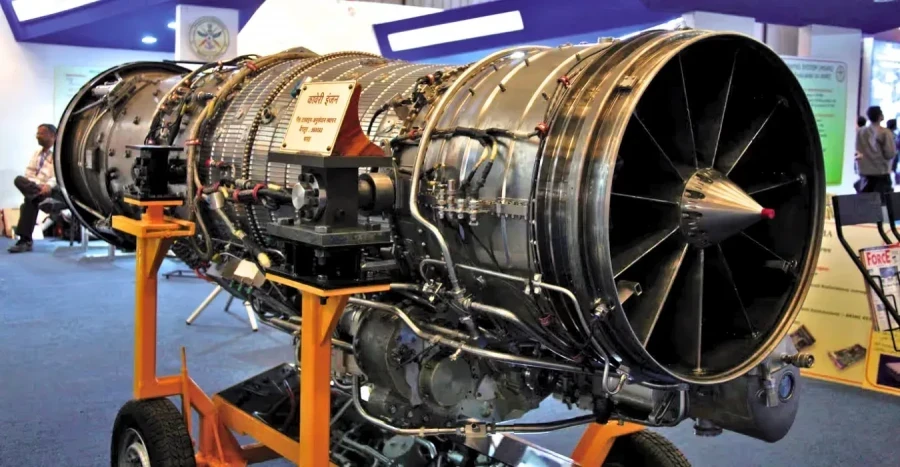
India's indigenous Kaveri engine has achieved a significant breakthrough during its flight trials conducted in Russia, marking a major milestone for the country's aerospace sector. 5 kilonewtons (kN) during the testing phase. This performance is particularly noteworthy as the initial target for the engine was set at approximately 46 kN. By surpassing this benchmark, the Kaveri engine has demonstrated superior performance and reliability on an international testing platform, reinforcing India's reputation in high-end engineering.
Technical Specifications and Testing Environment
The specific variant tested is the dry engine version of the Kaveri, which is designed to operate efficiently without the use of an afterburner. This design choice is strategic, as the engine is being specifically developed to power India's future Unmanned Combat Aerial Vehicles (UCAV), also known as stealth combat drones, while the flight trials were carried out using the sophisticated facilities available in Russia, specifically at the Central Institute of Aviation Motors (CIAM) and the Gromov Flight Research Institute. To facilitate these high-altitude and high-speed tests, an Ilyushin IL-76 flying testbed was utilized, allowing engineers to monitor the engine's performance under real-world flight conditions. The success of these trials is a testament to the persistence of Indian scientists who have worked on this project for decades.
From Tejas to Stealth Drones
The journey of the Kaveri engine has been one of resilience. Originally, the Kaveri engine was envisioned as the primary indigenous powerplant for the Light Combat Aircraft (LCA) Tejas. However, during its initial development phases, the engine struggled to meet the specific high-thrust requirements necessary for a supersonic fighter jet like the Tejas, while consequently, the project was often labeled as a setback in India's defense narrative. Despite these challenges, the technology developed for the Kaveri wasn't abandoned. Instead, the focus shifted toward repurposing the engine for other critical platforms. 5 kN thrust is more than sufficient for stealth operations.
Future Roadmap and Strategic Impact
5 kN thrust is a pivotal moment for the Kaveri program, but it isn't the final step. Before the engine can be deployed for operational use, it must undergo a series of further rigorous evaluations. If these subsequent stages are completed successfully, India will secure a massive advantage in the field of combat drone technology. Having an indigenous engine means India will no longer be dependent on foreign suppliers for the heart of its stealth drone fleet. This trial is viewed as a critical step in strengthening India's indigenous aero-engine technology and its overall combat drone capabilities, ensuring a more self-reliant defense infrastructure.