
- India,
- 06-Nov-2026 09:09 PM IST



United States President Donald Trump has raised significant questions regarding the American law that bans the import of Russian petroleum products, stating during a briefing that he will take a look at it. However, amidst ongoing controversy surrounding his administration's approval of Russian diesel transactions, he didn't announce any definitive policy changes, while when a reporter informed President Donald Trump that the United States Congress had passed this specific legislation and that then-President Joe Biden had signed it into law in the year 2022, President Donald Trump responded by remarking that perhaps that's precisely what makes it a very bad law, adding that he will certainly look into the matter in detail.
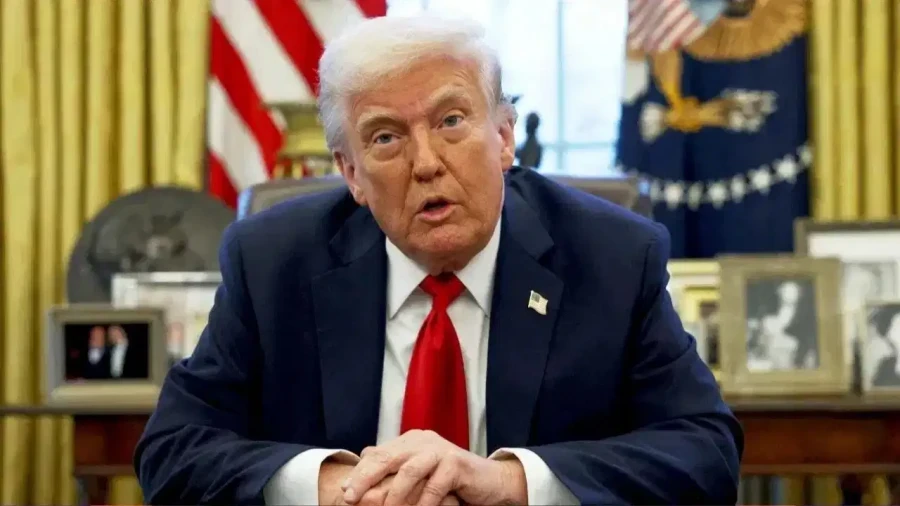
To provide proper context, while inside the Oval Office, President Donald Trump was asked about a specific tanker crossing the Atlantic Ocean carrying Russian diesel that was allegedly headed toward the United States, while he was specifically questioned about the legal restrictions preventing the offloading of its cargo at American ports. Initially, President Donald Trump inquired whether this particular ban fell under the purview of the Jones Act. A reporter then clarified that the question was directly connected to the legislation enacted back in the year 2022. Nevertheless, President Donald Trump's response lacked any specific timeline, proposed amendments, or any detailed explanation regarding how the current American administration intends to reconcile its diesel approvals with the existing legal import ban. He also made no official declaration stating that the ban had been officially lifted or dismantled.
Procedure regarding the termination of the Russian oil import ban
It's important to understand that the legislation aimed at halting Russian oil imports, which was signed into law on April 8 2022, imposes a separate and distinct ban on the importation of Russian products classified under Chapter 27 of the Harmonized Tariff Schedule of the United States. However, the legislation itself outlines a formal procedure through which this ban can theoretically be lifted or terminated. To execute this, the law requires presidential certification regarding several critical conditions. These include a recognized and approved Russian withdrawal and cessation of hostilities by Ukraine, the complete absence of any immediate Russian military threat directed against NATO member nations, and the formal recognition of the Ukrainian people's fundamental right to freely choose their own government. Without fulfilling these extensive diplomatic prerequisites, altering the legislative framework remains an exceptionally complex task.
On top of that, the United States Congress plays a vital and indispensable role in any potential termination of this law. The statutory framework explicitly mandates prior consultations with the relevant committees of the United States Congress. Following such presidential certification, a mandatory 90 day review period is initiated, after which the termination can only become legally effective unless the United States Congress successfully passes a joint resolution of disapproval. Current Treasury department licenses don't contain documentation confirming the full completion of this rigorous legal procedure. This procedural complexity has generated intense debate among policy experts and lawmakers alike, keeping the future of these sanctions under constant public scrutiny.
New Jersey Governor reminds administration of established rules
It's also noteworthy that just three days prior to President Donald Trump's recent statements, specifically on November 2, New Jersey Governor Mikie Sherrill issued a formal letter addressed to port and terminal operators strongly challenging these administrative approvals. In her communication, she explicitly wrote that the Trump administration's authorization allowing the import of Russian petroleum products is in direct violation of federal law. Governor Mikie Sherrill argued forcefully that the governing statute never granted the executive branch the unilateral authority to waive such statutory prohibitions through the issuance of administrative licenses. Her intervention sparked widespread political discourse regarding executive overreach and the strict enforcement of congressional mandates.
Amidst this unfolding sequence of events, American domestic politics experienced another major jolt with reports indicating preparations to introduce impeachment proceedings against Donald Trump. Having faced significant setbacks and losses during the recent midterm elections, President Donald Trump now finds himself entangled in a new wave of political turmoil. Political analysts suggest that this brewing controversy over Russian diesel and petroleum transactions, combined with the looming threat of impeachment, could generate severe additional domestic hurdles for the administration in the coming days. As these intricate domestic and international political dynamics continue to evolve, observers are watching closely to see how the administration navigates this stringent statutory ban on Russian fuel imports and whether its ongoing friction with Capitol Hill will escalate further.