
- India,
- 06-Nov-2026 09:14 PM IST



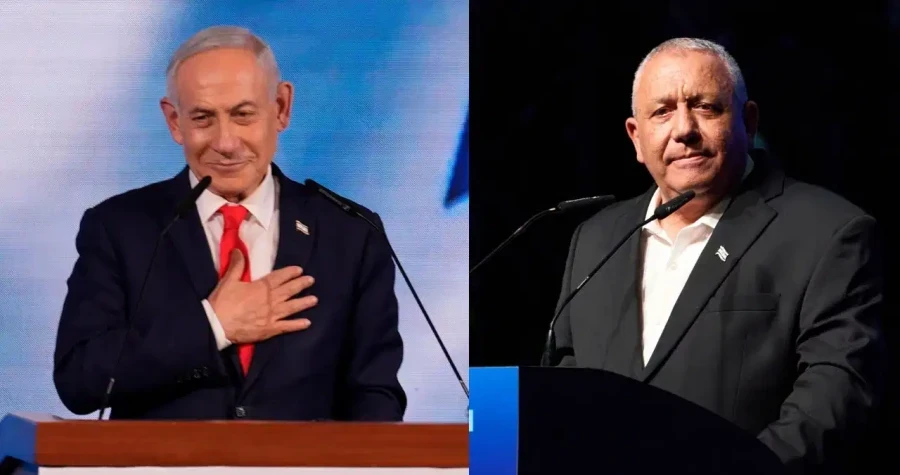
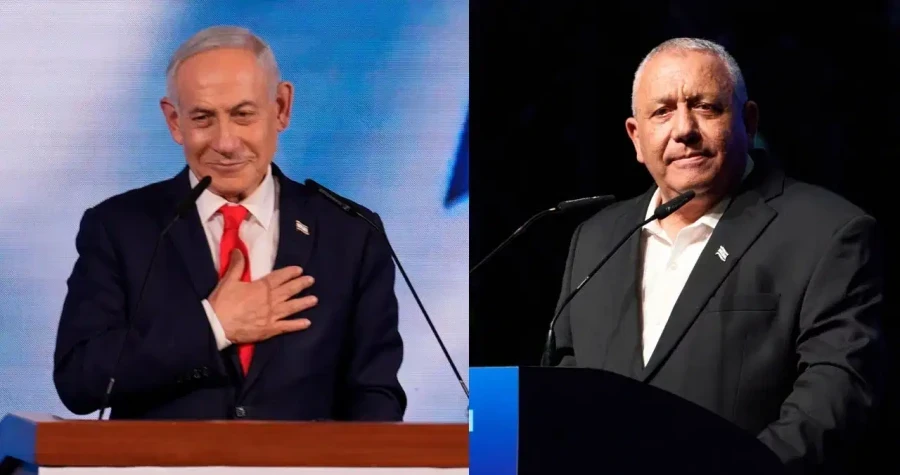
Political activity has intensified dramatically in Israel regarding the formation of a new government following the release of recent parliamentary election results. Prime Minister Benjamin Netanyahu faces a mounting crisis regarding his grip on power, while his principal rival and former military chief, Gadi Eizenkot, has secured the backing of a majority of the parliament members. Amidst this deep political uncertainty, the eyes of the entire nation are firmly fixed on Israeli President Isaac Herzog, who will decide which leader is entrusted with the initial opportunity to form the government. Ever since the conclusion of the elections, political turbulence has persisted across Israel, accompanied by intense behind-the-scenes negotiations among various political factions.
The Arithmetic of Lawmaker Support and Eizenkot Position
During the formal consultation process held on Thursday, sixty-seven members of the one hundred and twenty-seat Knesset expressed their explicit support in favor of Gadi Eizenkot. In sharp contrast, incumbent Prime Minister Benjamin Netanyahu managed to secure the backing of only forty-six lawmakers. Despite this substantial numerical advantage, it remains entirely unclear whether Eizenkot will successfully navigate the political landscape to assemble the necessary and stable coalition required to form a government. He faces the formidable challenge of bringing together parties holding vastly divergent political ideologies under a single governing umbrella.
The Next Crucial Step by President Isaac Herzog
Meanwhile, Israeli President Isaac Herzog has officially announced that he will designate a qualified candidate to form a government on Sunday, while on Wednesday and Thursday, the President engaged in extensive discussions with official representatives from various political factions. Following these intense deliberations, Herzog acknowledged that while the numbers representing parliamentary support appear straightforward on the surface, deep-seated differences both between and within various parties make it far from simple to determine which leader holds the most viable opportunity to establish a government. The President also disclosed that he will continue personal consultations with several political party leaders on Friday and Saturday, culminating in the official announcement of the designated candidate on Sunday.
Netanyahu Falls Short of Majority Despite Winning Twenty-Seven Seats
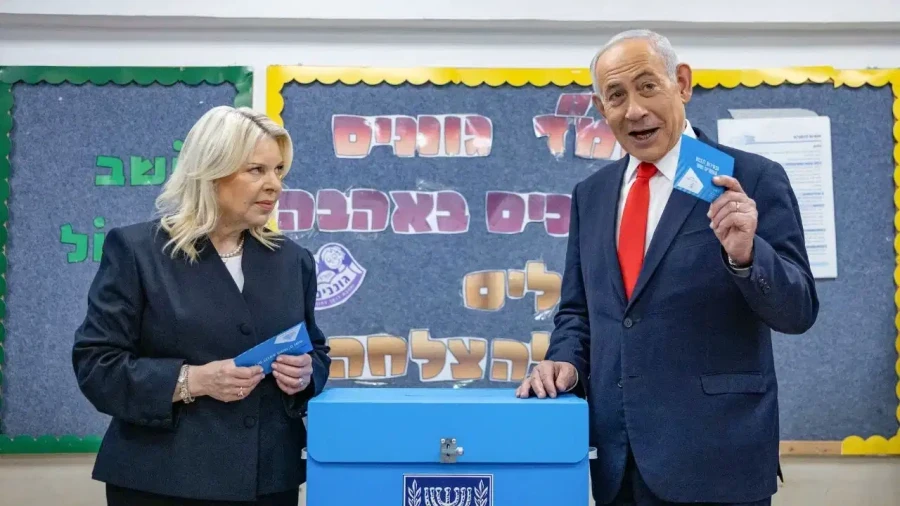
In the parliamentary elections held on October twenty-seventh, no single political party or coalition managed to secure an outright majority. Netanyahu’s Likud party emerged as the single largest party by winning twenty-seven seats, but his religious-nationalist coalition could only gather a total of fifty-three seats overall. On the other side of the political spectrum, the anti-Netanyahu bloc accumulated forty-eight seats. This opposing alliance comprises four Jewish-led parties spanning the center-left to the right-wing. Also, two separate parties representing Israel's Arab population secured a combined total of nineteen seats, and in the aftermath of the elections, both of these factions threw their weight behind Gadi Eizenkot. Consequently, while Eizenkot has inherited a strong numerical backing from lawmakers, forging a functional political consensus to actually form a government remains an immense challenge.
Another Severe Blow to Netanyahu Coalition
Benjamin Netanyahu suffered yet another major setback when his long-standing ally, United Torah Judaism, formally declined to recommend any candidate during their consultations with the President. This unexpected development further compounded the difficulties facing Netanyahu’s already fragile coalition, while political analysts suggest that such rapid developments continue to diminish Netanyahu's prospects of returning to power, although political dynamics remain unpredictable until the very final stages.
The Entangled Coalition Arithmetic Involving Arab Parties
The single most complex complication surrounding government formation in Israel involves the strategic role played by Arab political parties. Curiously, both Gadi Eizenkot and Benjamin Netanyahu have consistently and publicly rejected the prospect of forming a government alongside Arab-led parties. Nevertheless, both Arab factions independently stepped forward to extend their support to Eizenkot. However, the right-wing party Yisrael Beytenu, which is part of Eizenkot's potential coalition framework, has already signaled firmly that it will refuse to be part of any administration that relies entirely on the backing of Arab parties. Party leader Avigdor Lieberman attributed this stance to the refusal of Arab factions to explicitly designate Hamas as a terrorist organization, even though these same Arab parties did condemn the brutal Hamas assault on Israel that occurred on October seven, two thousand twenty-three.
Controversy Over Election Results and Central Election Committee Appeal
Amidst these political maneuvers, Prime Minister Benjamin Netanyahu raised serious questions regarding the validity of the election results, leveling severe allegations against Arab parties for allegedly manipulating votes. He formally demanded that election officials conduct a thorough and impartial investigation into these potential irregularities, while however, Israel's Central Election Committee issued a definitive statement on Wednesday clarifying that the integrity, fairness, and transparency of the elections were maintained without any compromise whatsoever. Committee Chairman and Supreme Court Justice Noam Sohlberg made a passionate appeal to all political leaders to uphold the public's trust in democratic institutions, emphasizing that the peaceful transfer of power stands as one of the foundational requirements of any healthy democracy.
According to Israeli constitutional rules and regulations, the candidate designated by the President will be granted a total period of twenty-eight days to successfully establish a government. If deemed necessary, this initial timeframe can be extended by an additional fourteen days. Throughout this entire political process, Benjamin Netanyahu will continue serving in his capacity as caretaker Prime Minister. Should any designated candidate ultimately fail to assemble a working coalition, the nation could potentially face the prospect of being forced into fresh repeat elections. For Gadi Eizenkot, the single greatest hurdle will be uniting political factions whose core ideologies and stances regarding Arab parties stand in stark opposition. Concurrently, Netanyahu faces an uphill battle in keeping his traditional allies together and discovering a viable pathway to a parliamentary majority. Ultimately, this intense post-election struggle for power in Israel now rests entirely upon President Isaac Herzog's forthcoming decision and the crucial negotiations unfolding among political parties, with Sunday's official announcement set to determine who bears the initial responsibility of forming the government.