
- India,
- 06-Nov-2026 08:03 PM IST



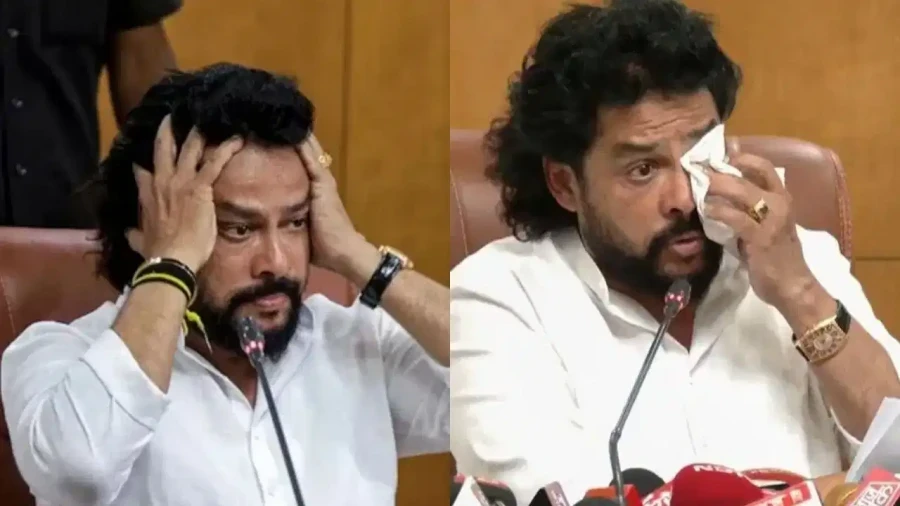
The Karnataka government made a major and serious claim on Friday stating that the petrol sold by oil marketing companies contains ethanol way beyond the prescribed limit of twenty percent, known as E20. This claim has been put forward by the Consumer Affairs Ministry of the Karnataka government, asserting that the ethanol content in ethanol-blended petrol is exceeding twenty percent. Minister Rizwan Arshad stated that testing of petrol samples across various NABL-accredited laboratories in Karnataka has revealed this major fact. Illegal and excessive ethanol adulteration has directly come to light at petrol bunks across Karnataka, posing a direct threat to consumer interests.
Quality testing conducted under Operation Nikhar campaign
Under the state government special Operation Nikhar campaign, rigorous quality checks were conducted on petrol of major brands available across Karnataka. Samples were collected from Bengaluru, Kolar, Chikkaballapura, Bengaluru Rural, Ramanagara, Mangaluru, and Tumakuru for this testing process, while petrol samples collected from all major oil companies were found to contain an ethanol blend exceeding twenty percent. Notably, petrol from IOCL was found to contain thirty-one point two percent ethanol, while petrol from HPCL contained thirty point five percent ethanol, which is a clear violation of established standards.
Allegations of oil company laboratories concealing crucial information
Karnataka Minister Rizwan Arshad further stated that when petrol samples were earlier sent to the oil companies' own laboratories belonging to IOCL and BPCL, those labs completely concealed this fact in their reports and failed to record the actual percentage of ethanol, despite such testing being mandatory. Concealing this crucial and sensitive information has sparked deep and serious suspicion that oil companies are cheating customers and trying to cover up the fact that they're mixing more ethanol than the permitted limit. Because of this, the state government collected fresh samples from various petrol pumps in accordance with norms and sent them for testing to NABL-accredited and ISO-certified laboratories.
Ethanol percentages found in petrol of various companies
Elaborating on the findings, the minister claimed that according to samples tested in laboratories, IOCL MS petrol contained thirty-one point two percent ethanol. On top of that, HPCL MS Power petrol contained thirty point five percent ethanol, and standard HPCL MS petrol contained twenty-seven percent ethanol. BPCL MS Speed petrol recorded twenty-six point five percent ethanol, Nayara MS petrol recorded twenty-six point one percent, Shell MS petrol recorded twenty-five point five percent, BPCL MS petrol recorded twenty-four point two percent, another BPCL MS petrol recorded twenty-two point six percent, HPCL MS petrol recorded twenty-two point four percent, IOCL MS petrol recorded twenty point eight percent, and Nayara MS petrol recorded twenty point six percent ethanol. In addition, BPCL MS petrol recorded nineteen point nine percent, MRPL MS petrol recorded nineteen point two percent, and Shell MS petrol recorded thirteen point five percent ethanol. All these petrol samples were collected from different locations.
Oil companies earning record profits while consumers bear losses
Minister Rizwan Arshad stated in strong terms that while oil companies are earning record profits on one hand, ordinary consumers are forced to bear the heavy economic burden in the form of mileage loss and severe vehicle repairs on the other hand. Also, most dispensing machines currently installed at petrol pumps across the country are designed to handle up to only fifteen percent ethanol blending. Implementing this policy without upgrading the necessary infrastructure and systems required for higher ethanol fuel raises several serious questions, and the direct losses are being borne solely by ordinary consumers.
Karnataka government asks center to clarify the situation
Placing its clear demands before the central government, the Karnataka government stated that the Union Minister of Road Transport and Highways and the Minister of Petroleum and Natural Gas must clarify the situation, as concrete evidence is now officially on record. The government should publicly disclose the exact percentage of ethanol currently being supplied in fuel to consumers. Strict punitive action should be taken for mixing ethanol beyond the prescribed limits against IOCL, BPCL, HPCL, and related companies supplying petrol containing more than twenty percent ethanol, and a pump-level audit of ethanol quantities in all petrol supplied to Karnataka should be published.
Establishment of compensation fund and consumer choices
The state government has also demanded the establishment of a dedicated compensation fund for damages caused to vehicles by E20 fuel, ensuring that consumers whose vehicles suffered damages due to this adulteration receive timely compensation through a structured claim process upon producing proof of damage from authorized service centers. Also, displaying the percentage of ethanol blending on petrol at every fuel station across the country should be made mandatory, giving consumers a clear choice of fuel selection so that every petrol pump clearly indicates the exact percentage of ethanol mixed in the fuel.
Inspection process to continue across the state
The Karnataka government has made it clear that such rigorous inspection processes will continue across the state and their findings will be made public from time to time. Under the Motor Spirit and High Speed Diesel Regulation of Supply and Distribution and Prevention of Malpractice Order of two thousand five, the state government has empowered the Commissioner of the Food, Civil Supplies and Consumer Affairs Department, officers of the Legal Metrology Department, Deputy Commissioners, Sub-Divisional Officers, Tahsildars, and police officers of the rank of Deputy Superintendent of Police or higher to take strict legal action against any malpractice in the supply and distribution of fuel.