
- India,
- 05-Jun-2026 09:08 PM IST
- (Updated 05-Jun-2026 09:13 PM IST)



The Government of India has officially registered a strong and unequivocal protest against Pakistan's recent announcement to conduct general elections for the so-called Gilgit-Baltistan Assembly, while the Ministry of External Affairs (MEA) has formally communicated its objection to Pakistan, labeling the proposed move as entirely illegal and without any legal basis. According to the schedule proposed by Pakistan, these elections are slated to take place on June 7 2026. India has consistently maintained that the entire Union Territories of Jammu and Kashmir and Ladakh, which includes the regions of Gilgit and Baltistan, are an integral and inseparable part of India.
Legal and Historical Standpoint
In its official statement, the Ministry of External Affairs reiterated that the legal, complete, and permanent accession of the princely state of Jammu and Kashmir to India in 1947 forms the bedrock of India's sovereignty over these territories. India has made it clear that any administrative or electoral exercise conducted by Pakistan in these areas is a violation of India's territorial integrity. The government emphasized that such actions by Pakistan can't alter the ground reality or provide legitimacy to its illegal occupation of Indian territories. India has called upon Pakistan to immediately vacate all areas under its illegal occupation.
Concerns Over Human Rights and Repression
Beyond the territorial dispute, India has raised serious concerns regarding the prevailing conditions in the regions currently under Pakistani control. The Ministry of External Affairs highlighted that these areas are witnessing severe human rights violations, systematic political repression, and significant economic exploitation. India pointed out that the people in these regions are being deprived of their fundamental freedoms. The government stated that Pakistan's attempts to hold elections are merely a facade to divert attention from these deep-rooted issues and the lack of genuine political representation for the local population.
Appeal from Human Rights Activists
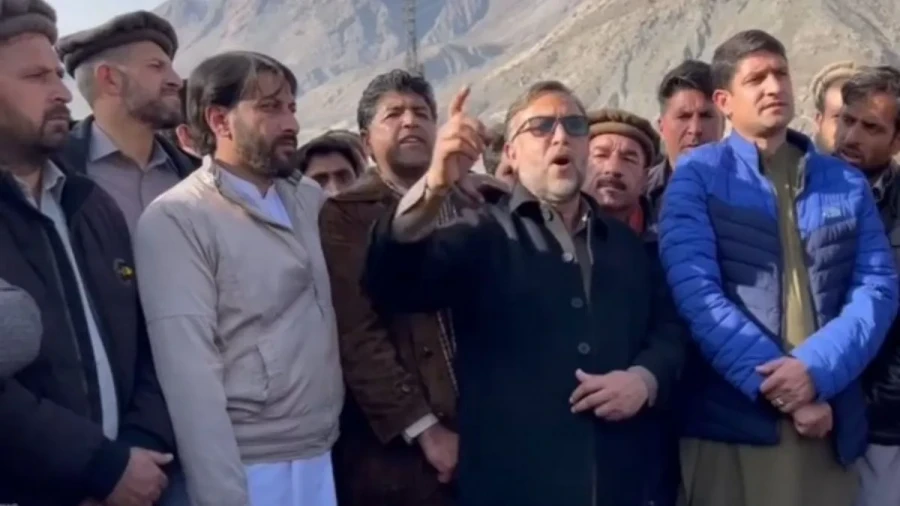
The situation has gained further international attention following an appeal by Amjad Ayub Mirza, a prominent human rights activist from Pakistan-occupied Jammu and Kashmir (PoJK). Mirza has reached out to Indian Prime Minister Narendra Modi, urging him to intervene and protect the rights of the people living in Gilgit-Baltistan and PoJK. He alleged that there is an increasing crackdown on political and civil rights activists in the region, while according to Mirza, the Pakistani authorities are exerting immense pressure on anyone who demands political representation or economic rights.
Crackdown on Local Leadership
Providing specific details on the repression, Mirza noted that several leaders and members of the Gilgit-Baltistan Awami Action Committee have been arrested and imprisoned. He claimed that these arrests are a deliberate attempt by the Pakistani establishment to silence voices that are advocating for the rights of the local people. Despite decades of strict control and state-sponsored propaganda since 1947, Mirza asserted that there is a profound sense of resentment and dissatisfaction among the people of Gilgit-Baltistan. The growing anger against the Pakistani administration is fueled by the lack of political autonomy and the continuous denial of basic rights.
India's Firm Stance
India's latest protest serves as a reminder of its firm stance on the issue of Gilgit-Baltistan. The Ministry of External Affairs concluded that no amount of electoral engineering or administrative changes by Pakistan can change the legal status of the region. India remains committed to its position that the only way forward is for Pakistan to end its illegal occupation and address the grievances of the people it has forcibly brought under its control. The international community is being made aware of these developments as India continues to challenge Pakistan's attempts to unilaterally change the status of the region.