

- India,
- 13-Feb-2026 08:03 PM IST


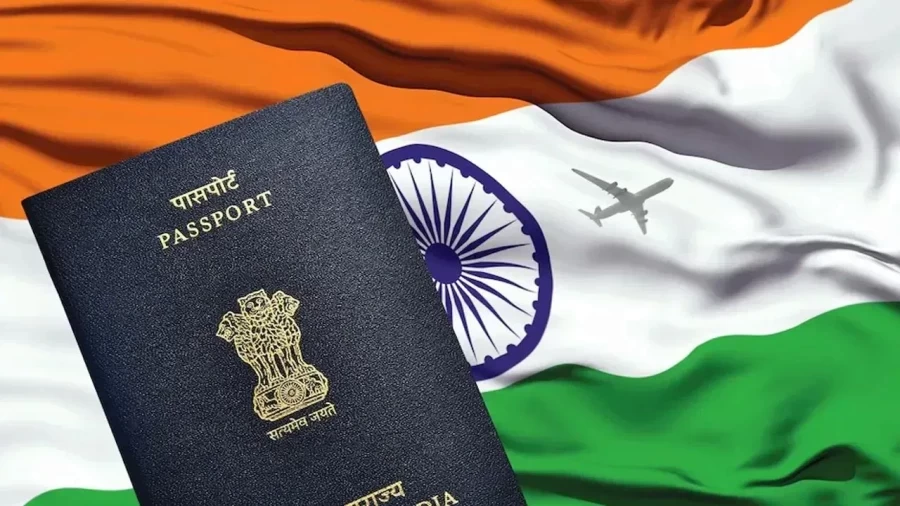
The global standing of the Indian passport has witnessed a significant enhancement this year. According to the latest data released by the Henley Passport Index, which utilizes exclusive information from the International Air Transport Association (IATA), India has secured the 75th position in the global rankings. This marks a substantial jump of 10 places from its previous rank of 85th. This improvement translates into greater ease of international travel for Indian nationals, who can now access 56 destinations worldwide without the requirement of a prior visa. These destinations offer either complete visa-free entry or the convenience of visa-on-arrival facilities, streamlining the travel process for millions of citizens.
Detailed Overview of the Ranking Improvement
The rise to the 75th spot in the Henley Passport Index is a notable milestone for India's global mobility profile. The index, which ranks passports based on the number of destinations their holders can access without a prior visa, indicates a positive trend in India's international relations, while while the current rank is a significant recovery, historical data shows that India achieved its highest-ever ranking of 71st in 2006. The jump from 85th to 75th within a year suggests a strengthening of bilateral ties and a growing recognition of the Indian passport's credibility. This shift reduces the administrative burden on Indian travelers, eliminating the need for extensive documentation and embassy visits for nearly 56 global destinations.
Major Destinations with Visa-Free Access
Indian passport holders can now explore a diverse range of countries across Asia, Africa, the Caribbean, and Oceania under the visa-free or visa-on-arrival regime. In the Southeast Asian region, popular destinations such as Thailand, Indonesia, and Sri Lanka have implemented policies to facilitate easier entry for Indian tourists. Neighboring nations like Bhutan and Nepal continue to offer visa-free access based on long-standing bilateral agreements. In the Indian Ocean, Mauritius and the Maldives remain accessible with minimal visa formalities. African nations including Kenya, Tanzania, and Seychelles provide visa-on-arrival options. On top of that, Caribbean countries like Barbados, Jamaica, and Grenada, along with Oceanic nations like Fiji, are part of the list where Indians can travel without a pre-arranged visa.
Methodology and Data Collection Process
The Henley Passport Index is considered the most authoritative ranking of the world's passports. Its methodology is based on comprehensive data from IATA, which maintains the world's largest database of travel information. The index evaluates 199 different passports against 227 travel destinations. For each destination, if no visa is required for passport holders from a particular country, a score of 1 is assigned. This includes instances where travelers can obtain a visa-on-arrival, a visitor's permit, or an electronic travel authority (ETA) upon entry, while conversely, if a visa or government-approved electronic visa is required before departure, a score of 0 is assigned. The total score represents the number of destinations accessible without a prior visa.
Historical Context and Global Comparisons
India's performance in the passport index has seen various fluctuations over the past two decades. After reaching the 71st position in 2006, the ranking faced several downward adjustments, often hovering between the 80th and 87th positions. The current ascent to 75th is viewed as a significant recovery in the post-pandemic era. Globally, countries like Singapore and Japan frequently lead the index, with access to over 190 destinations. In the regional context, India maintains a stronger position compared to several of its neighbors, including Pakistan, Bangladesh, and Sri Lanka, while the improvement in ranking is often attributed to the reciprocal visa arrangements and the increasing economic and strategic importance of India on the global stage.
Diplomatic Relations and Enhanced Mobility
The strength of a passport is often a reflection of a country's diplomatic reach and its standing in the international community. According to officials, the Indian government has been actively engaging in diplomatic dialogues to secure visa-free or simplified visa processes for its citizens. Several countries have recently announced temporary visa waivers for Indian tourists to boost their local tourism sectors. This enhanced mobility not only benefits leisure travelers but also facilitates smoother business interactions and cultural exchanges. As India continues to expand its global footprint, the number of countries offering visa-free access is expected to evolve, further strengthening the utility and power of the Indian passport in the international arena.
