
- India,
- 01-Oct-2026 05:45 PM IST



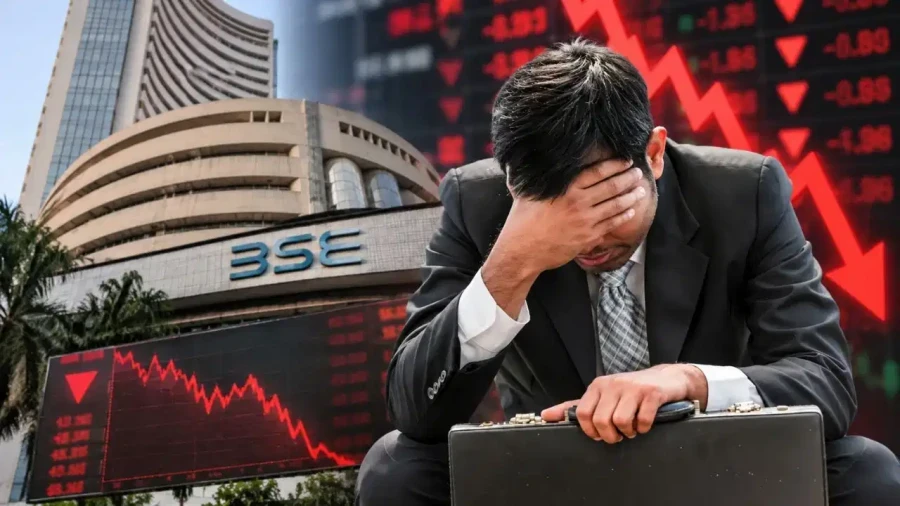
The Indian stock market experienced a severe downturn on Thursday, causing widespread panic across Dalal Street. Major indices, including the Sensex and Nifty, breached their critical support levels as a wave of heavy selling by foreign institutional investors (FIIs) and a surge in global bond yields rattled investor confidence. By the end of the trading session, the BSE Sensex had plummeted by 570 points, closing below the psychologically significant 72,000 mark. Similarly, the NSE Nifty fell by 199 points to settle at 22,421. This sharp decline led to a massive erosion of wealth, with the total market capitalization of BSE-listed companies falling below 465 lakh crore. In a single day, investors saw approximately 6 lakh crore of their wealth vanish.
Intraday Volatility and Market Sentiment
The trading day was marked by extreme volatility. At one point during the session, the Sensex crashed by as much as 1200 points, hitting its 52-week low of 71,292. During this period of peak panic, the notional loss to investors had reached a staggering 10 lakh crore. The breadth of the market was overwhelmingly negative, with 2789 shares ending in the red on the NSE, while only 594 shares managed to post gains. The broader market wasn't spared either, as the Nifty Midcap and Smallcap indices both tumbled by approximately 2 percent. The fear gauge, India VIX, surged by more than 12 percent, indicating a high level of anxiety among market participants. Amidst this carnage, only a few heavyweights like HDFC Bank and Kotak Mahindra Bank attempted to provide some support to the indices, though their efforts were insufficient to stem the tide of selling.
Key Factors Behind the Market Meltdown
The primary catalyst for this market crash was the aggressive selling by Foreign Institutional Investors (FIIs). On Wednesday alone, FIIs offloaded shares worth 10,148 crore. The total selling figure for this week has already reached 26,000 crore, severely damaging market sentiment. This massive outflow of foreign capital has put immense pressure on domestic equities. Simultaneously, the rise in US Treasury yields has become a major concern for global markets. 31 percent, its highest level since 2007. Higher bond yields often prompt investors to shift capital from risky assets like stocks to safer fixed-income instruments, while 98 per dollar, which added further strain on the market.
Sectoral Impact: Auto Stocks Face the Brunt
The automobile sector was one of the worst-hit segments during Thursday's session. The Nifty Auto index crashed by more than 4 percent, led by significant losses in major players like Mahindra & Mahindra and Maruti Suzuki. The primary reason for this decline was the release of September auto sales data, which failed to meet market expectations. The disappointing sales figures triggered a sell-off in auto stocks, contributing heavily to the overall market decline, while from a technical perspective, the Nifty's breach of its crucial support level at 22,500 exacerbated the selling pressure. Derivative research analysts had previously warned that a break below 22,500 could lead the index toward 22,400, a prediction that materialized as Axis Securities noted that the breach triggered fresh rounds of selling.
A Historic 25-Year Record Broken
This current downturn is particularly concerning as it marks the eighth consecutive week of decline for the Indian stock market. This is the first time since the dot-com crash of 2001 that the market has witnessed such a prolonged losing streak. This period of sustained selling has now surpassed the duration of declines seen during the 2008 global financial crisis and the 2020 Covid-19 market crash. Interestingly, while foreign investors are pulling money out of the secondary market, they continue to show interest in the primary market (IPOs), representing a diverging trend. Market experts suggest that this is a short-term phase of correction. With Brent crude prices cooling down below 98 dollars per barrel, there is hope for a recovery in the near future. Analysts advise long-term investors to view this as an opportunity to accumulate quality stocks of large-cap companies at attractive valuations.