
- India,
- 26-Sep-2026 08:24 AM IST



The rapid expansion of Artificial Intelligence (AI) and data center infrastructure is creating a massive ripple effect across the technology supply chain, with optical fiber companies emerging as significant beneficiaries. 65 rupees in January to a peak of 910 rupees on September 15, 2026. This represents a staggering growth of approximately 975 percent in just about seven months. As of September 25, the company's shares were trading around the 867 rupees mark, reflecting the intense investor interest in the sector.
The AI Catalyst: Why Fiber Demand is Exploding
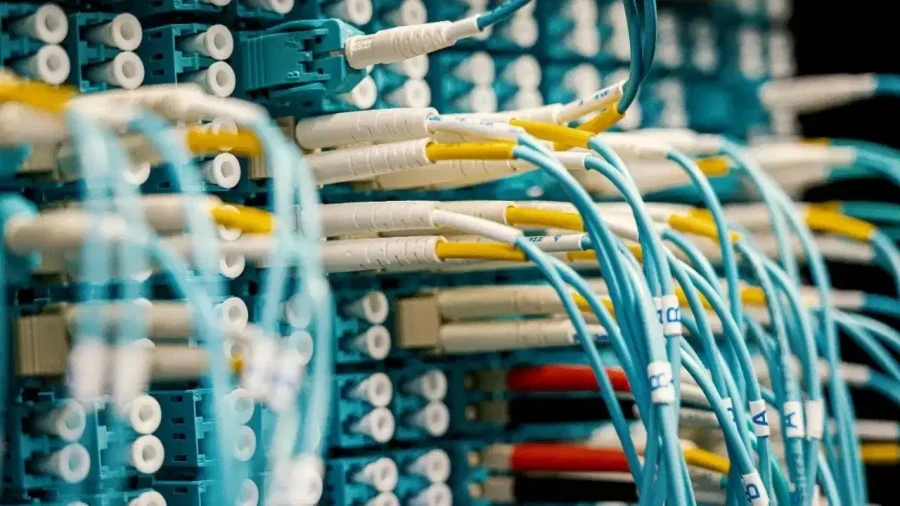
The surge in demand for optical fiber is directly linked to the architectural requirements of AI data centers. Unlike traditional cloud data centers, AI facilities take advantage of a vast number of Graphics Processing Units (GPUs) that must constantly share massive amounts of data with each other. This high-speed data exchange necessitates a much denser network of optical fibers, while according to a report by Financial Express, the requirement for fiber per rack is increasing exponentially with different AI chip architectures. STL notes that while older front-end racks required about 1,000 fibers, the Hopper-based racks need approximately 4,000 fibers. This requirement jumps to 16,000 fibers for Blackwell racks and is projected to reach a massive 64,000 fibers per rack in the upcoming Vera Rubin architecture.
Record Performance in Q1 FY27
The first quarter of the financial year 2026-27 has been exceptionally strong for Sterlite Technologies. The company reported a revenue of 1,910 crore rupees, marking an 87 percent increase on a year-on-year basis. The EBITDA stood at 397 crore rupees, a significant jump from the 140 crore rupees recorded in the same quarter of the previous year. 8 percent. On top of that, the company's Profit After Tax (PAT) rose to 197 crore rupees. A key highlight of this performance is the growing contribution of the data center segment, which accounted for 21 percent of the revenue in Q1 FY27, compared to just 1 percent in FY26.
Massive Order Book and Future Targets
11 billion dollars, which translates to nearly 10,000 crore rupees, from a global hyperscaler. This contract involves providing next-generation AI data center optical connectivity products, with deliveries scheduled through FY29. In the first quarter of FY27 alone, the company bagged orders totaling 13,100 crore rupees, pushing its open order book to a record high of 18,618 crore rupees. Under its 'Lakshya' growth plan, STL aims to achieve a revenue of 20,000 crore rupees by FY29, up from 4,750 crore rupees in FY26. The company also targets an EBITDA margin of 27 percent or higher and plans a capital expenditure of 3,000 crore rupees over the next three financial years.
Valuation and Potential Risks
While the stock has seen a phenomenal rise, analysts suggest that the current valuation already factors in much of the ambitious FY29 revenue targets. Future growth will depend on the company's ability to convert its massive order book into revenue and meet its long-term goals. Investors must also consider potential risks, including the challenges of scaling capacity, the availability and cost of raw materials like Germanium and Helium, and shifts in global trade policies. The 20,000 crore rupee revenue target remains a strategic plan rather than a guaranteed future outcome.