

- India,
- 22-Oct-2025 08:40 AM IST


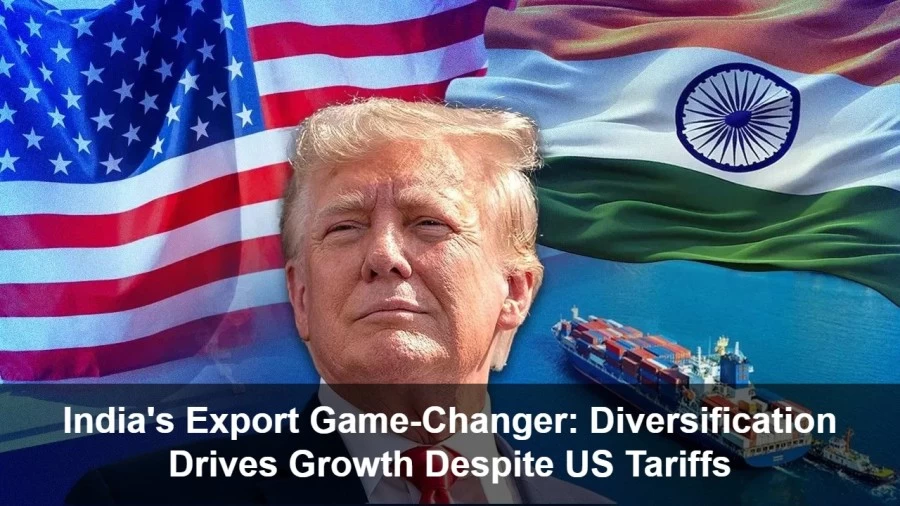
When the US, under President Donald Trump, imposed steep 50% import duties on various Indian products, particularly affecting labor-intensive sectors like textiles, gems, leather, and marine products, a major crisis for India's exports seemed imminent. The US, being India's largest export market, saw orders dwindle, raising significant concerns.
Instead of succumbing to panic, India adopted a shrewd strategic approach. The government collaborated with industries to identify and cultivate new. Export markets while strengthening existing trade relations with diverse countries. This proactive stance is now yielding positive outcomes. While Indian exports to the US did witness a decline, dropping from $8. 8 billion in May 2025 to $5. 5 billion by September 2025—a 37, while 5% reduction—this shortfall was effectively offset by increased exports to other nations, leading to overall growth.
Sectoral Performance and New Market Penetration
India's strategy to reduce reliance on the US proved successful, with. Significant export boosts to countries like Spain, UAE, China, and Bangladesh. Expanding into emerging markets such as Africa, the Middle East, and Latin America exemplified a successful trade diversification policy. September 2025 saw remarkable growth in several sectors. Electronics exports surged by over 50%, while rice exports increased by 33% to nearly $925 million, while marine products, initially feared to be heavily impacted, grew by 23% to $781 million. Gems and jewelry also experienced modest growth.
Persistent Challenges and Economic Stability
Despite the overall positive trend, some traditional and labor-intensive sectors, including ready-made garments and handloom products, continue to face headwinds, with declines of 10-12%. India's trade deficit expanded to $155 billion in the first half of FY 2025-26, up from $145 billion. However, total exports simultaneously grew by 3% to $220 billion, and imports rose by 4. 5% to $375 billion, signaling strong domestic demand and limited impact on the broader economy. The International Monetary Fund (IMF) has acknowledged India's economic resilience, projecting a solid GDP growth of 6. 6% for FY 2026, making it the fastest-growing major economy globally. Government data reveals India achieved positive export growth in 24 countries, including Korea, Germany, UAE, Russia, Canada, Brazil,. Italy, and Thailand, during the first half of the current fiscal year, validating the success of diversification efforts.
