
- India,
- 11-May-2026 07:48 AM IST



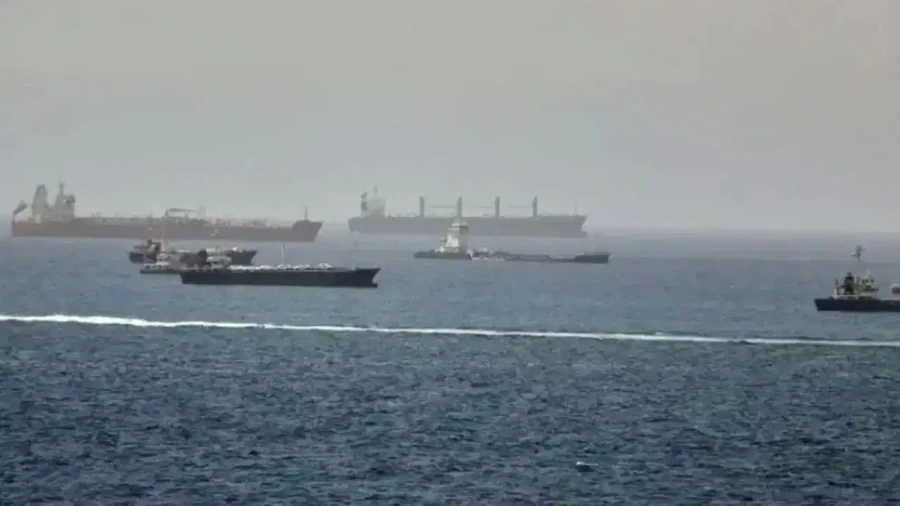
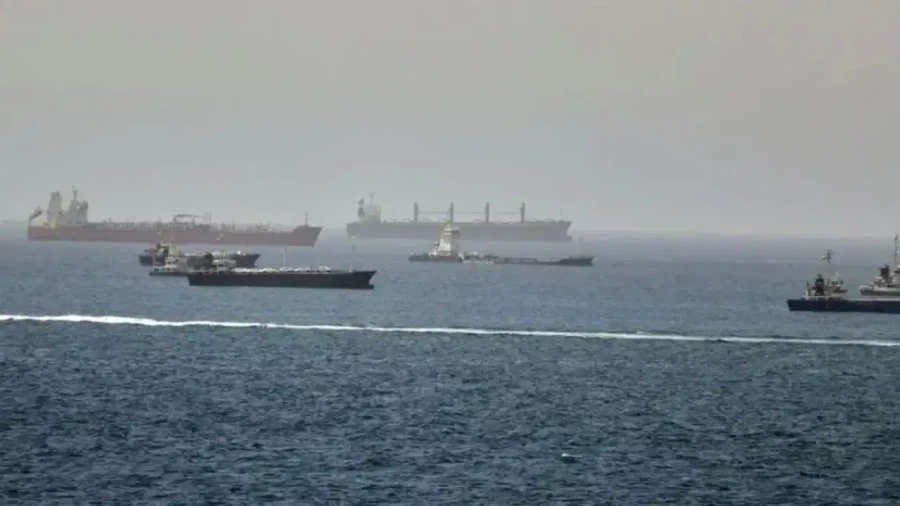
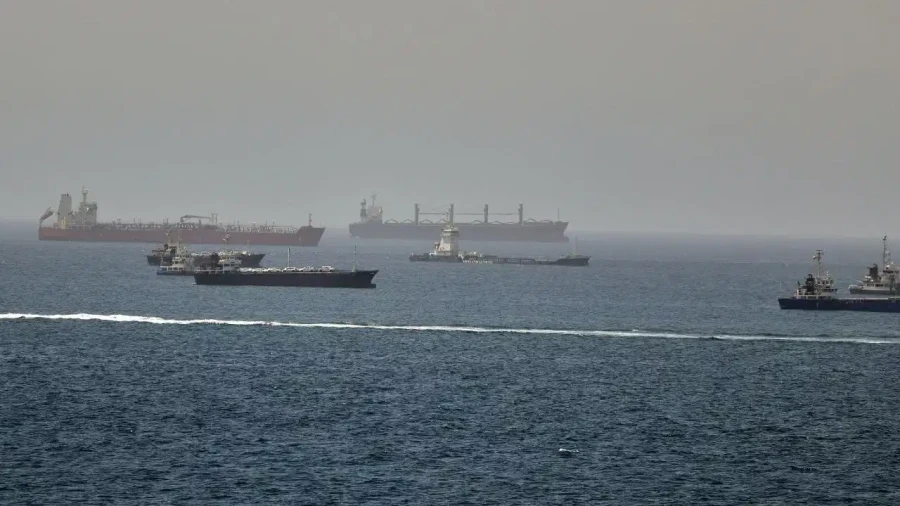
The Strait of Hormuz is currently witnessing a state of double blockade, creating significant ripples in global geopolitics and the international economy. On one side stands Iran, maintaining a stringent grip on this strategic waterway, where no vessel can pass without its explicit consent, while s. President Donald Trump remains in effect, preventing Iranian ships from exporting oil through this route. This inability to sell oil has resulted in massive economic losses for Iran, while to compensate for this financial deficit, Iran has been collecting toll taxes from merchant vessels passing through Hormuz. ' Iran's new strategy involves taxing the digital data flowing through underwater cables beneath the strait. This is being viewed as a trillion-dollar gamble by Mujtaba, potentially impacting the global internet and financial systems.
Iran's Strategic Control and the Toll Tax Mechanism
Iran's geographical and tactical control over the Strait of Hormuz is exceptionally solid, while mujtaba is reportedly unwilling to relinquish influence over this narrow stretch of the Arabian Sea at any cost, even if it means risking another conflict with the United States. Under current operations, ships traversing the strait must obtain Iranian clearance and pay a toll tax. While Iran is already generating substantial revenue through these tolls, its focus has now shifted from oil and ships to digital data, while the Iranian leadership believes that after oil, digital data is the primary resource that can exponentially increase its national revenue, especially under the pressure of international sanctions.
Taxing Digital Data and Its Global Economic Implications
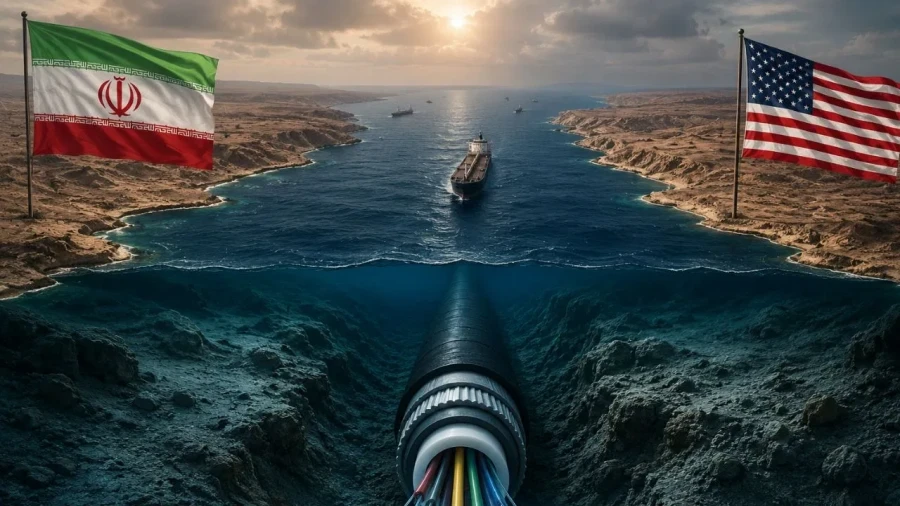
Under Iran's proposed plan, a fee will be levied on the fiber-optic internet cables laid beneath the Strait of Hormuz, while this implies that any country or corporation transferring data through these cables will be required to pay a tax to Iran. Should any entity refuse to pay, Iran possesses the capability to obstruct or halt the data transfer. This move has raised alarms from Europe to Asia.
Iran argues that since this massive economic activity occurs within its sovereign jurisdiction, it's entitled to collect a fee for the use of its maritime territory.
Legal Justifications and International Maritime Law
Iran is citing international maritime laws to bolster its controversial claims. The geography of the Strait of Hormuz is unique, with its narrowest point measuring only 39 kilometers. Oman lies on one coast, while Iran occupies the other, while 5 kilometers from the Iranian coast falls under Iran's jurisdiction. Iran is now invoking Article 34 of the United Nations Convention on the Law of the Sea (UNCLOS). While this law mandates that straits remain open for international navigation, Iran is focusing on the clause that clarifies that the waters, seabed, and airspace remain under the control of the coastal state.
Rising Concerns in Europe and Asia: Iran's Two-Phase Plan
Article 79 of the international maritime law is also pivotal here, stating that the consent of the coastal state is mandatory for laying cables in its territorial waters. Iran intends to exploit this legal provision. A significant portion of the cables in Hormuz touches the seabed within Iran's maritime boundaries. If these cables require repair, Iran's permission is essential. Tehran could potentially delay such processes by citing security concerns.
This strategy wouldn't only provide Iran with significant revenue but also enhance its physical security and monitoring capabilities over global data transfers.
Threats to the Digital Economy and Cable Sabotage
Donald Trump's blockade aimed to cripple the Iranian economy, but Iran is working on a roadmap to multiply its income using Hormuz as benefit from. If Iran's conditions aren't met, the consequences could be dire. Recently, the IRGC-linked Tasnim News Agency issued a report threatening to cut the internet cables in the Strait of Hormuz. At least seven major communication cables for Gulf countries pass through this route. It's crucial to note that over 97% of global internet traffic is transmitted via fiber-optic cables on the ocean floor. The concentration of such a high volume of cables in a narrow passage makes Hormuz the weakest link in the global digital economy.
The Risk of a Digital Blackout in the Middle East
Iran has prepared a plan for a 'Digital Blackout' in the Arab world if the data tax isn't paid, while hormuz isn't just a major oil chokepoint; it's a hub for underwater cables. More than 20 cables pass through this narrow passage, carrying 17% to 30% of the world's internet traffic. These cables serve as a digital bridge between Asia, Europe, and the Middle East.
This threat underscores that future warfare won't just involve missiles and warships but will also be fought over cloud infrastructure and internet cables.
Impact on Arab Systems and Key Cable Infrastructure
Four primary cables form the backbone of the digital infrastructure in Hormuz. The first is the Falcon Cable, spanning 10,300 km. The second is the TGN Gulf Cable, measuring 4,500 km. The third is the GBI Bridge Cable at 10,000 km, and the fourth is the IMEWE Cable, which extends 12,000 km. These cables connect the entire Gulf region to Europe and Asia. If Iran sabotages these lines, the banking and business sectors of Arab nations could collapse. By cutting these cables, Iran could block payment interfaces and internet access, effectively paralyzing the entire regional system. Given that repairs would be impossible without Iranian consent, Arab and European nations may find themselves with no choice but to comply with Tehran's demands.