
- India,
- 24-Jun-2026 10:19 PM IST



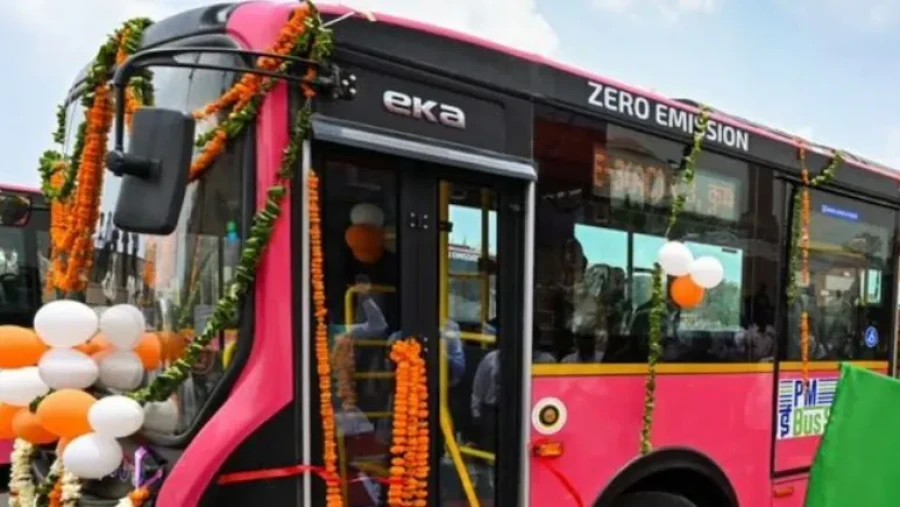
A newly launched electric city bus service in Rajasthan's capital, Jaipur, became the center of a major scare on Tuesday morning. The incident occurred on the busy Tonk Road when a new electric bus suddenly came to a halt in the middle of the route, leading to a situation where approximately 25 to 30 passengers were trapped inside. The automatic doors of the vehicle locked instantly, and a loud emergency siren began to blare, creating a sense of panic among those on board. As the doors remained shut, the environment inside the bus became increasingly suffocating for the passengers, leading to chaos for several minutes. The sudden technical lockdown turned a routine commute into a frightening experience for the commuters who were unable to exit the vehicle.
The Emergency Situation Near Kumbha Marg
The incident took place around 10:30 AM near Kumbha Marg. Initially, even the bus driver was unable to comprehend the exact nature of the technical failure that had occurred. The sudden locking of the doors and the continuous sound of the siren left the passengers startled and anxious. After several attempts and utilizing his presence of mind, the driver managed to open the door on his side. This allowed him to facilitate the safe evacuation of all the passengers who were stuck inside the bus. Following the evacuation, a technical team and mechanics reached the spot to address the issue. It took about half an hour for the technical problem to be resolved, after which the bus was able to resume its journey. The quick response from the driver prevented the situation from escalating into a more serious health hazard for the passengers.
The Cause: Activation of the Panic SOS Button
Preliminary investigations into the incident have revealed that the emergency situation was triggered because the Panic SOS button inside the bus was pressed. These electric buses are equipped with this button as a critical safety feature. Once the SOS button is activated, the bus's emergency system is immediately engaged. This system is designed to lock the doors and sound a loud siren to alert people nearby and the authorities about a potential emergency. In this case, it appears that the button was pressed accidentally or intentionally by a passenger, which led to the automatic lockdown of the vehicle. The system functioned exactly as it was programmed to do in an emergency, but the lack of immediate override knowledge caused the temporary entrapment.
Driver Hemant Shares the Experience
The bus driver, identified as Hemant, explained the sequence of events that led to the panic. According to him, the situation arose likely because a passenger pressed the panic button. He noted that as the air inside the bus started becoming thin and passengers began feeling suffocated, he used the emergency system controls available at his disposal to unlock the doors and ensure everyone could exit safely. Hemant also pointed out a gap in the preparation process, stating that while they were provided with general training on how to operate the new electric buses, they weren't given detailed instructions or specific protocols on what to do exactly when the panic button system gets activated. This lack of specific technical training for emergency overrides was a key factor in the delay in opening the doors.
Expansion of Electric Bus Services in Rajasthan
This incident comes shortly after the state government initiated the operation of several new electric buses under the PM e-Bus Sewa scheme. Recently, 29 new electric buses were introduced in Jaipur, while 18 such buses were launched in Bhilwara. Chief Minister Bhajan Lal Sharma had officially flagged off these buses in Jaipur on Saturday, 20 June. During the same event, the 18 electric buses for Bhilwara were also inaugurated through video conferencing. The introduction of these buses is part of a larger effort to modernize public transport and reduce carbon emissions in the state's major cities. While the technology is advanced, this incident highlights the need for comprehensive training for the staff operating these high-tech vehicles to handle such technical contingencies effectively.