

- India,
- 11-Mar-2026 08:10 PM IST


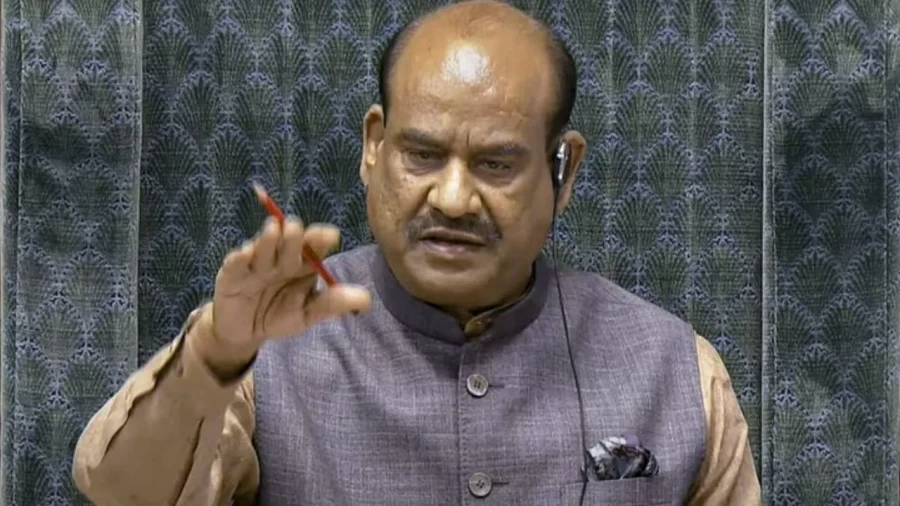
The Lok Sabha has officially defeated the no-confidence motion brought by opposition parties against Speaker Om Birla. Following a rigorous two-day debate that saw intense exchanges between the treasury and opposition benches, the motion was put to a voice vote and subsequently rejected. With this development, Om Birla continues to hold his constitutional position as the Speaker of the lower house of Parliament, while the motion had been a focal point of political friction, highlighting the growing divide over parliamentary conduct and procedures.
Background and Introduction of the Motion
The no-confidence motion was formally introduced by Congress Member of Parliament Mohammad Javed, supported by several other opposition legislators. According to parliamentary records, the motion was admitted after meeting the requisite numerical support from members. The opposition argued that the move was necessary to address concerns regarding the shrinking space for dissent within the legislative chamber. They alleged that the Speaker's decisions often favored the ruling dispensation, prompting a formal challenge to his authority under the rules of the House.
Government Defense and Amit Shah's Address
Union Home Minister Amit Shah led the government's defense, emphasizing the sanctity of the Speaker's office. During his address, Shah stated that the functioning of the House is predicated on mutual trust and adherence to established rules. He described the Speaker as a neutral custodian who represents the interests of both the ruling party and the opposition. Shah further noted that the Lok Sabha operates under specific guidelines designed to ensure orderly conduct, while he dismissed the opposition's claims, asserting that members are expected to participate within the framework of parliamentary decorum rather than treating the floor as a marketplace.
Opposition Allegations of Bias and Partisanship
Opposition members utilized the debate to voice significant grievances regarding the Speaker's impartiality. RJD MP Abhay Kumar Sinha expressed regret over what he termed as the chair becoming a symbol of the ruling party's dominance rather than a protector of parliamentary freedom, while sinha specifically highlighted the previous suspension of over 140 MPs in a single day as a point of contention. He argued that true democracy requires the voices of the weakest to be heard, claiming that opposition members were frequently interrupted with a repetitive "no" from the chair whenever they attempted to speak.
Technical Grievances and Procedural Concerns
The debate also touched upon technical aspects of parliamentary broadcasting and floor management. JMM MP Vijay Kumar Hansdak alleged that interruptions during opposition speeches had become a routine occurrence. He further claimed that camera angles were often shifted away from opposition members during critical points of their speeches. Adding to this, NCP (SP) MP Bajrang Manohar Sonwane used a metaphor to describe the chair's conduct, comparing it to a table fan that provides cooling to only one side. He alleged a visible difference in the Speaker's demeanor when addressing the treasury benches versus the opposition.
Final Vote and Procedural Outcome
At the conclusion of the two-day discussion, the motion was put to a voice vote by the presiding officer. The treasury benches overwhelmingly voiced their opposition to the motion, leading to its rejection. Despite the opposition's efforts to highlight their democratic concerns, the lack of numerical strength and the government's solid defense ensured the motion's failure. According to parliamentary officials, the rejection of the motion reaffirms the House's confidence in Om Birla's leadership, while the proceedings concluded with the Speaker resuming his duties to oversee the remaining legislative business of the session.
