
- India,
- 16-Jun-2026 11:54 AM IST



The political landscape for Mamata Banerjee has become increasingly treacherous following a series of setbacks that have shaken the foundations of the Trinamool Congress (TMC), while after a significant defeat in the West Bengal assembly elections, the Chief Minister is now facing a dual-front war characterized by internal rebellion and a formal split within the party. Her political stature, which was once considered unassailable, is currently under immense pressure as she navigates the complexities of maintaining control over her party's identity and its elected representatives.
The Crisis in Kolkata: A Battle for the Party's Soul
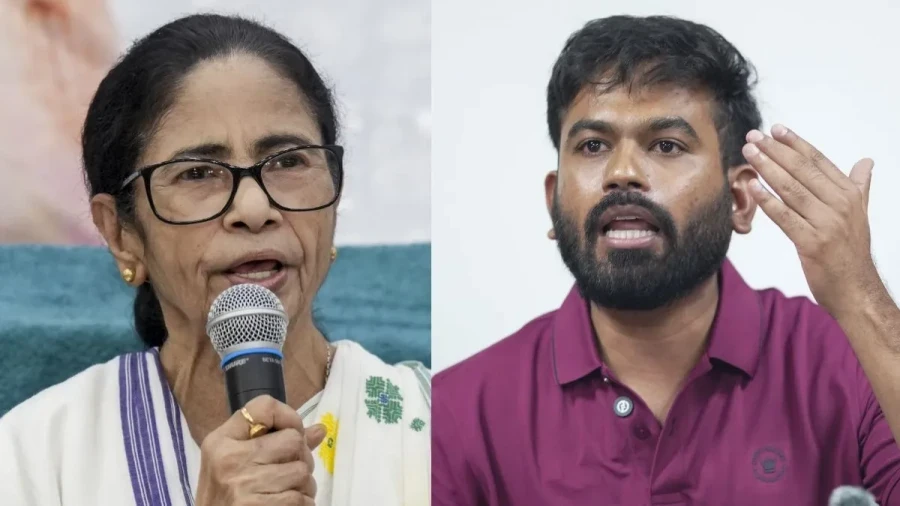
In West Bengal's capital, Kolkata, the challenge is immediate and structural. A group of more than 60 MLAs has broken away from the main fold under the leadership of rebel legislator Ritabrata Banerjee. This internal fracture has already seen significant developments in the state assembly. The Speaker of the Assembly has officially recognized Ritabrata Banerjee as the Leader of the Opposition, a move that effectively formalizes the split within the TMC legislative party in Kolkata. This recognition serves as a major blow to Mamata Banerjee's authority, as it provides a legal and institutional platform for the rebel faction.
Ritabrata Banerjee has signaled that this is only the beginning of a larger disintegration. He has stated that the split within the TMC is just starting and will soon extend to the organizational levels, including block-level committees and other administrative tiers. His faction is now positioning itself as the "real TMC," creating a direct conflict over the party's heritage and assets. The rebel group is reportedly preparing to approach the Election Commission of India to stake a claim on the party's official symbol and its various properties. This sets the stage for a protracted legal battle to determine which faction truly represents the Trinamool Congress.
The Delhi Front: Merger and Strategic Shifts
While the battle rages in Kolkata, a second front has opened in the national capital, Delhi. In a move that caught many political observers by surprise, 20 rebel TMC members of parliament have formed a separate group and merged with a relatively unknown entity called the Nationalist Citizens Party of India (NCPI). This strategic maneuver is designed to provide the rebel MPs with a new political identity while complicating Mamata Banerjee's efforts to have them disqualified under anti-defection laws.
The transition within the NCPI has been swift. On May 28, the party's president, Sheuli Kundu, resigned from her post and gave up her primary membership. Following this, the political affairs committee of the NCPI declared Kakoli Ghosh Dastidar as the newly elected president, while with this change in leadership, the 20 rebel MPs have officially become part of the NCPI, marking a significant shift in the parliamentary strength of the original Trinamool Congress. Mamata Banerjee's camp has responded by submitting a formal letter to the Speaker, arguing that these 20 MPs can't separate in this manner and should be disqualified from their positions.
Legal Battles and Future Implications
Mamata Banerjee now faces two monumental legal and political challenges. In Kolkata, she must prove that her faction remains the legitimate Trinamool Congress, while in Delhi, she must fight to ensure the disqualification of the 20 rebel MPs. Legal experts suggest that both these battles are likely to be long and drawn out. The dispute before the Election Commission regarding the party symbol could result in the freezing of the current symbol, with both factions potentially being assigned new symbols for future elections.
Sources indicate that the strategy behind these rebellions is to keep the legal and political conflict alive for as long as possible. By prolonging the battle, the rebel faction aims to create a window of opportunity as the Lok Sabha elections approach. This would allow many of the rebel MPs to eventually join the Bharatiya Janata Party (BJP) to contest the elections, while rebel Muslim MPs would have the flexibility to choose their own political paths. The overarching goal appears to be the systematic dismantling of Mamata Banerjee's political influence through a combination of legislative maneuvers and legal challenges on multiple fronts.