
- India,
- 05-Aug-2026 11:48 AM IST



The Reserve Bank of India (RBI) has concluded its latest Monetary Policy Committee (MPC) meeting with a decision to maintain the status quo on policy rates, while 25 percent. This marks the fourth consecutive time that the RBI has chosen to hold the rates steady, reflecting a cautious yet stable approach toward the domestic economy amidst varying global signals. 25 percent. 25 percent. 25 percent in interest rates to support economic momentum.
Neutral Stance and Global Economic Context
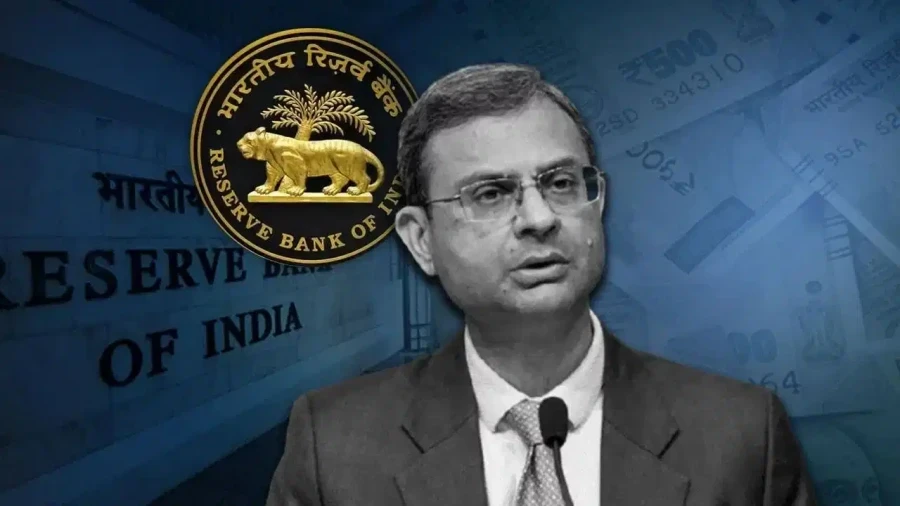
During the announcement, RBI Governor Sanjay Malhotra highlighted that the central bank has decided to maintain its neutral stance regarding future policy actions. This decision comes at a time when several central banks across the globe have been increasing interest rates to combat persistent inflation. The Governor pointed out that since the first week of July, there has been a resurgence of conflict in West Asia, which has led to increased volatility in energy prices. This geopolitical tension has once again triggered uncertainties regarding global supply chains. However, despite these persistent global uncertainties, India's domestic economic activities have shown remarkable resilience. This strength is evident in the high-frequency indicators available for the first quarter (Q1) of the current period.
Inflation Forecast and Quarterly Projections
On the inflation front, the RBI has provided some relief by lowering its projections, while governor Sanjay Malhotra stated that the Consumer Price Index (CPI) inflation for the current year is now estimated at 5 percent, which is 10 basis points lower than the previous estimates. 9 percent during the months of May and June. 5 percent for the fourth quarter (Q4).
Risks to the Inflation Outlook
The RBI Governor also cautioned about potential risks that could impact these inflation estimates. A significant risk remains the impact of El Nino on the timing and spatial distribution of rainfall across the country. Also, global oil prices have remained highly volatile due to geopolitical developments, making it challenging to predict near-term inflation with absolute certainty. While general inflationary pressures have remained low so far, there is a persistent risk of 'second-round effects' where rising costs of food, fuel, and other inputs could spread to the wider economy. The central bank remains vigilant to ensure that inflation aligns with the medium-term target.
Upward Revision in GDP Growth Estimates
In a positive move for the economy, the RBI has raised its real GDP growth forecast for the financial year 2027.7 percent, reflecting a 10 basis point hike from the earlier projection. The quarterly growth expectations are also solid, with the first quarter (Q1) expected to see a growth of 7 percent. 8 percent in the fourth quarter (Q4). These figures suggest a steady economic trajectory for the country over the coming year.
Stability in Financial Parameters
Governor Malhotra provided an update on the health of the Indian financial system, noting that system-level parameters for scheduled commercial banks remain strong. This includes capital adequacy, liquidity, asset quality, and profitability. Although there has been a slight decrease in Net Interest Margins (NIMs) compared to the previous year, the overall banking sector remains resilient. Similarly, Non-Banking Financial Companies (NBFCs) are showing strong system-level parameters, characterized by adequate capital, improved gross and net Non-Performing Assets (NPAs), and higher profitability, while despite a challenging global macro-economic environment, India's Current Account Deficit (CAD) remained low last year, staying well below levels considered sustainable for emerging markets.
Current Account Surplus and Trade Dynamics
8 billion dollars during the April-May period of this year. This surplus was primarily driven by strong receipts from service trade and remittances from abroad. However, the merchandise trade deficit for the first quarter (Q1) widened to approximately 86 billion dollars, compared to about 69 billion dollars in the same quarter of the previous year. This increase was largely attributed to the import of crude oil, electronic goods, and gold, while 7 billion dollars during the first quarter of this year.
Mitigating Risks through Trade Agreements
Looking ahead, the Governor mentioned that risks to India's current account deficit could arise from slowing global trade growth, rising energy prices, and continued uncertainty regarding trade policies. However, there is optimism that these risks can be mitigated through the implementation of recent trade agreements with major partners, including the India-UK trade deal. Continued growth in service exports and steady remittance inflows are also expected to provide a cushion against external shocks, while the RBI remains committed to monitoring these developments closely to maintain macroeconomic stability.