
- India,
- 07-Aug-2026 11:55 AM IST



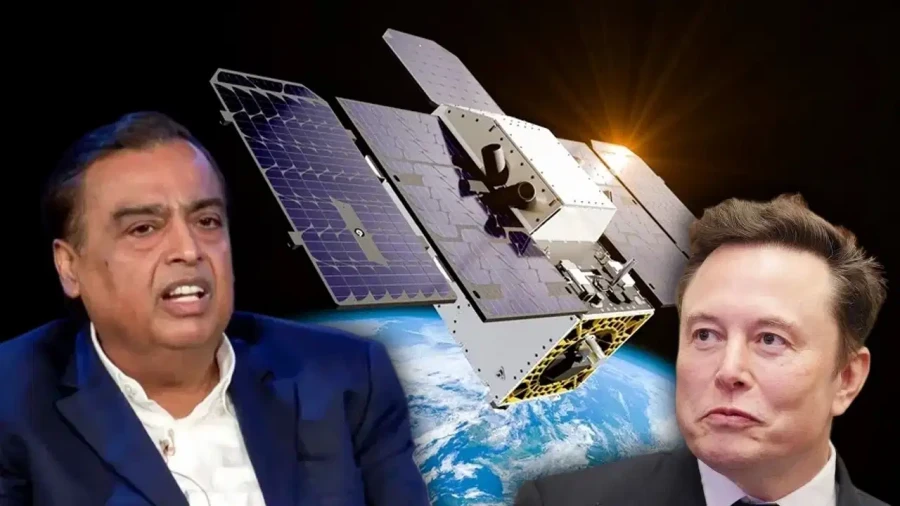
The Indian government is preparing a comprehensive master plan to regulate the rapidly growing satellite communication (Satcom) sector. This strategic move aims to protect domestic players and ensure that global giants like Elon Musk's Starlink and Jeff Bezos's Amazon Kuiper don't monopolize the Indian market. According to the latest reports, the Department of Telecommunications (DoT) is drafting rules that will mandate global satellite companies to coordinate their technical operations with Indian satellite networks to obtain spectrum access and provide local services.
Mandatory Technical Coordination for Global Players
The core of the government's plan involves a mandatory coordination process. Global Non-Geostationary Orbit (NGSO) satellite communication companies will be required to align their operations with domestic constellations, such as those operated by Reliance Jio. This coordination is essential to maintain a smooth domestic presence in the space communication sector without any interruptions. The DoT is expected to include these coordination provisions in the upcoming draft rules for spectrum allotment to global NGSO satcom providers. The primary objective is to ensure that global companies don't block or hinder the entry of Indian firms into the space communication arena.
Protecting Domestic Interests and Orbital Slots
The government and the space regulator, IN-SPACe, are focused on strengthening the Indian satellite network. There is a recognized need for guarantees to ensure that the operations of local companies aren't restricted by global providers who have already secured certain approvals. Currently, global companies have a significant advantage in securing their preferred orbital slots, while if these companies refuse to coordinate, their potential entry into the Indian market could be jeopardized. An official noted that a lack of coordination could lead to signal interference issues for subsequent satcom entrants, potentially preventing them from launching their services effectively.
Technical Challenges and Interference Management
To avoid signal interference, satcom companies must adjust their infrastructure, including satellites and earth stations, as well as the tilt angles of their receivers. Such a system only functions efficiently when both parties cooperate. However, existing operators often hold an advantage, forcing newer entrants to make more significant adjustments to their systems. By mandating coordination, the Indian government aims to level the playing field for domestic companies that might enter the market later than their global counterparts.
National Security and Strategic Autonomy
National security remains a top priority for the Indian government, especially since satellite communication networks operate across geographical boundaries. Recent global events, such as the use of Starlink terminals in Iran despite a ban, have raised concerns within India's security circles. Consequently, the central government is actively supporting the development of Indian satellite constellations. The space sector is considered vital for national security and defense-related matters. By fostering local capabilities, India aims to reduce its dependence on foreign operators for critical communication infrastructure.
Jio's Massive Infrastructure and Market Outlook
Reliance Jio is positioning itself as a major player in the satcom sector. The company is planning to establish a large satellite network by building 20 to 22 ground stations across the country. 5 Terabits per second (Tbps) in India, which is the highest among the global companies that have received approvals so far. Jio's plans include offering fixed satellite services like broadband and cellular backhaul, as well as mobile satellite services like direct-to-device communication. The company has designed its orbital parameters and architecture to be compatible with future Indian constellations.
The Future of India's Space Economy
The stakes are high as India's space economy is projected to reach 44 billion dollars by the year 2033. While Starlink, Bharti Group's Eutelsat OneWeb, and Jio's joint venture with SES have received certain permits, they're still awaiting security clearances and spectrum allotment. Amazon's Kuiper has also applied for approvals but is yet to receive the green light from IN-SPACe or the DoT, while the government's master plan ensures that as these giants enter the market, they do so in a way that supports the growth and security of India's own space industry.