

- India,
- 08-Nov-2025 02:08 PM IST


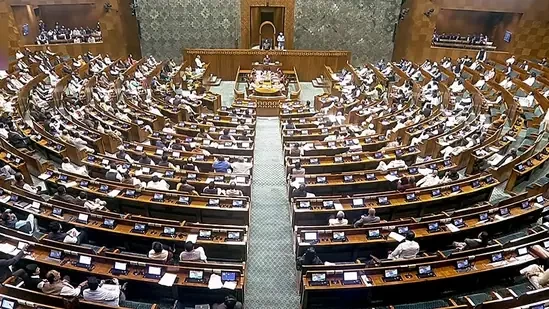
The much-anticipated Winter Session of the Indian Parliament is scheduled to commence on December 1 and conclude on December 19. Over these 19 days, a total of 15 sittings will be held, during which crucial legislative and policy matters are expected to be discussed. Union Parliamentary Affairs Minister Kiren Rijiju officially announced the schedule for the upcoming session on Saturday via the social media platform X. This session is poised to be significant, especially in light of the events. And disruptions that characterized the preceding Monsoon Session, where the opposition raised various issues.
Recap of the Monsoon Session: Disruptions and Low Productivity
The previous Monsoon Session of Parliament, which ran from July 21 to August 21, was notably marked by disruptions and lower-than-expected productivity, while on the very first day of the session, the then Deputy Chairman of the Rajya Sabha, Jagdeep Dhankhar, resigned from his post, leading to a notable change in the upper house's leadership. Subsequently, the entire session was largely consumed by the opposition's uproar over the issue of Special Intensive Revision (SIR) in Bihar. Despite holding a total of 21 sittings during the Monsoon. Session, parliamentary proceedings were frequently interrupted by protests and debates.
Legislative Business and Limited Debate
The legislative agenda also faced challenges during the Monsoon Session. While 120 hours were allotted for discussions in the Lok Sabha, the actual proceedings only lasted for 37 hours. Similarly, the Rajya Sabha managed to conduct discussions for only 41 hours, Notably less than the scheduled time, while despite these hindrances, a total of 27 bills were successfully passed by both houses. Among these, the "Constitution Amendment Bill to remove arrested PM-CMs" garnered significant attention and debate. A proposal to send this particular bill to a Joint Parliamentary Committee (JPC) was also passed, underscoring its complexity and importance.
Opposition Prepares Impeachment Motion Against CEC
A major point of contention expected to dominate the upcoming Winter Session is the I. N, while d. I. A, while bloc's intention to move an impeachment motion against Chief Election Commissioner (CEC) Gyanesh Kumar. The I. N. D, while i. A, while bloc, comprising 8 opposition parties including Congress, TMC, SP, DMK, and RJD, has made its intentions clear on this matter. Following a meeting held on August 18 at Congress President Mallikarjun Kharge's residence, these parties held a joint press conference to announce their decision.
Allegations and CEC's Response Fueling Controversy
During the joint press conference, TMC General Secretary Abhishek Banerjee stated that the opposition would serve a notice for impeachment against the CEC in the upcoming Winter Session. He clarified that a 14-day notice is required to move an impeachment motion, and with only three days remaining in the Monsoon Session, they had to defer the action to the next session. This move by the opposition comes after Congress MP Rahul Gandhi, on August 7, accused the Election Commission of "vote theft, while " In response to these allegations, CEC Gyanesh Kumar, on August 17, publicly stated that Rahul Gandhi should either submit an affidavit to substantiate his claims or apologize to the nation. The opposition views the CEC's stance as a basis for their impeachment motion, indicating that the Winter Session is likely to be charged with intense political debate and confrontation.
