
- India,
- 27-Jun-2026 11:59 AM IST



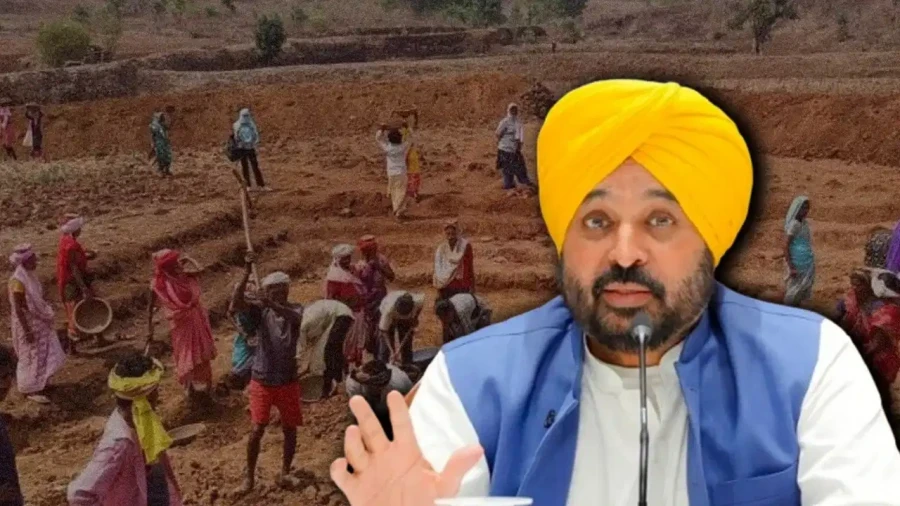
The Punjab government has officially decided to implement the VB-G RAM G (Viksit Bharat Guarantee for Rozgar and Ajeevika Mission) scheme across the state. This decision comes as a significant policy shift, considering that the Aam Aadmi Party (AAP) led government had previously passed a resolution in the state assembly against this very scheme. The state government has now issued a formal notification for the implementation of the scheme, which is set to come into effect from July 1. This move marks a transition in the rural employment landscape of Punjab, aligning it with the central government's new framework for rural development and livelihood security.
Enhanced Employment Guarantee for Rural Households
Under the provisions of the VB-G RAM G scheme, rural households are now guaranteed 125 days of employment in a single financial year. This is a notable increase from the previous system, providing an additional 25 days of work to eligible families. The scheme has been designed keeping in mind the vision of 'Viksit Bharat@2047'. It aims to provide a more strong safety net for the rural population by ensuring a longer duration of guaranteed work, thereby supporting livelihood security and economic stability in the countryside.
Transition from MGNREGA to VB-G RAM G
The central government introduced the Viksit Bharat-Rozgar and Ajeevika Guarantee Mission Rural Act by replacing the Mahatma Gandhi National Rural Employment Guarantee Act (MGNREGA). The MGNREGA scheme was originally launched in 2005 by the Congress-led UPA government, providing a guarantee of 100 days of work per year to rural households. The new legislation, which was passed by Parliament in December last year and subsequently received the President's approval, increases this guarantee to 125 days. This transition represents a major legislative overhaul of rural labor laws in India, aimed at modernizing the employment guarantee framework.
History of Political Opposition
It's important to note that several opposition-ruled states, including Punjab, Karnataka, Kerala, Telangana, and Jharkhand, had initially opposed the VB-G RAM G Act. These states passed resolutions in their respective assemblies demanding the restoration of the MGNREGA scheme. The Punjab government had argued that the new Act would have a detrimental impact on families living below the poverty line, Scheduled Caste communities, and rural laborers who have traditionally relied on MGNREGA for their survival. Despite these initial reservations and the assembly resolution, the Punjab government has now moved forward with the implementation notification to ensure the benefits reach the rural workforce.
Infrastructure Focus and Government Perspective
Union Minister Shivraj Singh Chouhan has expressed confidence that the VB-G RAM G Act will usher in a new era for laborers, while according to the minister, the scheme won't only provide employment but also boost activities such as water conservation and the development of rural infrastructure. This includes the construction of roads, bridges, culverts, schools, and Anganwadi buildings. The focus is on creating durable assets that contribute to the overall growth of rural areas while providing immediate employment opportunities. The minister emphasized that this isn't just a change in the name of a scheme but a matter related to the lives and livelihoods of millions of workers.
Budgetary Allocations and Implementation
The central government has backed the scheme with significant financial resources, while for the financial year 2026-27, a budget of more than 95,600 crore rupees has been allocated for this mission. Minister Shivraj Singh Chouhan further clarified that the central government had already allocated 30,000 crore rupees under the MGNREGA framework. 25 lakh crore rupees. The minister stressed that the implementation starting July 1 must be smooth and worker-centric, ensuring that no laborer remains without work even for a single day. He stated that there should be no hurdles in job creation, wage payments, or the fulfillment of legal rights for the workers during this transition.