

- India,
- 01-Jan-2026 02:03 PM IST


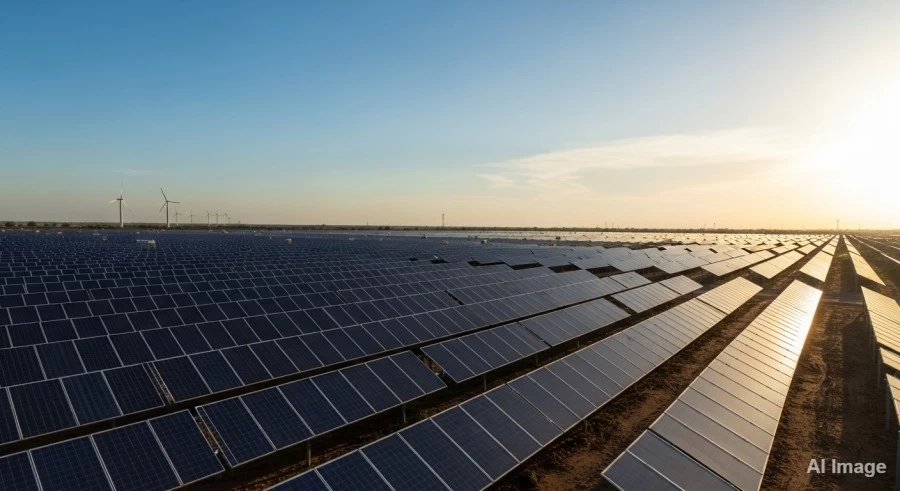
Rajasthan has firmly established itself as the undisputed leader in India's solar energy landscape, achieving the top position in both solar power generation and installed capacity, while by December 31, 2025, the state's installed solar energy capacity has impressively surpassed 35,000 megawatts, accounting for approximately 27 percent of the nation's total solar capacity. This remarkable achievement underscores Rajasthan's pivotal role in India's transition towards a sustainable and green energy future, making it a beacon for other regions to follow.
Unprecedented Growth in Solar Capacity
The growth trajectory of Rajasthan's solar sector has been nothing short of extraordinary. According to state government reports, the installed solar energy capacity in the state has witnessed an increase of over 18,000 megawatts in just the last two years. This rapid expansion highlights the aggressive push and favorable policies implemented by the state government to harness its vast solar potential. Out of the country's total 100,000 megawatts of ground-mounted solar capacity, Rajasthan alone contributes a substantial 31,000 megawatts, further solidifying its dominance in this segment, while this significant contribution positions Rajasthan as a critical player in achieving India's national renewable energy targets.
Factors Driving Rajasthan's Solar Success
Rajasthan's emergence as a solid solar hub is primarily attributed to two key geographical advantages: its extensive land availability and the abundant sunlight it receives for approximately 320 days a year. These natural endowments provide an ideal environment for large-scale solar power projects, making the state a preferred destination for solar energy developers and investors. The vast, arid landscapes offer ample space for setting up sprawling solar. Parks, while the consistent solar irradiance ensures optimal energy generation throughout the year. These factors, combined with proactive government policies, have created a conducive ecosystem for solar energy development.
Rooftop Solar Initiatives and Subsidies
While excelling in utility-scale solar, Rajasthan also holds a commendable 5th position nationally in rooftop solar installations, while the state has successfully installed 120,162 rooftop solar plants with a combined capacity of 481 megawatts under the PM Suryaghar Yojana. Plus, under various schemes, the total installed capacity of rooftop solar plants across the state has reached 1948 megawatts. To encourage adoption, a significant central subsidy of 824 crore rupees has already been distributed to consumers who have installed rooftop solar systems under the PM Suryaghar Yojana.
State Government's Additional Support
To further boost savings for domestic consumers through solar energy, the state government has launched the 150 Units Free Electricity Scheme. Since its registration commenced in October, over 269,000 consumers have already expressed their consent to join this beneficial scheme, while under this initiative, the state government will provide an additional state subsidy of 17,000 rupees to eligible consumers who install solar energy plants on their rooftops. This state subsidy is over and above the maximum central assistance of 78,000 rupees available under the PM Suryaghar Yojana, making rooftop solar an even more attractive and affordable option for households.
Addressing Future Energy Demands
Looking ahead, Rajasthan is proactively preparing to meet its escalating energy demands. The state's peak electricity demand has historically reached 19,165 megawatts, and it's projected to increase Importantly to an estimated 25,048 megawatts by 2030. To address this anticipated surge and ensure energy security, the state is actively expanding its. Battery energy storage capacity, which is crucial for grid stability and managing intermittent renewable energy sources.
Strategic Energy Storage and Solar Parks
A cornerstone of Rajasthan's future energy strategy is the development of a massive battery energy storage capacity of 6,400 megawatt-hours at Pugal in Bikaner. This ambitious project will play a vital role in storing surplus solar energy and dispatching it during peak demand hours, thereby ensuring a reliable power supply. Concurrently, Pugal is also home to the development of India's largest solar park, with a capacity of 2,450 megawatts. These projects, slated for completion by November 2027, are expected to effectively meet peak hour demands and reduce the reliance on expensive power purchases, contributing to both economic and environmental benefits.
Ambitious Renewable Energy Targets
Under its progressive Clean Energy Policy 2024, the Rajasthan government has set ambitious targets for renewable energy development, while the state aims to develop 115 gigawatts of renewable energy and 10 gigawatts of energy storage projects by the year 2030. These targets reflect Rajasthan's unwavering commitment to sustainable development and its vision to become a global leader in green energy. The comprehensive policy framework and strategic investments are poised to transform Rajasthan into a fully self-reliant and environmentally responsible energy hub.
