

- India,
- 24-Mar-2026 05:07 PM IST


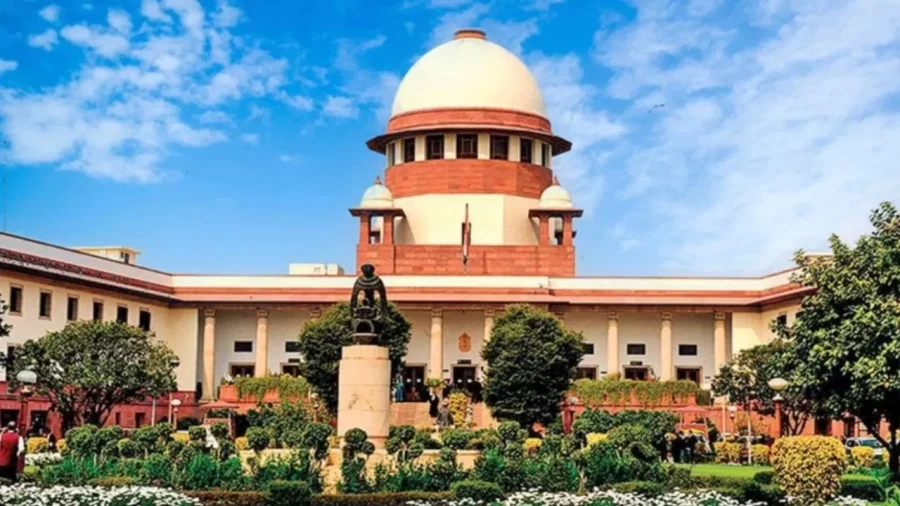
The Supreme Court of India has delivered a significant legal clarification, stating that an individual who follows a religion other than Hinduism, Sikhism, or Buddhism can't be considered a member of a Scheduled Caste (SC). V. Anjaria upheld an earlier order by the Andhra Pradesh High Court, affirming that the SC status of a person is lost immediately and completely upon conversion to religions such as Christianity or Islam. The ruling reinforces the strict criteria established under the Constitution (Scheduled Castes) Order, 1950.
Interpretation of the Constitution (Scheduled Castes) Order, 1950
The apex court focused its deliberation on Clause 3 of the 1950 Order, which defines the religious boundaries for Scheduled Caste identification. According to the bench, the language of the order leaves no room for ambiguity, while it specifies that no person who professes a religion different from Hinduism, Sikhism, or Buddhism shall be deemed to be a member of a Scheduled Caste. The court noted that this provision is a mandatory requirement, and the cessation of SC status occurs the moment the conversion takes place, regardless of the individual's birth or previous social standing.
Immediate Cessation of SC Status Upon Conversion
The bench emphasized that the legal bar is absolute and non-negotiable. The court stated that any legal benefit, protection, reservation, or entitlement provided under the Constitution or laws enacted by Parliament or State Legislatures can't be extended to a person who doesn't meet the criteria of Clause 3. The ruling clarifies that an individual can't simultaneously profess a religion outside the specified three and still claim the benefits of being a member of a Scheduled Caste. This interpretation ensures that the special provisions meant for SC communities are applied strictly according to the constitutional framework.
Case Background: The Pastor from Andhra Pradesh
The judgment arose from a case involving a man in Andhra Pradesh who had converted to Christianity and was actively serving as a pastor. Despite his conversion, he filed a complaint under the Scheduled Castes and the Scheduled Tribes (Prevention of Atrocities) Act, alleging physical assault and caste-based abuse. The accused challenged the maintainability of the complaint, arguing that the complainant was no longer an SC member and thus couldn't invoke the protections of the Act, while the High Court had agreed with this contention, leading to the appeal in the Supreme Court.
Applicability of the SC/ST Prevention of Atrocities Act
The case involved charges under Sections 3(1)(r), 3(1)(s), and 3(2)(va) of the SC/ST Act, along with various sections of the Indian Penal Code (IPC), including 341, 506, and 323. The complainant, who conducted Sunday prayers in Pittalavanipalem village, alleged that he faced repeated attacks and death threats. However, the court observed that once the individual had embraced Christianity and assumed the role of a pastor, his identity as a member of the Scheduled Caste community ceased to exist in the eyes of the law, while consequently, the special protections afforded by the SC/ST Act were no longer applicable to him.
Judicial Observations on Legal Protections and Rights
The Supreme Court reiterated that the identification of Scheduled Castes is governed by the specific religious affiliations mentioned in the 1950 Order. The court noted that the petitioner sought to quash the FIR on the grounds that the complainant’s active role as a Christian pastor disqualified him from SC status. By upholding the High Court's decision, the Supreme Court has reaffirmed that the constitutional definition of Scheduled Castes is the primary factor in determining eligibility for both affirmative action and protective legislation, while the ruling serves as a definitive precedent for similar cases involving religious conversion and caste identity.
