

- India,
- 27-Dec-2025 07:56 AM IST


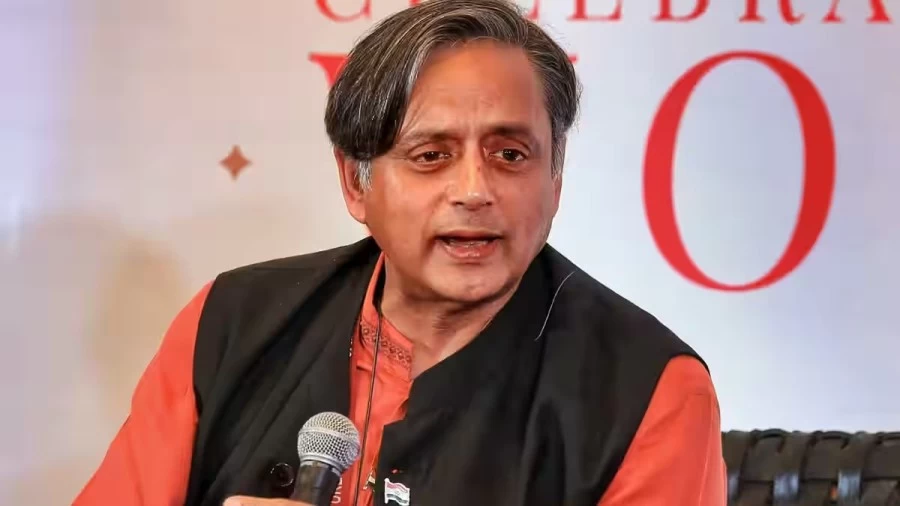
Congress MP Shashi Tharoor made a significant statement on Friday, asserting that foreign policy isn't the domain of the BJP or the Congress, but of India as a whole. He emphasized that if anyone in politics rejoices at the defeat. Of a Prime Minister, they're, in essence, celebrating India's defeat. Tharoor recalled Pandit Jawaharlal Nehru's profound words, “If India dies, who will live? ” This statement underscores the need for national unity and a non-partisan approach to matters of foreign policy and national interest.
Evolving Security Threats from Pakistan
During an interaction with India Today, Tharoor cautioned India against taking security threats emanating from Pakistan lightly. He highlighted that Pakistan is altering its military strategy, now. Focusing on hypersonic missile technology and a policy of stealth attacks. This development is a serious concern that India must address, as it could Importantly change the regional security landscape and necessitate a re-evaluation of India's defense preparedness.
Pakistan's Shifting Military Doctrine
Tharoor pointed out that Pakistan has previously resorted to drone, rocket, and missile attacks, and is now moving towards even more dangerous technologies. He stressed that this new military policy of Pakistan isn't something India can afford to ignore. This necessitates a continuous review of India's defense capabilities and strategic planning to effectively counter these emerging threats and maintain regional stability.
Internal Instability and Military Dominance in Pakistan
Commenting on Pakistan's internal situation, Tharoor described it as a 'highly problematic country, while ' He noted that Pakistan has a nominal civilian government, with real power concentrated in the hands of the military. The army dominates policy-making, and decisions are made according to its directives. This internal power structure Importantly influences Pakistan's foreign policy and its approach to regional security.
Economic Fragility and Regional Competition
Tharoor highlighted Pakistan's 'extremely fragile' economic condition, with a GDP growth rate of approximately 2, while 7 percent, Importantly lower than India's 7 percent or more. He suggested that while international aid provides temporary support, this economic weakness could provoke risky actions in the future, while Plus, Pakistan is now attempting to advance in sectors where India is already strong, particularly in textiles and agriculture, which could intensify regional market competition.
Bangladesh's Challenges and Implications for India
Addressing the rapidly changing global landscape and a period of upheaval, Tharoor stated that the question isn't about controlling whom, but about how to deal with countries that aren't easy to control. He also mentioned Pakistan's proposal to the US for access to mineral resources and its cryptocurrency-related business being entrusted to a company reportedly linked to Zachary Witkoff and Donald Trump's sons. These developments indicate Pakistan's shifting strategic priorities and its attempts to forge new alliances. Tharoor also discussed Bangladesh's current problems, including an energy crisis, rising inflation, and weakening investor confidence. He noted that discussions on defense agreements between Bangladesh and Pakistan suggest that Bangladesh might be attempting to portray India as an adversary. This is a concern for India, as an unstable or hostile Bangladesh could become India's 'soft underbelly,' particularly for its northeastern states.
Separatist Elements and Regional Stability
Tharoor warned that some individuals are openly threatening to separate India's northeastern states from the country and are harboring separatist elements. Islamic forces like Jamaat-e-Islami have further exacerbated the situation, making it more sensitive. A calm and stable Bangladesh is crucial for India, as instability in the. Neighboring country could have severe repercussions for regional security and India's internal peace.
India's Connectivity Initiatives and Future Dependence
India has proposed regional connectivity plans for Bangladesh, involving ports, railways, and energy grids, which are in Bangladesh's interest. However, Tharoor emphasized that the success of these initiatives depends on stability within Bangladesh, while a peaceful and stable Bangladesh is extremely important for India, as instability could turn it into India's “soft underbelly” and hinder regional development efforts.
Tharoor's Recent Statements
Shashi Tharoor has recently expressed his views on other significant issues. On December 25, he supported the government's action against illegal immigrants residing in the country, stating that securing national borders and managing immigration systems properly is the government's responsibility. On November 4, Tharoor criticized India's dynastic politics in an article, asserting that politics in India has become a family business. He argued that as long as politics revolves around families, the true meaning of democratic government can't be fully realized, while these statements reflect Tharoor's broader perspective on various national and political issues.
