

- India,
- 21-Feb-2026 05:30 PM IST


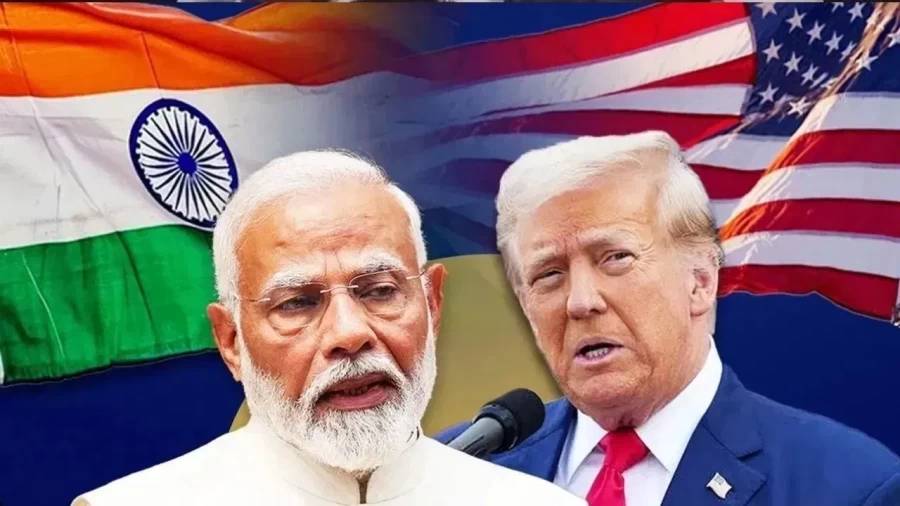
The landscape of India-US trade is set for a significant shift following President Donald Trump's announcement of a new 10% global import surcharge. This decision came shortly after the US Supreme Court struck down previous tariff mandates. The new 10% temporary surcharge will be effective for 150 days starting at 12:01 AM Eastern Standard Time on February 24, 2026. According to the think tank Global Trade Research Initiative (GTRI), this development necessitates a strategic rethink of the proposed trade agreement between the two nations, as the tariff dynamics have fundamentally changed.
The New Reciprocal Tariff Structure
The concept of Reciprocal Tariffs (RT) was introduced by the Trump administration to level the playing field for US exporters. Initially, India faced a 26% RT in April 2025, which was later adjusted. Due to India's purchase of Russian crude oil, an additional 25% punitive tariff was imposed, bringing the total effective RT to 50%. While an interim framework had proposed reducing this to 18%, the new global order replaces these specific rates with a uniform 10% surcharge for all countries under the RT umbrella. Consequently, Indian goods that previously faced a combined 25% or higher RT will now be subject to a 10% surcharge plus the existing Most Favored Nation (MFN) duty.
GTRI Suggests Re-evaluating India-US Trade Pact
GTRI has pointed out that since the RT on Indian goods has effectively dropped from 25% to 10% due to the new global mandate, India's previous concessions in trade negotiations must be reconsidered. India had agreed to lower its own tariffs in exchange for Washington reducing the RT to 18%. However, with the US now applying a 10% rate across the board for all countries, the relative advantage for India has diminished. Ajay Srivastava, founder of GTRI, stated that trade deals aren't charity and must benefit both sides equally. He emphasized that India needs to reassess the benefits of the current deal under the revised tariff regime.
Exempted Categories and Persistent Sectoral Duties
A White House fact sheet has identified several categories of goods that will be exempt from the temporary 10% import surcharge. These exemptions include critical minerals, energy products, pharmaceuticals, and specific agricultural items such as beef, tomatoes, and oranges. Certain electronics, passenger vehicles, and aerospace parts are also excluded to ensure the stability of the US economy. Despite these exemptions, sectoral tariffs remain in place, while duties of 50% on steel, aluminum, and copper, along with a 25% tariff on certain auto components, will continue to be enforced as per existing policies.
Bilateral Trade Statistics and Surplus
The United States remains India's largest trading partner for goods during the 2021-25 period. India's exports to the US account for approximately 18% of its total global exports. 3billion in imports. 32billion the previous year. Major export items from India include biological formulations, telecom instruments, and precious stones, while imports from the US are dominated by crude oil and coal.
Upcoming Negotiations and Implementation Timeline
An Indian delegation is scheduled to meet US counterparts in Washington on February 23, 2026, to finalize the legal text for the first phase of the trade agreement. Commerce and Industry Minister Piyush Goyal indicated that the deal could be signed by next month and implemented by April, while president Trump has stated that the Supreme Court's ruling against his larger tariffs won't change the course of the trade deal with India. However, the long-term tariff structure after the 150-day temporary period remains uncertain, leaving officials to monitor the situation closely as the February 24 deadline approaches.
