
- India,
- 18-Aug-2026 08:53 AM IST



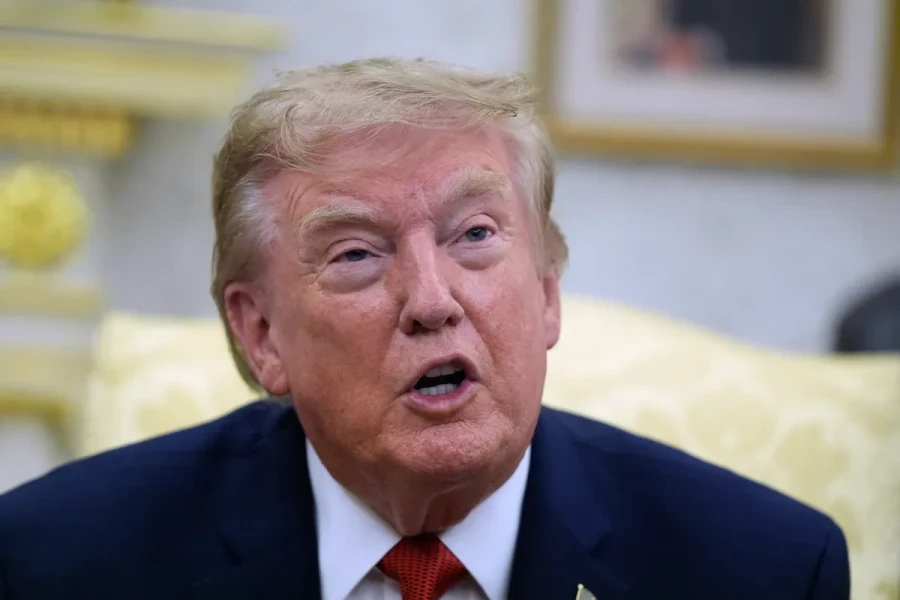
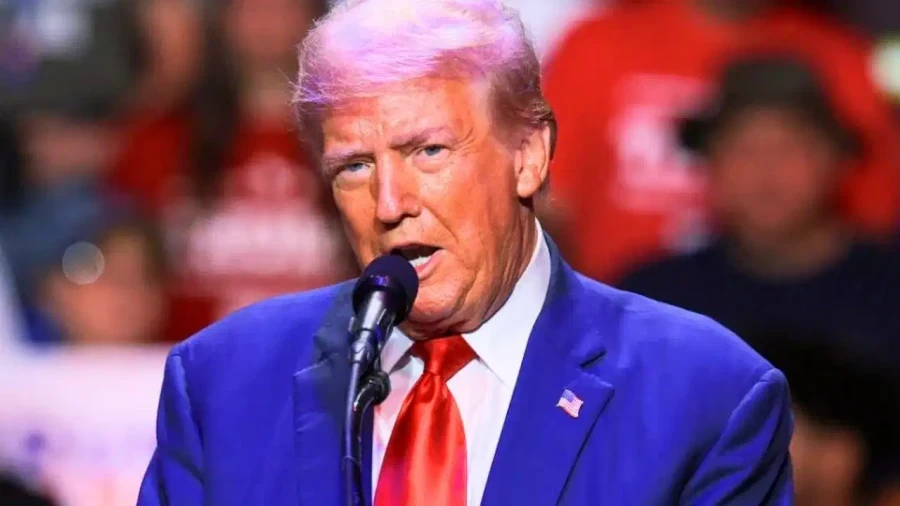
US President Donald Trump has strongly advocated for the implementation of mandatory photo identification for every American voter to prevent potential electoral fraud. In a recent statement, Trump highlighted the electoral system of India as a prime example of how a large-scale democracy can successfully manage voter identification, while he reiterated his demand for every voter to possess a valid photo ID, drawing a direct comparison between the American and Indian voting processes to support his argument for stricter voting laws in the United States.
The Question from India's Chief Election Commissioner
Donald Trump claimed that India's Chief Election Commissioner, Gyanesh Kumar, recently posed a significant question to his administration regarding the American electoral process. According to Trump, Gyanesh Kumar asked how the United States could conduct elections without requiring a valid photo identification from its voters. This inquiry from a high-ranking Indian official was used by Trump to underscore what he perceives as a major loophole in the American system. Trump shared this interaction on his social media platform, Truth Social, to bring attention to the necessity of the Safeguard American Voter Eligibility (SAVE) America Act.
India's Massive Voter Turnout and ID Requirements
In his post, Trump provided specific figures from India's recent general elections to bolster his case. He noted that India had a staggering 646000000 voters in its last election cycle. Despite the massive scale of the operation, Trump pointed out that every single voter was required to have a valid photo identification card. He emphasized that this requirement didn't hinder the democratic process but rather secured it. By citing these numbers, Trump aimed to show that if a country with hundreds of millions of voters can enforce photo ID laws, the United States should be able to do the same.
The Issue of Mail-in Ballots
Another point of comparison raised by Trump was the use of postal or mail-in ballots. He stated that in India's recent general elections, less than 1 percent of the voters used postal ballots. This stands in stark contrast to the United States, where mail-in voting has become widespread, especially in recent years. Trump argued that the limited use of mail-in ballots in India, combined with the mandatory photo ID, contributes to a more secure election. He used this data to advocate for limiting mail-in voting in the US and shifting towards a system that mirrors the Indian model of in-person voting with identification.
The SAVE America Act and Citizenship Proof
The core of Trump's advocacy revolves around the passage of the Safeguard American Voter Eligibility (SAVE) America Act. This proposed legislation would require individuals to provide proof of citizenship when registering to vote. Under this act, voter identification would become a nationwide requirement, and the practice of voting by mail would be Importantly restricted. Trump insists that passing this act is essential to ensuring the integrity of American elections and preventing non-citizens or unauthorized individuals from participating in the democratic process.
Political Standoff in the US Senate
Despite Trump's push for the SAVE America Act, the legislation faces significant political hurdles. The issue of voter ID and election security remains a deeply divisive topic between Democrats and Republicans, while while Republicans generally support stricter ID requirements, Democrats often argue that such measures could lead to voter suppression. The US Senate recently took a 5 week break without taking any concrete steps toward passing the act. Trump continues to urge lawmakers to pass the legislation immediately, citing the Indian example as proof that such a system is both possible and effective for a large democracy.