
- India,
- 19-Nov-2026 04:59 PM IST



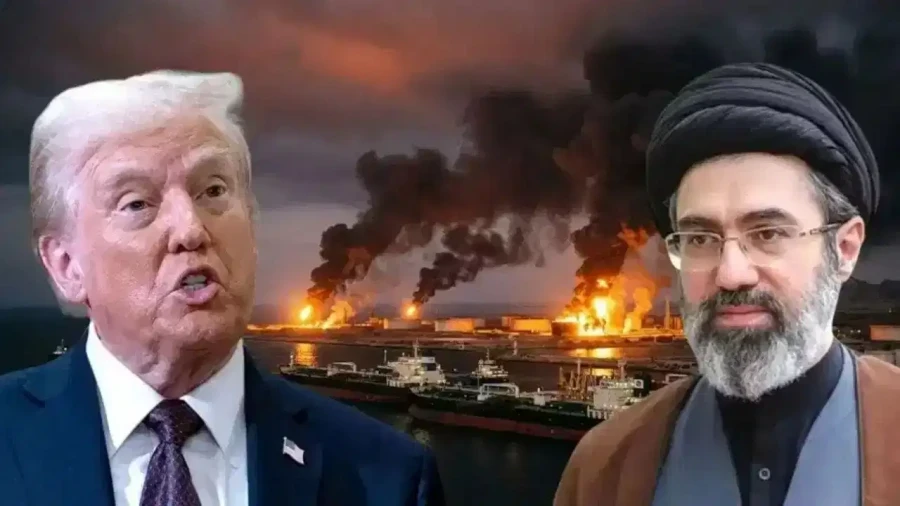
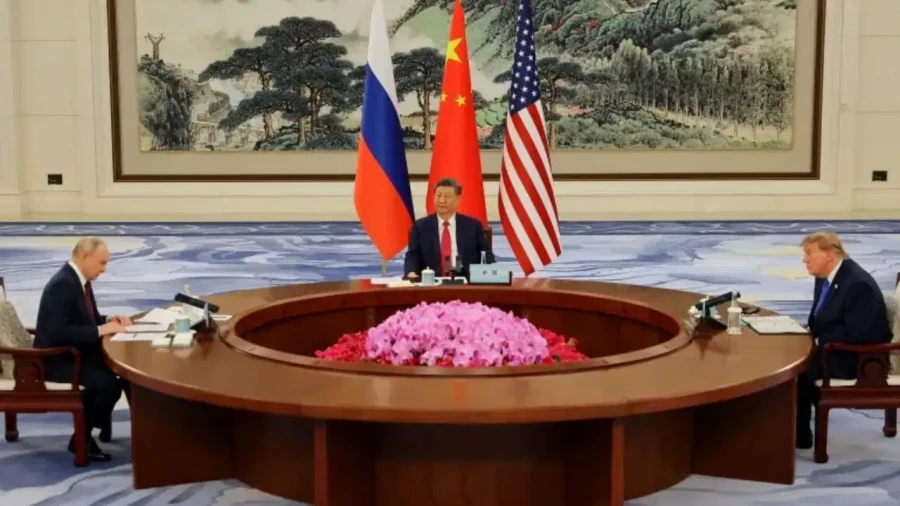
During the Asia-Pacific Economic Cooperation (APEC) summit held in Shenzhen, China, a high-level and crucially important meeting took place, bringing US President Donald Trump, Russian President Vladimir Putin, and Chinese President Xi Jinping face to face. In this round of trilateral and bilateral meetings, extensive discussions were held on several critical issues related to global politics, energy security, and international trade, drawing intense global attention, while following the meeting, US President Donald Trump clearly stated before the media and the global platform that both the United States and China completely agree that oil supplies from the Strait of Hormuz must continue without any interruption. Trump strongly emphasized that the shared interest of both superpowers lies in ensuring that energy movement through this strategically vital sea route faces no hindrances whatsoever.
Hormuz Crisis and Impact on the Global Energy Market
At present, due to the ongoing Hormuz crisis, crude oil prices in the international market have skyrocketed to an alarming level of around 100 dollars per barrel. This situation is rapidly transforming into a major crisis for the global economy. Notably, China is ranked among the largest oil-importing nations in the entire world. So, any halt or disruption in oil supplies originating from the Strait of Hormuz poses a direct and massive threat to China's domestic economy and its vital energy requirements. On the other hand, the United States is also deeply concerned about soaring oil prices and their negative repercussions on markets worldwide. Even though US President Donald Trump and Chinese President Xi Jinping share the exact same mindset regarding the safe movement of vessels through the Strait of Hormuz, no concrete or formal agreement has yet emerged on how the United States and China will work together to end tensions with Iran and restore safe passage for commercial ships through Hormuz.
Trump Agricultural Demands and Xi Jinping Taiwan Stance
During this high-level meeting in Shenzhen, US President Donald Trump also put forward another major commercial demand before China. Trump demanded that China purchase a Importantly larger volume of agricultural products from American farmers. He underscored the point that the demand for American agricultural products in the Chinese market is extremely high and should be further expanded, while meanwhile, Chinese President Xi Jinping forcefully raised the sensitive issue of Taiwan during the meeting. Jinping appealed to the United States to take entirely correct and balanced steps on the Taiwan issue and make serious efforts to narrow the policy differences between the two nations. Thus, alongside the Hormuz energy crisis, agricultural trade and the Taiwan issue have firmly established themselves as vital and central components of the diplomatic dialogue between the United States and China. However, how both nations will cooperate in the future regarding Iran's nuclear program and the prevailing wartime environment will only become clear through subsequent rounds of talks.
Russian President Vladimir Putin's Key Role and Statements
During this trilateral gathering, Russian President Vladimir Putin also articulated his perspective very firmly before Trump and Jinping, while putin stated that Russia, the United States, and China share multiple overlapping strategic and economic interests. He placed special emphasis on the shared and moral responsibility of these three major nations to assist in maintaining global peace and stability everywhere. On top of that, Russian President Vladimir Putin highlighted the immense necessity of direct and serious dialogue among the three countries to bring an end to the ongoing war in Ukraine, while it's noteworthy that just prior to this joint session, US President Donald Trump and Russian President Vladimir Putin held a separate, closed-door bilateral conversation lasting approximately 40 minutes. This meeting primarily focused on exploring the situation surrounding the Ukraine war and improving mutual bilateral relations between the two countries. According to Kremlin official Yuri Ushakov, Russian President Vladimir Putin was visibly quite happy following this confidential and extended meeting with Trump. Political analysts believe that this meeting in Shenzhen was critically important for Putin from a diplomatic standpoint, as it provided him with a golden opportunity to project his strong status and standing globally as an equal global leader alongside heavyweights like the United States and China. All these discussions have definitively proven that despite ideological differences on numerous fronts, all major powers are compelled to engage in serious dialogue when it comes to energy security and global peace.