
- India,
- 19-Nov-2026 09:18 PM IST



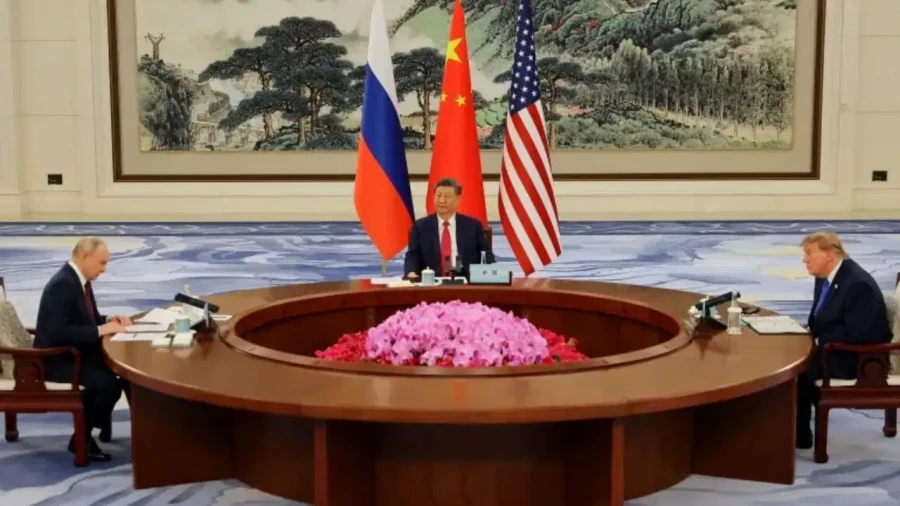
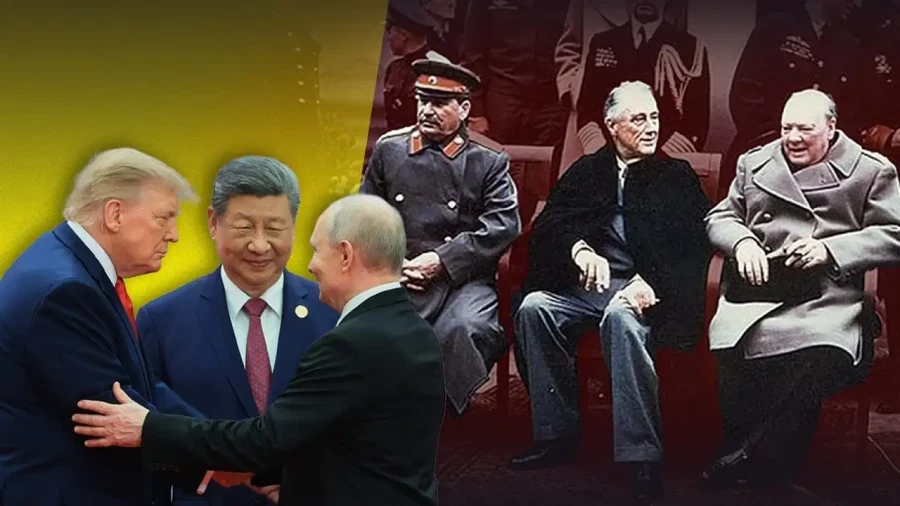
Discussions regarding the Yalta Conference held eight decades ago have once again surged into international prominence. That historic conference is being strongly linked to the recently concluded APEC conference in China's Shenzhen city, while the primary reason behind this comparison is that back then, the President of the United States, the Prime Minister of Britain, and the leader of the Soviet Union had met in the Crimean city of Yalta. This was precisely the time when World War II was breathing its final breaths, while following days of continuous meetings, several new paths opened up for the entire world. The roles of numerous international organizations, including the present-day United Nations, were determined during that very meeting, while today, that conference is back in the spotlight because the leaders of China, Russia, and the United States not only met together at the APEC Summit, but all three also sat down separately to hold detailed deliberations.
This separate meeting among the three influential global leaders has considerably heightened anxieties for several nations, including Ukraine. A deep apprehension has grown in the minds of these affected countries that these three powerful leaders might make some decision whose direct impact would fall on their nations without any participation from them. Although such an outcome doesn't appear very likely in today's diplomatic environment, everyone naturally possesses the right to express apprehension regarding their security and future. Let us use this occasion to understand in detail what the Yalta Conference actually was, why it's being compared to today's APEC Summit, what was genuinely achieved from that conference, and what the outcomes of the current summit turned out to be.
Historical Landscape And Background Of Yalta Conference
The Yalta Conference took place in February 1945 in the historic Crimean city of Yalta. This crucial summit was attended by United States President Franklin D. Roosevelt, British Prime Minister Winston Churchill, and Soviet leader Joseph Stalin. At that time, World War II was entering its final and decisive phase, and the defeat of Nazi Germany was drawing very close. The greatest challenge before these three great leaders was to determine what the political and administrative structure of post-war Europe and the entire world would look like. The conference ran from February 4 to February 11. During this period, intensive discussions were held on critical issues such as the future of Germany, Poland's borders and government, the political direction of Eastern Europe, the ongoing war against Japan, and the establishment of a brand-new international organization. This meeting proved to be immensely significant because the historic decisions made within it profoundly impacted the entire post-war global order.
What Was Achieved And Decided At The Yalta Conference
During the Yalta Conference, the three top leaders agreed to divide Germany into separate zones occupied by the Allied powers, and France was also allocated a designated zone for administration. This arrangement established the post-war administrative framework for Germany. The pathway toward the establishment of the United Nations was also advanced right at Yalta. The leaders agreed to convene a special conference in San Francisco, United States, to work on the official UN Charter. Also, consensus was reached regarding the vital roles of permanent members in the United Nations Security Council and the system surrounding their veto powers. The Soviet Union made a formal promise to join the war against Japan once Germany was completely defeated, and in exchange, it received recognition for certain strategic interests in Asia.
Discussions regarding the future of Poland also took place during the conference, but the expectations expressed for establishing a free and independent political system there weren't fully realized later on. Under Soviet influence, Moscow's dominance over the politics of several Eastern European nations increased substantially. The Yalta Conference shouldn't be viewed merely as a formal agreement; it also became a symbol of negotiations among great powers where affected nations were denied adequate opportunities to speak on their own futures. Subsequently, tensions escalated Notably between the United States and the Soviet Union, Europe was divided into two distinct political camps, and the foundational background for the Cold War was firmly established.
Why Today Apec Summit Is Being Compared To Yalta
The 33rd APEC Economic Leaders' Meeting was held in Shenzhen, China, on November 18 and 19, 2026. The meeting between US President Donald Trump, Russian President Vladimir Putin, and Chinese President Xi Jinping during this event triggered comparisons with the Yalta Conference, while all three nations are major global superpowers wielding tremendous influence over world politics and economics, possessing the capability to impact sensitive nuclear-related issues and critical global crises. The main reason for this comparison is the persistent anxiety that these major powers might make decisions among themselves that could adversely affect Ukraine, Europe, or Asian nations while those affected countries remain entirely uninvited to the negotiating table.
Ukraine, in particular, harbors deep fears that a settlement regarding its future or the ongoing war might be reached without its direct participation. Similarly, certain nations in the Asia-Pacific region worry that crucial regional security decisions could be formulated without hearing their voices. Nevertheless, treating both meetings as identical wouldn't be accurate, while in 1945, World War II was coming to an end, and establishing a post-war system was an immediate and pressing necessity. Today's meeting, however, wasn't convened for any declared world-order agreement. Nor was it clear that any shared political or military strategy would be forged among the three countries. Both Russia and China have dismissed such comparisons. 0' as a political metaphor rather than an official designation or a fixed agreement is much more appropriate.
Outcomes And Economic Agenda Of Apec Summit 2026
The primary and core objective of the APEC Summit is to foster economic cooperation within the wider Asia-Pacific region, while this year's Shenzhen meeting placed strong emphasis on trade, global supply chains, connectivity arrangements, the digital economy, and artificial intelligence. According to information released by the Prime Minister's Office of Canada, all attending leaders agreed on shared principles to advance APEC's connectivity agenda, promote paperless trade, and shield food supplies from global disruptions. In his keynote address, Chinese President Xi Jinping highlighted trade, economy, connectivity, innovation, and inclusive development as the key areas for mutual cooperation. He spoke about collaborating in the digital economy, artificial intelligence, energy, and food security. On top of that, China announced a major financial contribution of 20 million US dollars toward practical cooperation within APEC.
Bilateral Meetings Held On The Sidelines Of The Summit
Apart from the core events of the APEC Summit in Shenzhen, various leaders held separate bilateral meetings on the sidelines. Japanese Prime Minister Sanae Takaichi, following her meeting with Chinese President Xi Jinping, stated that Japan's policy regarding Taiwan remains unchanged. Regarding the separate meeting between US President Donald Trump and Russian President Vladimir Putin, the Kremlin stated that the Ukraine conflict was the primary subject of discussion. A bilateral meeting also took place between Donald Trump and Xi Jinping. However, available reports don't conclude that the trilateral meeting between Trump, Putin, and Xi produced any final agreements regarding the Ukraine war, nuclear weapons control, or other major regional disputes.
The economic outcomes of APEC and the separate political meetings of these leaders must be understood in different contexts. While the meeting demonstrated a solid direction toward economic cooperation, no final resolution for major global security crises was officially announced. Thus, while the 1945 Yalta Conference played a decisive role in shaping post-war Europe and the United Nations system, it also left behind the lingering question of whether major powers can decide the fate of smaller nations without their participation. This historical parallel is why the name of Yalta is being invoked alongside today's APEC Summit. The APEC Summit 2026 held in China had economic cooperation as its core agenda. While the meeting of the three superpower leaders was undoubtedly significant, calling it a new Yalta or a definitive global agreement is premature.