
- India,
- 15-Jun-2026 08:18 AM IST


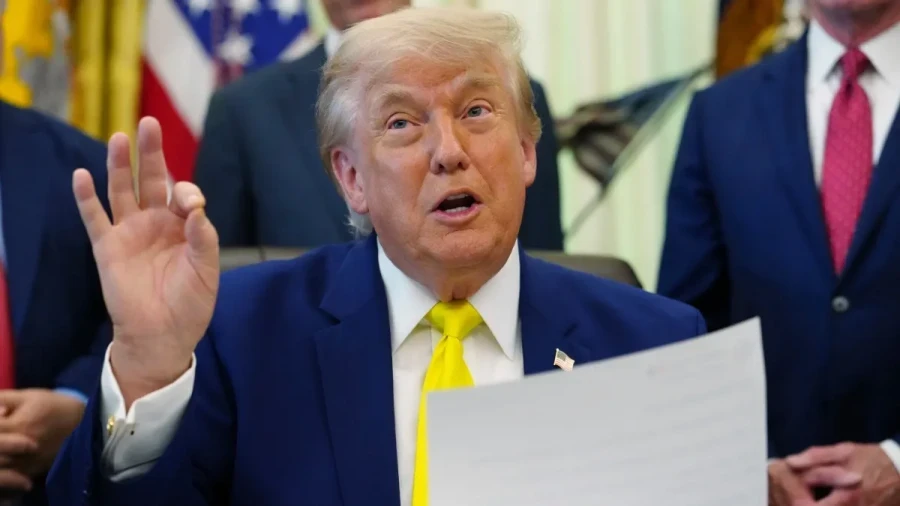
United States President Donald Trump has made a significant announcement regarding a peace agreement between the United States and Iran. According to the President, the two nations have reached a consensus that will lead to the reopening of the Strait of Hormuz starting this Friday. This development comes after a period of intense tension and conflict that has lasted for 107 days. Trump shared this news on his Truth Social platform on Sunday evening, suggesting that the deal would Importantly alleviate the mounting pressure on the global energy market. The formal signing ceremony for this peace treaty is scheduled to take place on June 19 in Switzerland.
Reopening of the Strait of Hormuz and Economic Impact
One of the most critical aspects of this claimed agreement is the reopening of the Strait of Hormuz. President Trump stated that the strait would be opened without any toll tax, allowing for the free movement of vessels. This is a major development as approximately 20 percent of the world's oil supply passes through this narrow waterway. The closure of the strait during the 107-day conflict had severely disrupted global oil supplies. With its reopening, countries like India and many others are expected to see a resumption of regular oil supplies, which could lead to a decrease in crude oil prices in the international market. Trump's announcement included a directive for the immediate removal of the United States naval blockade on Iranian ports, telling the world's ships to start your engines and let the oil flow.
Details of the Agreement and Signing Schedule
The peace deal is set to be officially signed on June 19. While Trump has expressed great confidence in the deal, there has been no official reaction from the Iranian side yet. In the past, Trump had made similar claims about Iran being ready to sign a deal involving nuclear programs, oil bans, frozen properties, and issues related to the Strait of Hormuz. However, Iran had previously dismissed those claims as false, asserting that they would only sign an agreement if they received a fund of 24 billion dollars first. Despite this history, Trump maintains that the current deal is complete and will bring lasting peace and security to the entire region. S. presidents had failed to achieve peace with Iran, but he has succeeded where they couldn't.
Nuclear Negotiations and Regional Tensions
The agreement also includes a specific timeline for addressing nuclear concerns. Under the terms of the deal, the United States and Iran will engage in negotiations over the next 60 days regarding Iran's nuclear enrichment activities and the disposal of its highly enriched uranium. This part of the deal is crucial for long-term stability. The announcement comes at a time of heightened regional tension, following Israeli airstrikes on Hezbollah positions in Beirut. Trump reportedly had a heated conversation with Israeli Prime Minister Benjamin Netanyahu, urging both him and Iranian negotiators to avoid further attacks to protect the peace process.
Background of the Conflict and Mediation
The path to this agreement was paved by mediators from Pakistan and Qatar. These intermediaries had initially secured a two-week ceasefire agreement on April 8, which was subsequently extended to allow for the completion of peace talks. The conflict saw a major escalation on February 28, when the United States and Israel launched attacks on Iran. These strikes resulted in the loss of several top Iranian leaders, including Supreme Leader Ayatollah Ali Khamenei, Secretary of the Supreme National Security Council Ali Larijani, Islamic Revolutionary Guard Corps Commander Mohammad Pakpour, and Defense Minister Aziz Nasirzadeh, while following these events, Khamenei's son, Mojtaba, has become the Supreme Leader, though he has not made a public appearance since the start of the war. Trump's announcement of the deal coincided with his 80th birthday, marking the end of a turbulent week of diplomacy and military threats, including a recently withdrawn threat to seize Iran's Kharg Island oil export hub.