
- India,
- 17-Aug-2026 08:52 AM IST



US President Donald Trump has issued a formal directive to the Pentagon to scale back the upcoming joint military exercises with South Korea. This significant policy shift comes at a time when North Korea has reportedly resumed its ballistic missile testing activities, which remain under a strict ban by the United Nations. Trump's decision reflects a strategic pivot in the US-South Korea military alliance, prioritizing diplomatic signaling and cost-cutting over large-scale field maneuvers.
Reasons Behind the Reduction
In a detailed social media post, President Trump explained that the joint exercises scheduled to commence this week are excessively expensive. He argued that these maneuvers send a completely wrong and hostile signal to North Korea. Trump emphasized that since his tenure in the White House, North Korea's behavior has been respectful and has not posed a direct threat. Plus, the President expressed dissatisfaction with South Korea, stating that the nation had refused to assist in efforts to make Iran nuclear-free, which influenced his decision to distance the US from the full-scale drills.
Directives to the Pentagon
Trump noted that while it's currently too late to cancel the exercises entirely, he has provided specific instructions to Secretary of Defense Pete Hegseth, while the directive mandates a significant reduction in the scope and intensity of the joint operations. This move is intended to mitigate the provocative nature of the drills as perceived by Pyongyang while still maintaining a baseline of military cooperation.
Scope of the Joint Operations
The original plan for the 11-day exercise involved approximately 18,000 South Korean soldiers. The primary objective of these drills was to strengthen the collective preparedness of the US and South Korean forces against potential threats from North Korea. According to the US military, the exercises were designed to practice joint operations under challenging conditions. The training modules included live-fire exercises to test precision and movement capabilities, water obstacle crossings, and the strategic distribution of pre-positioned military equipment.
Diplomatic Relations and Historical Context
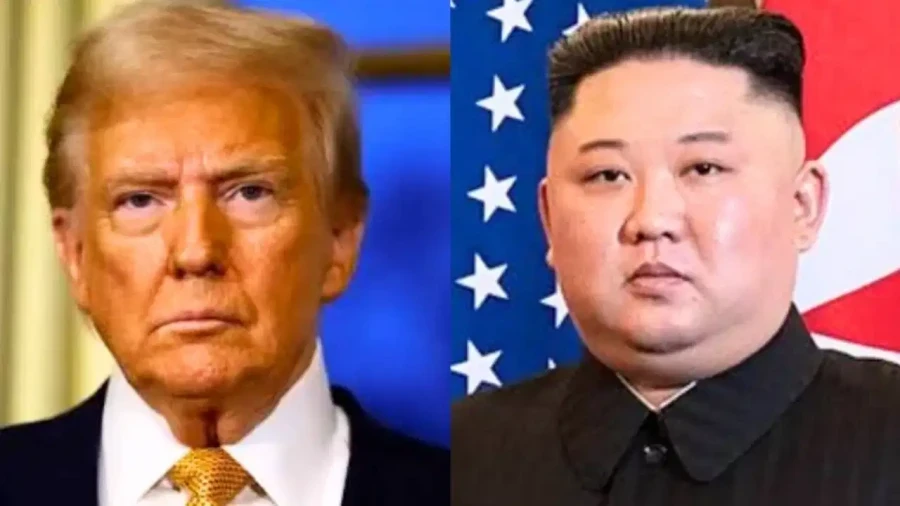
Just a day prior to this announcement, Trump shared a photograph of himself with North Korean leader Kim Jong Un. He remarked that despite the serious expressions in the photo, the two leaders maintain a very good relationship. This stands in contrast to the North Korean Foreign Ministry's stance, which has labeled the US-South Korea training as a preparation for an aggressive war, leading to a new phase of instability in the region. Trump has a history of engaging with Kim Jong Un, having met him three times during his first term to discuss the country's nuclear program, with the final meeting occurring in 2019. Upon returning to power, Trump has shown a renewed interest in continuing these high-level discussions.
Trump's Long-standing View on War Games
This isn't the first instance where Trump has sought to curtail these military activities. During his first term, he unexpectedly announced that these war games were provocative. Following the 2018 summit with Kim Jong Un in Singapore, Trump told reporters that the US would stop the war games to save a significant amount of money, provided that future negotiations proceeded as expected. His current order to Pete Hegseth aligns with this long-held belief that large-scale exercises are both a financial burden and a diplomatic hurdle.