
- India,
- 15-Nov-2026 08:28 PM IST



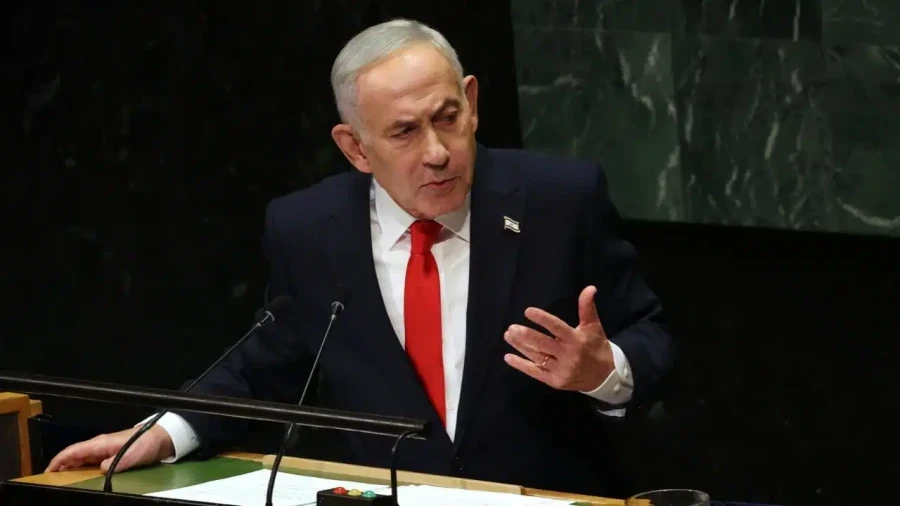
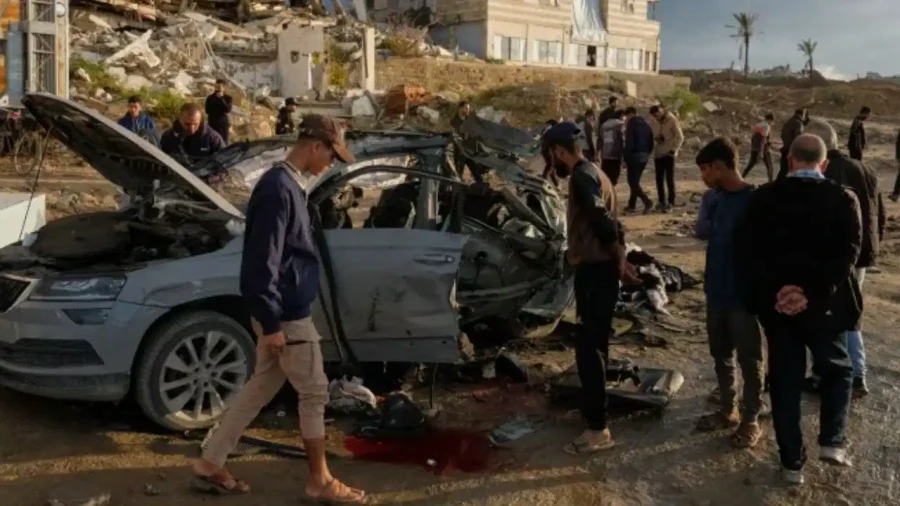
Israel has Importantly intensified its ongoing military operations in the Gaza Strip, making a major and impactful claim regarding the leadership of Hamas. Israeli security forces have officially confirmed that a top Hamas commander was successfully eliminated during intense overnight airstrikes carried out across the southern region of Gaza. This significant military development has once again thrust the complex Middle East conflict firmly into the global international spotlight. According to official details released by the Israeli military, the slain Hamas commander has been identified as Abu Younis, who was killed in a precise strike that occurred immediately after midnight on Saturday. The military further stated that Abu Younis was actively working to strengthen the organizational capabilities of Hamas within the Gaza Strip and was deeply involved in planning and executing advanced terrorist attacks against Israeli targets on the ground. The Israeli military also pointed out the crucial fact that the individual who previously held this exact position was also eliminated by an Israeli strike just two months ago, delivering yet another crippling blow to the operational command structure of Hamas. According to the army, Sunday's fresh airstrike didn't solely target Abu Younis, but also specifically engaged other associated members and operatives of Hamas in order to systematically dismantle their network.
Hamas has also officially acknowledged and confirmed this heavy organizational loss. In an official statement released by Hamas, the commander of the group's Rafah Brigade, Samir Mahmoud Hassan, formally verified the death of Abu Younis. The statement issued by Hamas further clarified that the slain commander, Abu Younis, was laid to rest on Sunday itself following standard burial rituals and under strict security measures. Following this high-profile incident, the security dynamics within and around the Gaza Strip are shifting rapidly, with the Israeli military maintaining continuous and sharp vigilance over all remaining Hamas strongholds. The systematic elimination of one top Hamas leader after another is widely regarded as a massive strategic setback for the militant group, as it severely disrupts both the momentum and coordination of their ground operations.
Rising Tensions Between Iran And Bahrain
Amid the relentless conflict unfolding within Gaza, strategic and military tensions across other parts of the Middle East have reached alarming levels, while iran's powerful Islamic Revolutionary Guard Corps made a bold and provocative claim on Sunday morning, stating that it had successfully targeted a radar system located at a United States helicopter base in Bahrain. However, the United States Central Command (CENTCOM), which oversees American military forces and operations across the wider Middle East, has thus far refrained from making any official comments or statements regarding this Iranian claim. This sensational sequence of events follows closely on the heels of Friday's announcement by CENTCOM, wherein the military command reported that it had successfully intercepted and stopped two Iranian drones heading in the direction of Bahrain. At the time of that earlier incident, Iran had claimed that it targeted an American early-warning radar system in the area, a claim that was promptly and firmly dismissed by the United States government.
In direct response to these aggressive moves and escalating regional threats by Iran, the Ministry of Interior of Bahrain has been placed on high alert. The Bahraini Interior Ministry issued two nationwide security alerts on Sunday, warning citizens of an unspecified impending danger. This marks the very first time such elevated security alerts have been issued in the country since September, while however, the ministry didn't disclose specific details regarding the exact nature of the threat or whether any physical infrastructure or assets had sustained damage from a potential strike. The official statement released by the ministry explicitly stated that Iran continues to adopt a hostile and aggressive attitude toward the Kingdom of Bahrain by repeatedly targeting the sovereign nation through dangerous and destabilizing attacks.
Jordan's State Security Court Delivers Harsh Verdicts
Meanwhile, major judicial and security developments have also emerged from the Jordanian capital of Amman and other parts of the country. According to reports from Jordan's state-owned television channel Al Mamlaka, the nation's State Security Court delivered a very harsh and historic ruling on Sunday, sentencing three individuals to capital punishment by death. All three defendants were directly accused of orchestrating and carrying out a lethal and brutal shooting incident inside a prominent Greek Orthodox Church located in the historic city of Karak last month. According to the Jordanian judicial system, all of these convicts were found guilty of executing premeditated terrorist activities and severely undermining national security and public peace, while the attack, which took place on October 23, went down in modern history as one of the deadliest assaults ever launched against Jordan's minority Christian community, leaving nine innocent people dead and dozens of others wounded, prompting immediate and rigorous tightening of security nationwide.
Yemeni Houthi Claims And Ballistic Missile Attacks On Riyadh
On the other front near the border of Yemen and Saudi Arabia, the conflict continues to escalate dramatically. Health officials belonging to the Iran-backed Houthi militant group in the Yemeni capital of Sanaa made a sensational claim that two women and two young children sustained injuries during a powerful airstrike that struck the city. A statement released by the Houthi-run health ministry claimed that the airstrike hit a densely populated residential area located in the northeastern sector of Sanaa early Sunday morning. However, the Houthi ministry provided no detailed evidence or specific elaboration in its preliminary report regarding what strategic or military site was actually targeted in the attack, while without offering any concrete proof, the ministry squarely blamed Saudi Arabia for the violent assault. Houthi officials added that all the civilians injured in the airstrike were swiftly rushed to the local Muyyad Hospital for emergency medical treatment.
Amidst the escalating provocations by the Houthis, the armed forces of Saudi Arabia demonstrated their formidable defensive capabilities. Official Saudi military spokesperson Major General Turki al-Maliki revealed during a press briefing that early Sunday morning, Houthi rebels fired two ballistic missiles toward the heavily populated capital city of Riyadh. Fortunately, Saudi Arabia's advanced air defense systems acted with swift readiness, intercepting both ballistic missiles mid-air and completely destroying them before they could reach their targets, thereby averting a major humanitarian crisis, while Also, spokesperson Major General Turki al-Maliki disclosed that two suspicious drones flying over Saudi Arabia's oil-rich and strategically vital Eastern Province were also successfully intercepted and shot down by Saudi security forces. These successive developments clearly underline the grave reality that from Gaza to Yemen and Bahrain, the entire Middle East is currently living under the ominous shadow of severe security crises and near-wartime conditions.