
- India,
- 16-Nov-2026 08:44 PM IST



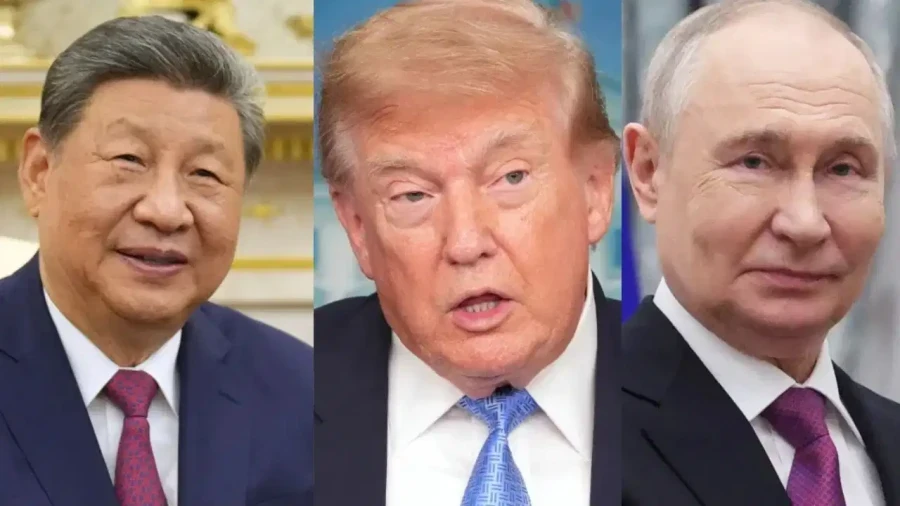
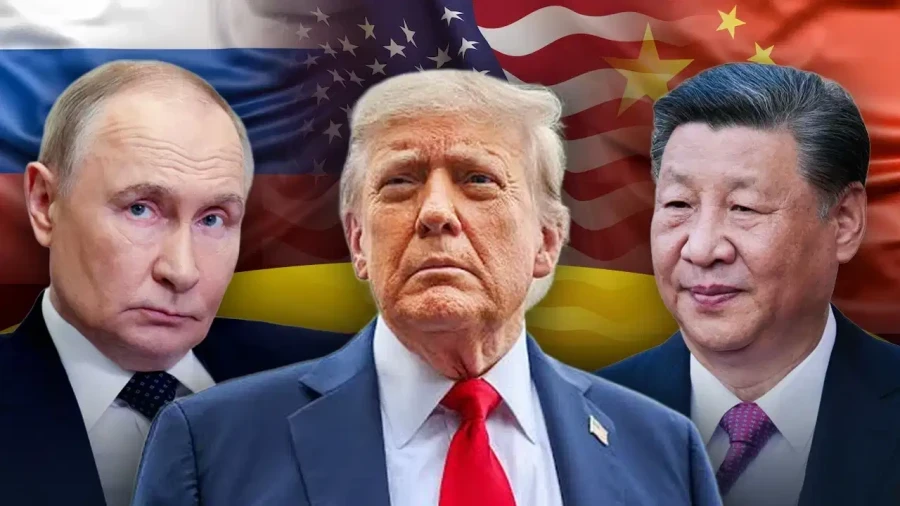
In February 1945, when World War II was in its final stages, leaders of the three major powers, the United States, Britain, and the Soviet Union, met in Yalta, Crimea. This meeting decided major issues such as the post-war world order, the future of Germany, and respective spheres of influence in Europe. About 81 years later, leaders of the world's three major powers are set to sit together once again. This time, US President Donald Trump, Chinese President Xi Jinping, and Russian President Vladimir Putin will meet in Shenzhen, China.
Putin and Xi have met more than 40 times, Trump and Putin 7 times, and Trump and Xi 3 times. However, the three have never met together simultaneously, while their first joint meeting is proposed during the Asia-Pacific Economic Cooperation (APEC) summit scheduled from November 18 to 19. This upcoming meeting has revived memories of the 1945 Yalta Conference, raising questions about whether it could bring major shifts in the global political and security architecture.
What happened at the Yalta Conference?
From February 4 to 11, 1945, US President Franklin D. Roosevelt, British Prime Minister Winston Churchill, and Soviet leader Joseph Stalin met in the Crimean city of Yalta. At that time, Germany's defeat was considered nearly certain. The three leaders faced the challenge of determining the post-war order of Europe and the world. The meeting agreed on dividing Germany into separate zones of occupation by different countries, with France later included in the administration. Agreement was also reached on advancing the formation of the United Nations and granting veto power to its five permanent Security Council members. Discussions also covered new governments and free elections in Poland and other Eastern European nations. The Soviet Union agreed to join the war against Japan in exchange for strategic rights and territories in Asia.
Why were Yalta decisions questioned?
At Yalta, the three leaders spoke of free elections and the right of people to choose their own governments. However, after the war, the Soviet Union expanded its influence across several Eastern European nations. Communist governments were established in Poland and other countries, heightening tensions between the US and the Soviet Union and eventually leading to the Cold War. Consequently, Yalta is viewed not just as a peace effort, but as a conference that carved out spheres of influence among major powers, raising concerns among smaller nations that their futures would be decided without their participation.
Could Shenzhen witness Yalta-like decisions?
The primary discussion surrounding the Shenzhen meeting is whether the three leaders will attempt to expand their spheres of influence or strike bargains across different parts of the world. However, the circumstances of the two meetings differ. While the three nations were allies in WWII, today the interests of the US, China, and Russia clash on numerous fronts. Russia wants the Ukraine war to end on its terms, and Putin seeks to project Russia as a major global power through this meeting. Conversely, Trump desires a new arms control agreement to limit nuclear weapons, including China. However, China appears reluctant, arguing that its nuclear arsenal is far smaller than those of the US and Russia.
According to data from the Stockholm International Peace Research Institute (SIPRI) for 2026, as of January 2026, Russia held approximately 5420, the United States 5042, and China 620 nuclear weapons. Plus, the New START treaty limiting strategic nuclear arms between the US and Russia expired in February 2026. Consequently, discussions on nuclear weapons could be significant. The conflict involving the US, Israel, and Iran may also emerge as a topic of discussion, as China seeks a role in resolving the crisis to protect its energy supplies.
Why are Ukraine and Europe fearing a Yalta-style deal?
Ukraine harbors strong apprehensions that the three major powers might decide its future in its absence. Russia wants changes to the European security architecture as well. Meanwhile, European nations fear that the US and Russia might strike a deal bypassing European interests. Ukrainian President Volodymyr Zelenskyy has also compared the Shenzhen meeting to Yalta, expressing fears of the world being carved up into spheres of influence. However, China is reportedly unenthusiastic about including the Ukraine war on the agenda, and US officials have indicated that discussions on Ukraine are unlikely during the leaders' meeting.
Can the global order change?
The primary significance of this meeting lies in its symbolic message. Granting Putin a platform alongside the leaders of the US and China could strengthen Russia's international standing. Jinping will get an opportunity to showcase China's growing power, while Trump will aim to project his diplomatic role on issues like nuclear pacts and the Iran war. Nonetheless, the agenda and format of the talks aren't yet fully finalized, and the interests of Russia, the US, and China diverge Notably. Because of this, expecting a new global map or major Yalta-style agreements from this meeting would be premature, leaving the core question open: will the leaders cooperate to solve global problems or pursue purely national interests?