
- India,
- 22-Jul-2026 06:48 PM IST



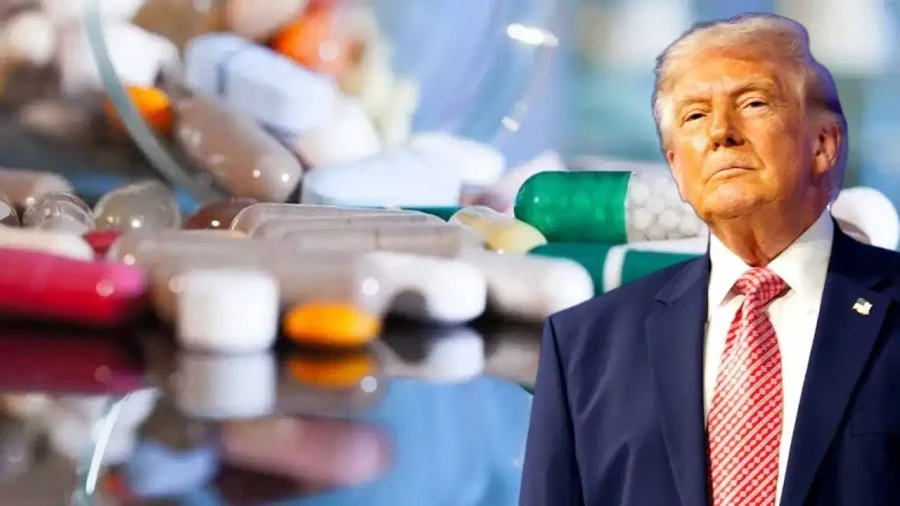
The global pharmaceutical landscape is bracing for a significant shift as United States President Donald Trump proposes a massive tariff hike on imported generic medicines. According to a detailed report by the Global Trade Research Initiative (GTRI), these proposed tariffs, which could reach as high as 200 percent, are expected to put considerable pressure on Indian pharmaceutical exporters. However, the report also highlights a silver lining: the inherent low-cost advantage of Indian-made drugs might allow them to maintain their competitive edge in the American market despite the heavy financial burden of these new taxes.
The GTRI Report: Analyzing the Tariff Threat
S. Tariff Threat, which delves into the potential repercussions of the new American trade policy. The report points out that many Indian generic drugs are priced seven to ten times lower than their branded counterparts in the United States. This massive price gap is the primary reason why Indian exporters might still find a way to stay relevant. Even after the implementation of a 200 percent tariff, the final cost of these generic drugs could remain lower than or comparable to branded alternatives produced within the US.
GTRI suggests that the additional costs incurred due to these tariffs might not be entirely absorbed by the manufacturers. Instead, the burden is likely to be passed on to US healthcare providers, insurance companies, and ultimately, the patients. This means that while the cost of healthcare in the US might rise, the market share of Indian pharmaceutical companies might not see an immediate or drastic decline.
Timeline of the Proposed Tariffs
The tariff plan introduced by President Trump follows a specific timeline designed to encourage domestic production, a strategy often referred to as reshoring. According to the announcement, imported generic drugs will continue to enter the United States duty-free until August 1, 2028. This three-year window is intended to give global medicine manufacturers enough time to shift their production units to American soil. Following this period, a 100 percent tariff will be imposed for one year. Starting from August 2029, the tariff will double to 200 percent for any manufacturer that has not established production facilities within the United States.
India's Dominance in the US Generic Market
India is one of the most significant players in the US pharmaceutical sector, making it highly vulnerable to these policy changes. 8 billion dollars globally. 7 percent of India's total pharma exports. This makes the US the largest single market for Indian drug manufacturers.
In terms of volume, Indian companies supply approximately 47 percent of the generic prescriptions filled in the United States. This high volume makes India the largest source of affordable generic medicines for American consumers. However, due to the low pricing of these generics, India's share in the total value of US generic imports stands at around 30 percent, which is lower than its share in terms of prescription volume.
Global Export Destinations for Indian Pharma (2025)
The GTRI report provided a detailed breakdown of India's pharmaceutical exports by destination for the calendar year 2025.
Expansion of Trump's Pharma Tariff Strategy
This latest move completes Trump's broader strategy to tax imported pharmaceutical products. The plan now encompasses branded drugs, active pharmaceutical ingredients (APIs), and generic medicines. In September 2025, a plan was announced to impose a 100 percent tariff on imported branded and patented drugs. Later, in April 2026, the US administration utilized the Section 232 National Security Framework to apply up to 100 percent tariffs on selected branded drugs and essential ingredients, though generics were excluded at that time. With the inclusion of generics, almost no major category of medicine remains outside the scope of Washington's reshoring strategy.
Challenges for the US Supply Chain
The United States imported pharmaceutical products worth 213 billion dollars in 2025.1 billion dollars in finished medicines sold in retail packs, a category that includes generic drugs. GTRI notes that accurately estimating the value of generic imports is difficult because US Customs data doesn't classify them separately. Instead, they're grouped under HS 3004, which includes patented drugs, branded generics, and over-the-counter (OTC) medicines. Shifting the production of these generics to the US will be a massive challenge, as the industry operates on thin margins and relies heavily on global supply chains for raw materials.
Impact on Indian Pharmaceutical Giants
The impact of these tariffs will vary across different types of products. High-value generic formulations and branded generics might face more pressure because manufacturing them within the US could become commercially viable. In contrast, low-cost essential generics may continue to be imported from India due to the significant pricing advantage. Many large Indian firms already have a presence in the US with FDA-approved manufacturing units. Companies like Sun Pharma, Zydus Lifesciences, Lupin, Aurobindo Pharma, Cipla, and Dr. Reddy’s Laboratories are already operating on American soil.
Cipla is reportedly increasing production at its units in Massachusetts and New York. Dr. Reddy’s Laboratories has indicated it might expand US manufacturing if it proves commercially beneficial, while however, Sun Pharma has stated that its current US manufacturing capacity is sufficient and has no immediate plans for expansion. The need for massive investment to create a fully domestic supply chain in the US could lead to higher drug prices for consumers.
The Strategic Risk of China Dependency
Beyond the US tariffs, GTRI highlighted India's dependence on China for raw materials as a major strategic concern. Approximately 70 percent of chemical-based Active Pharmaceutical Ingredients (APIs) and nearly 90 percent of biological inputs used by Indian pharma companies are imported from China. GTRI founder Ajay Srivastava emphasized that India must reduce this vulnerability by rebuilding its own API manufacturing capacity. The think-tank also recommended that Indian exporters look beyond the US and increase their focus on markets in Europe, Latin America, Africa, and Asia to diversify their risk.