
- India,
- 11-May-2026 10:10 AM IST



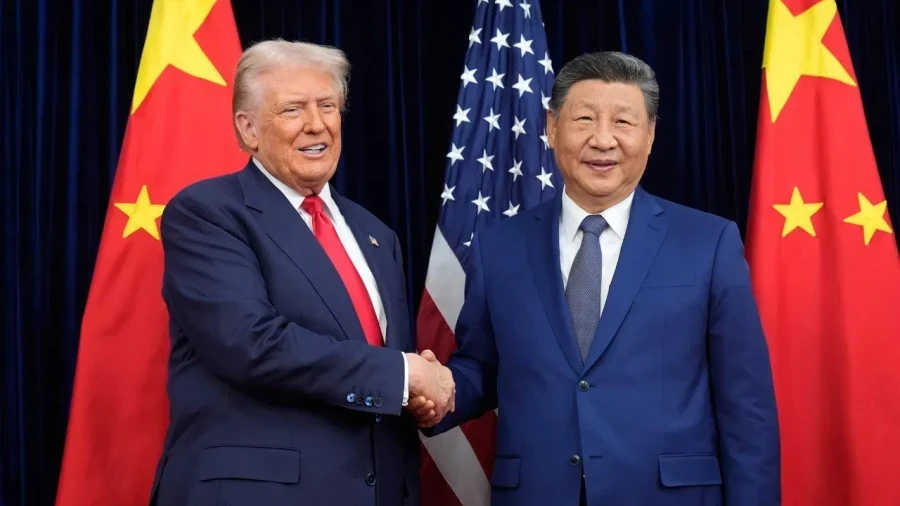
The official schedule for US President Donald Trump's upcoming visit to China has been released, marking a critical juncture in international diplomacy. President Trump is slated to visit Beijing from May 13 to May 15, where he will engage in high-stakes discussions with Chinese President Xi Jinping. This visit comes at a time when the United States and Iran have yet to reach a formal peace agreement, raising questions about whether Beijing could serve as the catalyst for a breakthrough. According to the Chinese Foreign Ministry, the agenda for this meeting is extensive, covering topics such as China's support for Iran and Russia, the situation in Taiwan, bilateral trade, Artificial Intelligence (AI), and the implementation of new sanctions.
The Iran Crisis and Diplomatic Pressure
A primary objective for President Trump during this visit is to exert pressure on China to cease its support for Iran and Russia. US officials have expressed concerns that China is providing dual-use goods and technologies that could be utilized for military purposes. While Trump has previously raised these issues with Xi Jinping, this meeting is expected to place a renewed emphasis on curbing such assistance. The US administration views China's influence as a potential lever to bring Iran back to the negotiating table, although the path to a comprehensive peace deal remains fraught with challenges.
Araghchi’s Beijing Visit and Regional Stability
The diplomatic groundwork for this meeting was partially laid by Iranian Foreign Minister Abbas Araghchi, who visited Beijing on May 6. During his visit, Araghchi met with Chinese Foreign Minister Wang Yi, who pledged that China would play a more significant role in facilitating peace talks and restoring stability in the Middle East. This follows the 40-day conflict between the US and Iran, during which China called for restraint while simultaneously criticizing US actions. US Secretary of State Marco Rubio stated on May 5 that he hopes China will use its influence to persuade Iran to loosen its grip on the strategic Strait of Hormuz. However, it remains to be seen how much pressure Beijing is willing to apply, given its ambition to position itself as a global alternative to US leadership.
US Sanctions on Chinese Satellite Companies
In the days leading up to the visit, the US State Department took decisive action by imposing sanctions on three Chinese satellite companies. These firms are accused of providing Iran with satellite imagery and other technical services that were allegedly used to facilitate attacks on US military forces in the Middle East. This move underscores the ongoing friction between Washington and Beijing over security concerns and the proliferation of sensitive technology. These sanctions are expected to be a point of contention during the bilateral talks between the two presidents.
Detailed Itinerary of the Presidential Visit
White House Deputy Press Secretary Anna Kelly has outlined a detailed itinerary for the President's trip. Trump is scheduled to arrive in Beijing on Wednesday. Thursday will feature the formal meeting between Trump and Xi Jinping, followed by a cultural visit to the Temple of Heaven and a formal State Dinner in the evening. On Friday, the two leaders will participate in a working lunch to finalize discussions on various bilateral issues before President Trump departs for the United States. The visit is designed to balance high-level political negotiations with symbolic cultural engagements.
Trade, Agriculture, and Economic Cooperation
Beyond security and geopolitics, the visit will also address economic ties between the world's two largest economies. Discussions are expected to revolve around agreements in the aerospace, agriculture, and energy sectors. Specifically, negotiations are underway regarding China's purchase of Boeing aircraft and American soybeans. Also, both nations are preparing to establish a Trade Board for non-sensitive goods and an Investment Board to handle investment-related issues. Despite these efforts, US officials have cautioned that a major investment breakthrough is unlikely during this trip, while the global community remains watchful to see if this meeting will provide a new direction for US-China relations and the ongoing Iran crisis.