
- India,
- 25-Aug-2026 05:21 PM IST



The Unified Payments Interface (UPI), which has fundamentally transformed the landscape of digital transactions in India, has successfully completed its remarkable journey of 10 years. Over this decade, UPI has recorded a historic increase of approximately 13000 times in its transaction volume, marking a significant milestone in the nation's financial history. What began as a modest initiative with 44 banks has now evolved into a massive network involving 703 banks, and as per the latest data from July 2026, this number has further grown to 741 banks. Currently, more than 66 crore transactions are being successfully completed through UPI every single day, showcasing the immense trust and reliance the Indian population has placed in this digital payment system.
The Dawn of a Financial Revolution
August 25, 2016, stands as a pivotal date in India's financial history, signaling the start of a major revolution. This was the day the Unified Payments Interface (UPI) was officially launched. Today, as UPI celebrates a decade of success, it's hard to imagine a time when people were hesitant to leave their homes without carrying physical cash. From the smallest roadside vendors to the largest shopping malls, the presence of UPI QR codes is now ubiquitous across the country. When testing began in 2016, few could have predicted how quickly this technology would become an integral part of daily life. The launch of the BHIM app shortly after the initial rollout provided further momentum, and since then, the platform has never looked back, consistently adding new features year after year.
Evolution and Technological Advancements
The journey of UPI has been marked by continuous innovation. In 2017, the introduction of dynamic QR codes made payments even more smooth. 0. Over the years, several sophisticated features were integrated, including Autopay, Credit Line, and UPI Circle. The flexibility of the system was further enhanced by increasing the tax payment limit to 5 lakh rupees. By the year 2025, the platform introduced advanced security features such as fingerprint and face unlock for direct payments on smartphones. According to data from the Ministry of Finance, UPI has seen a 13000-fold jump in digital transactions over the last decade, reflecting a massive shift in consumer behavior.
Record-Breaking Transaction Volumes
The growth in transaction volume and value has been nothing short of extraordinary. In the financial year 2016-17, the transaction volume of UPI was a mere 2 crore. Fast forward to the 2025-26 period, and this figure has skyrocketed to over 24162 crore. 07 lakh crore rupees to approximately 314 lakh crore rupees. Developed by the National Payments Corporation of India (NPCI) under the supervision of the Reserve Bank of India (RBI), the strong technology behind UPI has made it a global benchmark for real-time payments. While it started with only 44 banks, the network has expanded to include 741 banks as of July 2026.
New Milestones in 2026
The year 2026 has been particularly significant for UPI, setting new records in the digital payment space. In May 2026, the monthly transaction volume crossed the 2300 crore mark for the first time, reaching a total of 2320 crore transactions. This was followed by another record in July 2026, where the volume hit 2366 crore transactions, the highest monthly figure in UPI's 10-year history. On average, the system now handles over 66 crore successful transactions daily, proving its scalability and reliability.
Bridging the Digital Divide
To ensure that digital payments are accessible to everyone, including those without smartphones or internet access, UPI 123PAY was launched. This feature allows users with basic feature phones to send money via IVR or missed calls without needing an internet connection. Recently, the transaction limit for this service was increased to 10000 rupees. On top of that, for smaller, faster payments, the UPI Lite wallet was introduced, which now has an increased limit of 5000 rupees. These initiatives have played a crucial role in reducing the digital divide in India, bringing people from remote areas into the digital economy.
Global Footprint and International Recognition
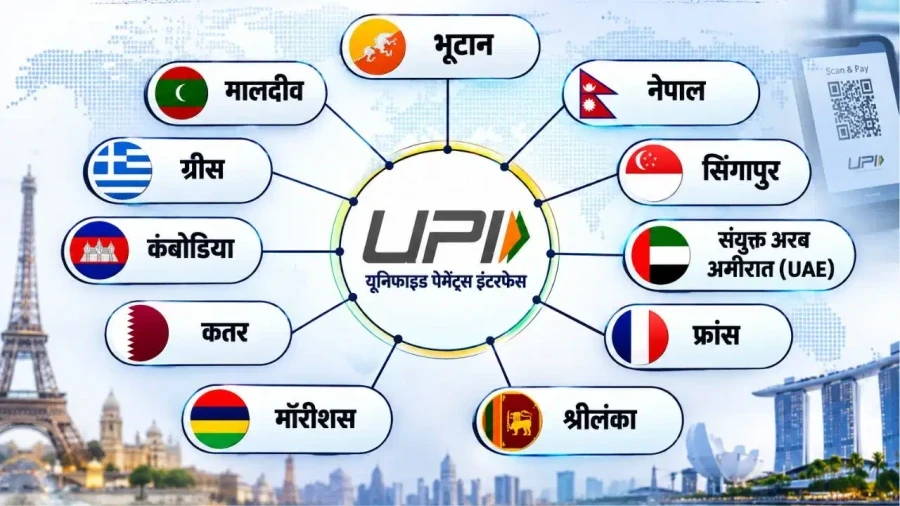
The success of UPI isn't limited to India; it has gained significant international acclaim. The International Monetary Fund (IMF) has recognized UPI as the world's largest real-time payment system in terms of transaction volume. By 2025, UPI accounted for approximately 49 percent of the global real-time payment transaction volume. As of now, UPI is successfully operational in 11 countries, including the UAE, France, Bhutan, Sri Lanka, Nepal, Singapore, Mauritius, Qatar, Cambodia, Greece, and the Maldives. In June 2026, Greece and Cambodia joined the network, and on July 30, 2026, a connection with the Maldives' system was established to facilitate cross-border money transfers.
The Road Ahead for the Next Decade
As UPI enters its second decade, the government's focus remains on making the system even more accessible and inclusive. The goal is to connect more small businesses and residents of remote areas to the digital economy. The next decade will see a continued emphasis on technological development and the addition of new users to the UPI ecosystem, while with its proven track record and global expansion, India is set to remain the undisputed leader in the world of digital payments.