
- India,
- 03-Jul-2026 11:27 AM IST



The United States has openly come out in support of Pakistan's recent military actions within Afghan territory, marking a significant diplomatic shift in the region. The US State Department issued a formal statement emphasizing that Washington supports Pakistan's inherent right to defend itself against terrorist attacks, while this development follows a series of intense aerial operations conducted by Pakistan on June 27, which resulted in significant casualties and has further strained the already volatile relationship between Islamabad and the Taliban-led government in Kabul.
The Scale of the Military Operation and Casualties
According to reports from the United Nations released on Monday, the airstrikes carried out by Pakistan along the border with Afghanistan on June 27 were devastating. The international body confirmed that at least 28 civilians lost their lives in these strikes, while another 49 individuals sustained various injuries. The operations targeted multiple locations, reflecting the escalating military friction between the two neighboring nations. Pakistan's decision to launch these strikes was a direct response to a previous security breach in Karachi, where an attack on the Sindh Rangers headquarters resulted in the deaths of 3 Pakistani soldiers. Islamabad has pointed fingers at 'Jamaat-ul-Ahrar', a group associated with the Tehreek-e-Taliban Pakistan (TTP), for orchestrating the Karachi attack.
A History of Escalating Conflict
The tension between Afghanistan and Pakistan isn't a new phenomenon but has seen a sharp increase since the beginning of the year. In February, a fierce conflict erupted between the two nations. Specifically, on February 21, Pakistan conducted airstrikes in the Afghan provinces of Nangarhar, Paktika, and Khost. In a swift retaliation, the Afghan army launched its own counter-attacks against Pakistani positions. Since that period, violent clashes have been reported intermittently, leading up to the major escalation witnessed on June 27. Following the latest strikes, the Taliban administration in Afghanistan claimed that they had also conducted airstrikes within Pakistani territory. However, Islamabad countered this claim, stating that its forces had successfully intercepted and shot down four initial drones in Balochistan. Subsequently, Pakistan intensified its operations by targeting the Afghan provinces of Paktya, Paktika, and Kunar, where they claimed to have destroyed Taliban weapon and ammunition depots.
Washington's Diplomatic Stance and Strategic Ties
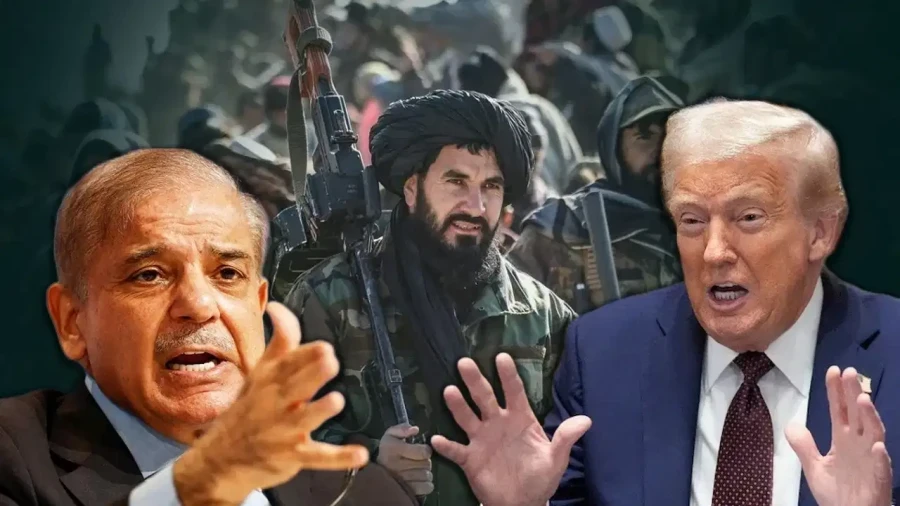
Washington's decision to favor Pakistan in this conflict carries significant weight. By supporting Pakistan's right to defend itself, the US has signaled that it views the Afghan Taliban as a terrorist entity. This stance is rooted in the long-standing relationship between the two countries, as Pakistan remains a major non-NATO ally of the United States. Also, the relationship between Washington and Islamabad has seen a notable improvement since President Donald Trump's return to the White House. Pakistan has also played a strategic role as a mediator in efforts to resolve the US-Israel conflict involving Iran, while currently, the tension between the two neighbors is at its peak, with the Taliban vowing to take revenge for the Pakistani attacks.
The Blame Game and Security Concerns
Islamabad has frequently accused Afghanistan of providing sanctuary to militants responsible for carrying out attacks within Pakistan. The Pakistani government maintains that these groups operate from Afghan soil with impunity, while on the other hand, the Afghan Taliban has consistently denied these allegations. They argue that militancy is an internal problem of Pakistan and that Islamabad is merely shifting the blame for its own security failures onto others, while as both sides remain firm in their positions, the border regions continue to witness high levels of military activity and civilian distress.