

- India,
- 06-Apr-2026 05:30 PM IST
- (Updated 06-Apr-2026 05:39 PM IST)


The United States military executed a high-risk extraction operation deep within Iranian territory to recover pilots who were stranded after their F-15E Strike Eagle was downed by Iranian forces. While the primary objective of rescuing the personnel was successfully achieved, the mission resulted in the intentional destruction of at least one, and possibly two, sophisticated American transport aircraft. This strategic decision was made under extreme pressure as Iranian military units closed in on the extraction site located in a remote desert region.
Operational Challenges and Aircraft Immobilization
According to reports from regional intelligence officials and media outlets, the rescue mission involved the deployment of specialized transport aircraft to a makeshift desert airfield in Iran's interior. During the landing and extraction phase, at least one aircraft became immobilized, either due to mechanical failure or the treacherous soft sand of the desert floor. As the tactical situation deteriorated and enemy forces approached, the decision was made to abandon the grounded assets. To facilitate the escape of the rescued pilots and the special operations team, additional aircraft were utilized for the final extraction, leaving the disabled planes behind.
Strategic Scuttling of High-Tech Assets
The intentional destruction of the aircraft was a calculated move to protect classified military technology. A regional intelligence official informed the Associated Press that US troops used explosives to blow up the transport planes to ensure that sensitive equipment didn't fall into Iranian hands. These aircraft are equipped with highly classified communication arrays, advanced navigation suites, and specialized electronic warfare systems. Military protocols dictate that in non-permissive environments, high-value assets that can't be recovered must be destroyed to prevent reverse-engineering by adversaries. This mirrors the protocol used during the 2011 raid in Abbottabad, Pakistan, where a crashed stealth helicopter was destroyed by US Navy SEALs.
Visual Evidence and Iranian State Media Reports
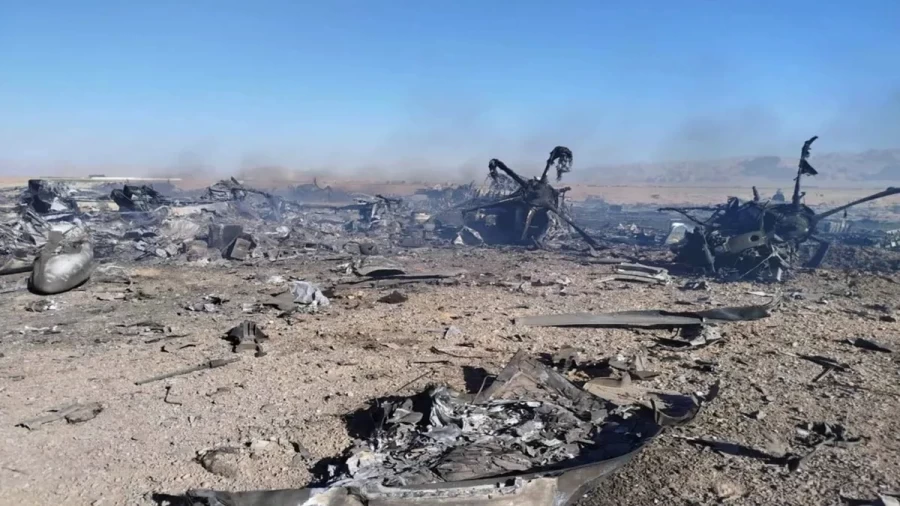
Iranian state media has released photographs and video footage showing the charred remains of the aircraft scattered across a flat desert expanse in Isfahan province. The wreckage appears to belong to a fixed-wing transport aircraft, identified by analysts as part of the Lockheed Martin C-130 family. The footage shows debris consistent with specialized platforms used for clandestine insertions and extractions. Iranian military officials claimed that the US bombed its own equipment to avoid international embarrassment. The visual evidence confirms that the destruction was thorough, leaving only the skeletal frames of the multi-million dollar machines.
Financial Implications and Equipment Specifications
The financial loss from the mission is substantial, as aircraft in the C-130 class are valued at over $100 million each, with specialized variants costing Notably more. Reports from 'Flight Global' suggest that the wreckage also contained remnants of rotorcraft, likely Boeing MH-6 Little Birds. These small, highly maneuverable helicopters are often transported inside MC-130J Commando II aircraft for rapid deployment in special operations. The loss of these assets highlights the extreme risks associated with search and rescue operations in hostile territory. While the human cost was averted with the successful recovery of the pilots, the loss of high-value hardware underscores the complexity of the engagement.
