
- India,
- 08-Oct-2026 11:32 PM IST



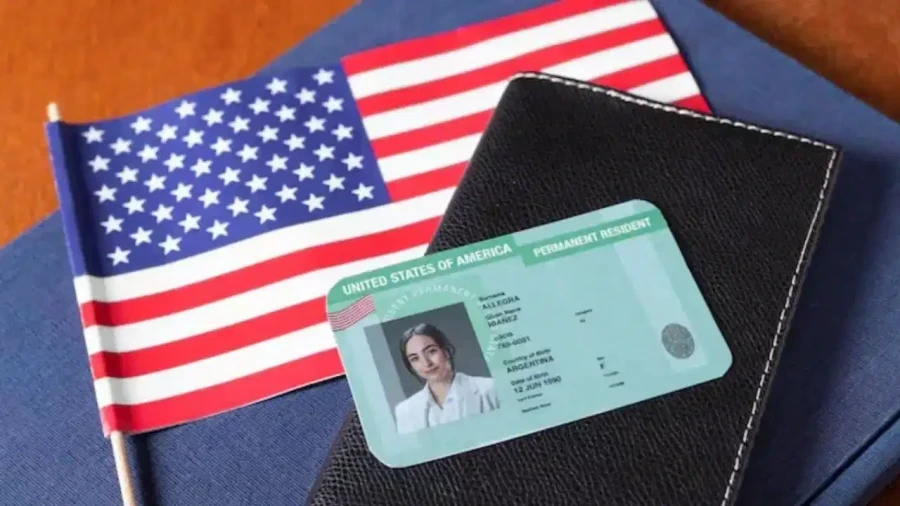
In a significant move that could reshape the landscape of the technology industry and immigration, the United States government has announced the suspension of eight major tech corporations from the Program Electronic Review Management (PERM). This decision, which targets some of the most prominent names in the global IT sector, includes Cognizant, Infosys, Tata, Wipro, HCL, Capgemini, Microsoft, and Adobe. The suspension effectively halts these companies' ability to initiate the green card process for their foreign employees, a move that's expected to have far-reaching consequences for thousands of workers, particularly those holding H-1B visas.
Official Announcement and Key Figures
The announcement was made on Thursday by the United States Labor Secretary, Keith Sonderling. The gravity of the decision was underscored by the presence of high-ranking officials during the briefing, including the head of the US Anti-Fraud Task Force and Vice President JD Vance, while this collective presence signals a coordinated effort by the US administration to tighten oversight on labor certifications and immigration processes related to employment.
According to reports from PTI News, Secretary Sonderling was explicit in his statement regarding the suspension. " He further clarified that the Department of Labor is extending this suspension to include tech giants Microsoft and Adobe as well. This broad sweep covers both traditional outsourcing firms and major software developers, indicating a comprehensive review of how these entities use foreign labor.
Impact on Foreign Workers and Historical Data
The immediate fallout of this decision is the rejection of all new and pending permanent labor certification applications from these eight companies. This creates a significant hurdle for foreign professionals who were in the process of seeking permanent residency in the United States. Secretary Sonderling provided historical context to the scale of these companies' operations, claiming that since 2009, these eight firms have requested approximately 3000000 foreign workers. During this period, they successfully secured approvals for more than 230000 H-1B visas and obtained over 100000 permanent labor certifications.
The US Labor Secretary alleged that these high volumes of foreign hires have directly impacted the employment opportunities available to American citizens. He characterized the situation as a loss of millions of jobs that could have otherwise been filled by US workers. This perspective forms the core of the administration's justification for the suspension, focusing on the protection of the domestic labor market.
Understanding the PERM Program
The Permanent Labor Certification Program, commonly known as PERM, is a critical process managed by the Department of Labor. It allows US employers to hire foreign workers for permanent positions, while however, the program is built on strict prerequisites. Employers must generally demonstrate that there aren't enough qualified, willing, and available US workers to fill the position. Also, they must prove that hiring a foreign worker won't adversely affect the wages and working conditions of similarly employed US workers.
Once the Department of Labor approves the labor certification, the employer can proceed with an immigrant petition to the US Citizenship and Immigration Services (USCIS), typically through Form I-140. For H-1B visa holders, the PERM process is often the most vital step toward obtaining an employment-based green card. By suspending a company's access to this program, the US government makes it nearly impossible for that employer to sponsor foreign workers for permanent residence, thereby stalling their path to citizenship.
Objectives and Identified Vulnerabilities
The primary objective of the PERM program is to ensure that American workers aren't disadvantaged when employers seek to fill permanent roles with foreign talent, while before a green card sponsorship can occur, the labor-market test must be conducted to verify the lack of available US talent. Concerns arise among US officials when employers are suspected of manipulating or bypassing this test. Fraudulent recruitment practices can create a false impression that no qualified American workers are available, when in reality, they may have been discouraged from applying or excluded from consideration.
The Department of Labor's Inspector General has previously identified several vulnerabilities within the PERM system, while these include the submission of fraudulent applications, the provision of inadequate supporting documentation, and weaknesses in the enforcement of rules after a certification has been granted. The current suspension appears to be a direct response to these systemic concerns, aiming to restore integrity to the labor certification process.