
- India,
- 08-Nov-2026 03:00 PM IST



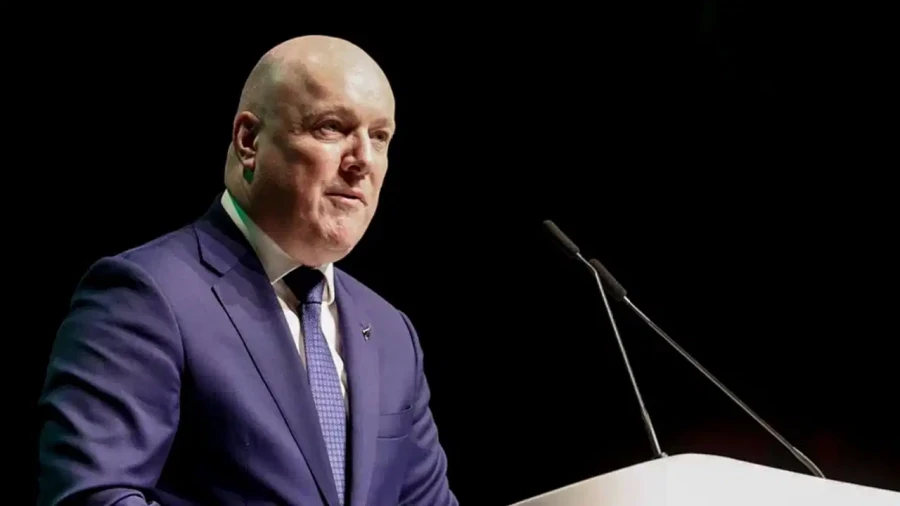
Following the recently concluded general elections in New Zealand, the process of forming a new government may take several weeks to finalize. The political party led by Prime Minister Christopher Luxon along with its coalition allies appears to be securing a workable majority, but a crucial segment consisting of approximately fourteen percent of the total votes still remains to be counted, while the final results derived from these pending votes have the absolute potential to alter the entire electoral landscape and outcome of the election. This is the precise reason why the overall situation regarding the establishment of a brand-new government in the country isn't entirely clear at the present moment. According to the preliminary results released by the country's Electoral Commission, Prime Minister Christopher Luxon's National Party along with its key political allies including ACT and New Zealand First are projected to win a total of sixty-seven seats in the one hundred and thirty-one member parliament.
In order to successfully form a government in the parliamentary setup of New Zealand, a political party or coalition requires a minimum threshold of sixty-six seats. This clearly indicates that the current governing coalition is running ahead of the magical majority mark by a slender margin of just a single seat. However, maintaining the suspense of this intense electoral battle, roughly fourteen percent of the overall votes are still left to be counted. These pending ballots predominantly include the votes cast by New Zealand citizens living abroad as well as those individuals who exercised their franchise outside their respective designated electoral districts. Looking at historical trends from past elections, the inclination and voting pattern of these specific categories of overseas and special voters have traditionally leaned heavily towards left-wing political parties. The country's Electoral Commission is officially scheduled to announce the final and definitive election results on the twenty-seventh of November, which will ultimately provide clarity on the government formation process.
Until the final election results are formally announced and a brand-new government officially assumes office, Prime Minister Christopher Luxon will continue to discharge his administrative duties and responsibilities in the capacity of a caretaker prime minister. Ever since the conclusion of the polling process, political activity has intensified Notably, yet neither Prime Minister Christopher Luxon nor the leader of the opposing Labour Party, Chris Hipkins, has made any premature claims of outright victory. Throughout the entire duration of this rigorous electoral campaign, the sluggish growth rate of the national economy and persistently high inflation remained the most prominent and central issues. While addressing the media, Prime Minister Luxon explicitly stated that this particular election has been exceptionally close and tightly contested. He further elaborated that for the next three weeks, it will remain entirely uncertain as to who will ultimately form the next government in the country.
Nevertheless, based on the existing preliminary figures, he remains deeply hopeful that he will successfully manage to form the government once again in collaboration with his traditional and long-standing political allies. Should Prime Minister Christopher Luxon's coalition fall slightly short of the required majority mark upon the release of the final election results, he or alternatively the opposition coalition might be compelled to seek political support from the Centrist Opportunities Party. This notable political entity could potentially make its historic entry into the country's parliament for the very first time. During the initial phases of the campaign, Prime Minister Luxon consistently and firmly ruled out entering into any form of political coalition with this emerging party, but he has recently modified his stance by stating that establishing formal ties with them would be a reasonable and appropriate course of action.
Senior Professor Mona Creravel from the Department of Political Science at Victoria University has also expressed her agreement regarding the strong possibility of both political parties coming together in the near future, while according to the analytical assessment presented by Professor Mona Creravel, the political posture and overall agenda of the Opportunities Party are balanced and pragmatic, which could serve the nation well. Another remarkable feature of these election outcomes has been that both major traditional political parties, namely the National Party and the Labour Party, have secured less than thirty percent of the total popular vote. It's worth noting that since the year nineteen ninety-six, New Zealand has maintained a distinctive electoral system where every voter casts two separate ballots—one for their preferred political party and another for the local constituency candidate of their choice.
Under this unique electoral framework, a total of seventy-one seats in the national parliament are directly decided through specific geographic constituencies while sixty seats are allocated purely on the basis of the overall cumulative vote share received by various political parties. Securing less than thirty percent of the total vote share by both the National Party and the principal opposition Labour Party in this election cycle marks a truly historic milestone. Ever since this modern electoral architecture was introduced in the year nineteen ninety-six, this poor electoral performance stands as the lowest and most disappointing outcome recorded by both major political forces. Renowned political commentator Ben Thomas, while offering his expert commentary on the unfolding situation, pointed out that the numerical gap between the total votes polled by various political parties and the actual seats allocated to them inside the parliament could be Importantly wider this time around, while the primary catalyst behind this substantial disparity lies in the intricate rules governing constituency-based parliamentary seats alongside strategic voting patterns exercised by the electorate. Because of receiving a relatively lower share of the popular vote, several senior and prominent leaders of the National Party, including Finance Minister Nicola Willis, will fail to secure a place in the incoming parliament. Despite this political setback, Finance Minister Nicola Willis will officially retain her crucial ministerial portfolio for the next four weeks. Another prominent leader of the National Party, Simon Brown, described these mixed and complex election results as an experience filled simultaneously with both happiness and disappointment.