

- India,
- 27-Nov-2025 08:45 PM IST


The Congress party's review meeting, called to dissect its crushing defeat in the Bihar assembly elections, was marred by intense internal strife and public altercations. Having contested 61 seats and securing only 6, the party's poor showing led to a crucial meeting in Delhi on Thursday. Intended to analyze the reasons for the loss and strategize for the future, the session instead highlighted deep-seated factionalism and. Discontent, as leaders engaged in heated arguments, hurled abuses, and even issued death threats before the formal proceedings could commence.
As attendees awaited the arrival of Congress MP Rahul Gandhi and party president Mallikarjun Kharge in the main hall, Engineer Sanjeev Singh, a former Congress candidate from Vaishali, initiated a heated exchange. Singh began leveling accusations against candidates who had been brought in from outside the state and those involved in 'friendly fights' – instances where party members or allied candidates contested against each other – claiming these factors Notably contributed to the party's electoral setback. His own constituency had also been affected by a 'friendly fight,' adding a personal dimension to his grievances.
Death Threats and Abusive Language
Singh's accusations were met with immediate resistance from several other candidates, who began to interrupt him. The verbal sparring quickly escalated into a full-blown confrontation. In a fit of rage, Sanjeev Singh reportedly threatened to shoot Jitendra Kumar, the candidate from Purnia, and other 'outsider' candidates who were challenging his claims. He also used abusive language, further inflaming the situation, while senior leaders present, including state president Rajesh Ram, Shakeel, Akhilesh Prasad Singh, and Madan Mohan Jha, had to intervene to de-escalate the alarming incident and prevent it from spiraling out of control.
Leadership's Firm Stance
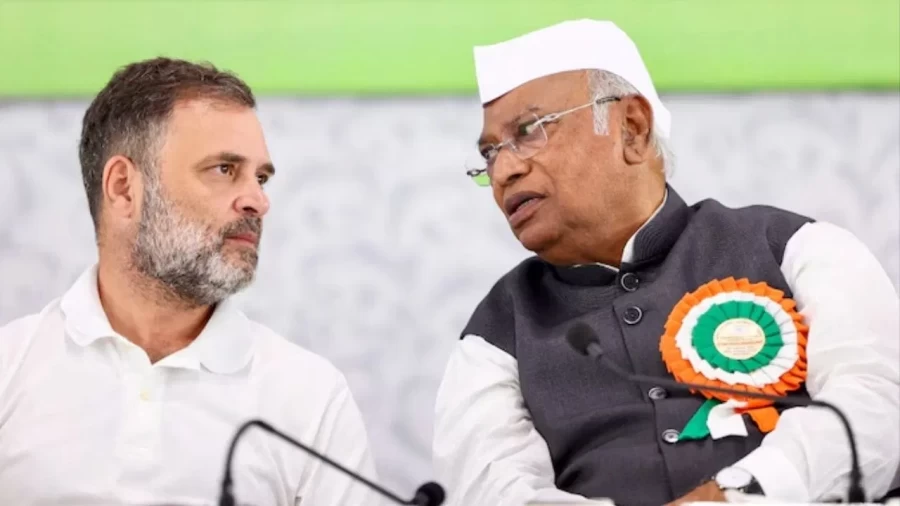
Upon being informed of the shocking events, Congress MP Rahul Gandhi and party president Mallikarjun Kharge expressed their serious concern. Both leaders unequivocally stated that such acts of indiscipline wouldn't be tolerated under any circumstances. They emphasized that while individuals may come and go within the party, maintaining discipline is paramount. This stern warning served as a clear message to curb the growing factionalism and. Public disputes that have plagued the party, particularly in the aftermath of the electoral defeat.
Key Issues Raised During the Meeting
During the actual review session, a multitude of factors contributing to the party's defeat were discussed in detail, while a prominent issue was the serious allegation of 'ticket selling,' with several candidates claiming that deserving and loyal party workers were overlooked in favor of individuals who allegedly purchased tickets. The detrimental impact of 'friendly fights' was also highlighted, as these internal contests led to a division of votes within the Mahagathbandhan (Grand Alliance), ultimately benefiting rival parties, while some candidates directly accused Pappu Yadav of actively working against Congress candidates in certain constituencies, contributing to their losses.
Voter Shifts and Internal Discord
Concerns were also raised regarding a potential shift in voter allegiance, with some participants suggesting that new voters, possibly identified through an SIR (Special Identification Drive) process, might have gravitated towards the BJP. Internal party conflicts and factionalism were identified as a significant underlying cause of the defeat. The absence of a single, influential Congress leader with widespread appeal across the entire state was also noted as a critical weakness, while On top of that, there was a consensus that charismatic and popular leaders like Kanhaiya Kumar weren't effectively utilized, representing a missed opportunity to energize the party's base and connect with a broader electorate.
Alliance Scrutiny and Future Strategy
The alliance with the Rashtriya Janata Dal (RJD) came under intense scrutiny. Some candidates even suggested that the party might not have. Fared as poorly had it not allied with the RJD. Criticisms included the late formation of the alliance, which left insufficient time for coordinated campaigning, and significant delays in seat-sharing agreements and the distribution of party symbols, causing confusion among cadres and voters, while several candidates proposed an immediate termination of the alliance with RJD, advocating for the Congress to focus on strengthening itself independently. It was also suggested that the alliance strategy should be thoroughly re-evaluated before the next assembly elections.
Regional Dynamics and Rahul's Directive
The meeting also addressed the impact of Asaduddin Owaisi's presence in the Seemanchal region, where his party's influence was believed to have siphoned off Muslim votes from the Mahagathbandhan, thereby hurting Congress and its allies in several constituencies. Prior to the meeting, Rahul Gandhi had instructed all candidates and leaders to focus solely on the situation in their respective constituencies and the reasons for their defeat, rather than engaging in a blame game. Despite this directive, the pre-meeting chaos and the subsequent heated discussions underscore the formidable challenges facing the Congress in Bihar, while the party now faces the arduous task of resolving these deep-seated internal issues and forging a cohesive strategy to regain its footing in the state.
