

- India,
- 13-Feb-2026 10:21 PM IST


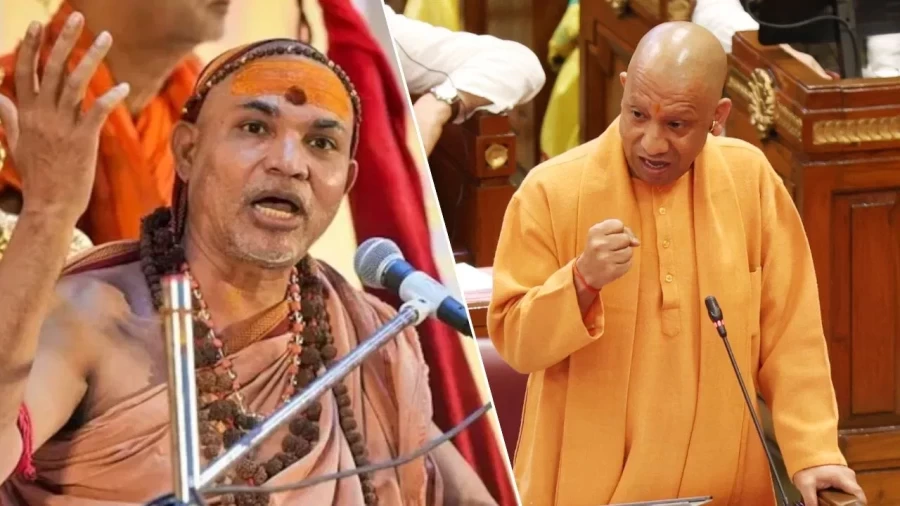
During the ongoing Budget Session of the Uttar Pradesh Legislative Assembly, Chief Minister Yogi Adityanath launched a scathing attack on the Samajwadi Party (SP). Addressing the house, the Chief Minister referred to a past incident involving Swami Avimukteshwaranand in Varanasi and the recent controversy at the Magh Mela in Prayagraj. He questioned the morality of the opposition party, stating that those who are now advocating for religious sentiments are the same ones under whose rule saints were subjected to force. The Chief Minister emphasized that adhering to the law and maintaining decorum is the duty of every citizen, and no individual or title can be placed above the established system.
The Varanasi Lathicharge and SP's Past Actions
Chief Minister Yogi Adityanath specifically highlighted an incident from the Samajwadi Party's tenure in Varanasi. Addressing the opposition benches, he asked why a lathicharge was ordered against Swami Avimukteshwaranand if they truly considered him a Shankaracharya. The Chief Minister noted that not only was force used, but an FIR was also registered against him at that time, while he accused the SP of maintaining double standards, pointing out that the party which once treated saints in such a manner is now lecturing on morality. According to the Chief Minister, this reflects political opportunism where stances are changed based on convenience.
Security Protocols and Crowd Management at Magh Mela
50 crore devotees visited the Sangam on the auspicious occasion of Mauni Amavasya. He explained that to manage such a massive gathering, the administration had established strict security protocols and designated entry and exit routes. The Chief Minister alleged that certain individuals attempted to bypass the system by trying to enter through the exit gates, while he argued that in a situation where millions are moving out, an attempt to enter from the opposite direction could trigger a stampede. He clarified that no one, regardless of their status, can be allowed to jeopardize the lives of devotees.
Sanctity of the Shankaracharya Title and Institutional Decorum
Elaborating on the significance of religious titles in Sanatan Dharma, the Chief Minister stated that the position of Shankaracharya is considered supreme and highly respected, while he asserted that not everyone can claim the title of Shankaracharya or attempt to disrupt the environment by posing as the Acharya of various Peeths. Drawing a parallel with the assembly, he mentioned that just as the house functions based on traditions and rules, religious institutions also have their own decorum and systems. He remarked that a responsible and disciplined person never violates established protocols. The Chief Minister advised the SP to stop misleading the public in the name of religion.
The Principle of Equality Before the Law
Referring to the constitutional framework, Chief Minister Yogi Adityanath stated that the law is equal for everyone in India. He explicitly mentioned that the post of Chief Minister or any other position can't be above the law. Giving an example, he said that if he were to commit an offense, the law would treat him exactly as it treats a common citizen, while 50 crore devotees apply to everyone without exception. The Chief Minister stressed that the state government knows how to follow the law and also how to enforce it strictly when necessary.
Administrative Systems and Public Safety
While presenting his views in the house, the Chief Minister highlighted the importance of administrative systems. He questioned whether any person could roam around with a 'Chief Minister' or 'Minister' board, or if anyone could challenge the system by claiming to be the National President of a political party. He stated that society and government function through a specific mechanism, while in large-scale events like the Magh Mela, security arrangements are prioritized to prevent any untoward incidents. The Chief Minister reiterated that his government is committed to constitutional values and won't permit anyone to take the law into their own hands or threaten public safety.
